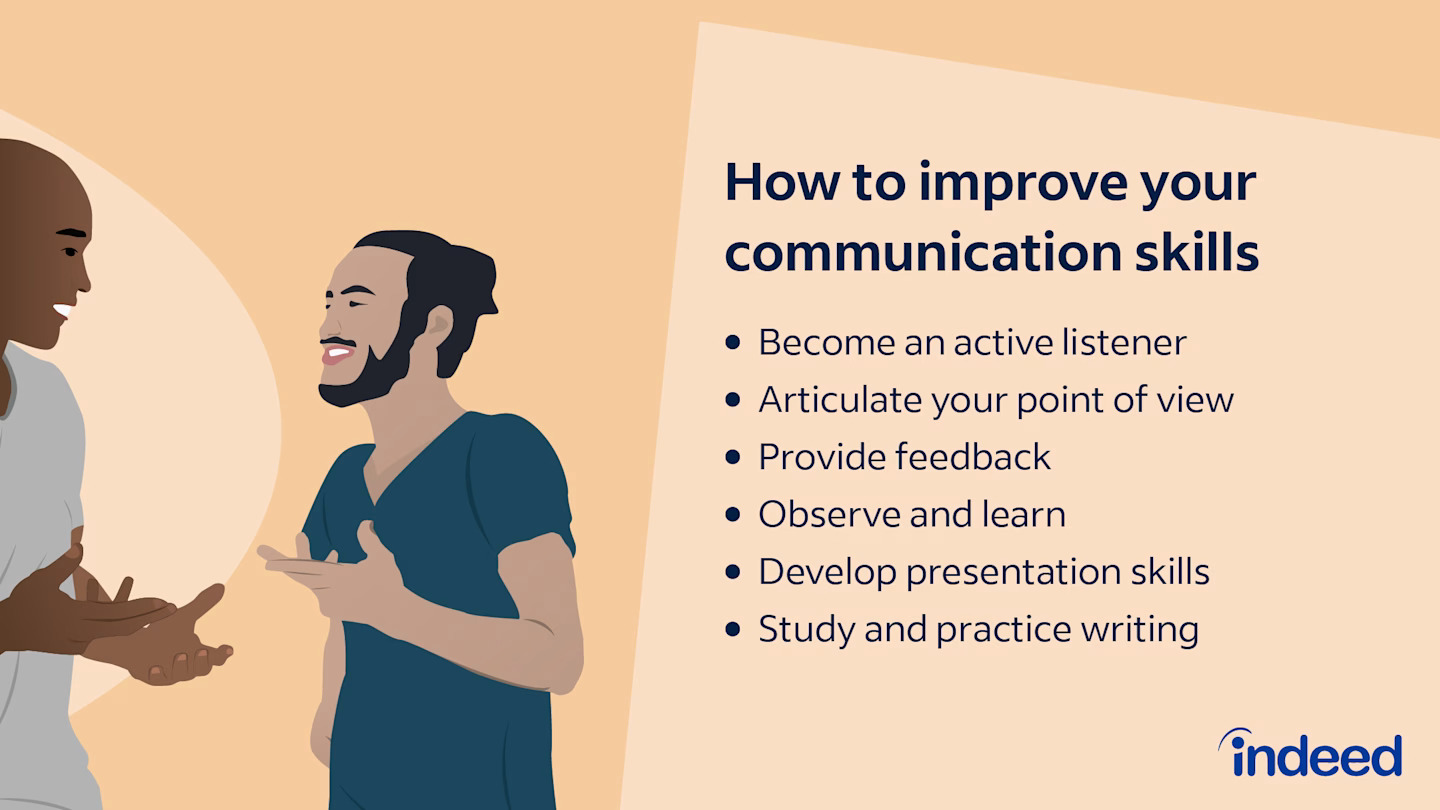
If you are willing to improve your communication skills for your career, implementing a few strategies can help you to achieve a satisfying result much seamlessly.

Communication is one of the most important skills that is immensely helpful for a successful career. When you are working in a professional setting, whether it is a small team or leading an entire organization, communicating efficiently can be helpful in many ways. Good workplace communication helps employees share ideas, understand responsibilities, solve problems, build stronger relationships, and work towards common goals. It also creates an environment where people feel comfortable expressing their opinions, asking questions, and sharing feedback. However, workplace communication involves more than simply exchanging information. It requires active listening, emotional awareness, clarity, patience, and the ability to adapt your communication style to different situations. Misunderstandings, unclear instructions, poor listening habits, and a lack of feedback can create unnecessary conflicts and affect productivity. Working on improving communication skills can be really helpful in many ways. Here are a few steps that can be really useful-
- Practice active listening:
If you are trying to improve your communication skills, then you need to pay attention to active listening. It is an essential part of effective communication. Instead of paying attention to what to say next, focus more on understanding what the person is saying. Pay attention to their words, tone, and intentions without interrupting them unnecessarily. When colleagues share ideas or concerns, allow them to finish before responding. Ask relevant questions if something is unclear and acknowledge their points to show that you are engaged. Active listening helps prevent misunderstandings and makes others feel respected and valued. If you focus more on active listening, you will be able to improve your communication automatically. Therefore, it is a step that can be quite useful for you.
- Improve your body language:
Non-verbal communication plays an important role in workplace interactions. Your facial expressions, posture, gestures, and eye contact can influence how colleagues understand your message and respond to you. Positive body language helps create a professional impression while making conversations more comfortable and engaging.Maintain a relaxed posture, make appropriate eye contact, and use natural hand gestures to support your words. When someone is speaking, show interest by nodding occasionally and maintaining an attentive expression. Avoid crossing your arms, constantly checking your phone, or looking distracted during conversations. These habits may make others feel that you are uninterested or unwilling to communicate. Pay attention to your body language during meetings, presentations, and everyday discussions. Developing positive non-verbal communication habits can help you express confidence, build trust, and establish stronger professional relationships with colleagues.
- Be clear and concise:
Effective workplace communication should be straightforward, organized, and easy to understand. Whether you are explaining a project, writing an email, or sharing instructions, avoid unnecessary details that might confuse your audience or distract them from the main message. Before communicating, take a moment to organize your thoughts and identify the most important information you want to share. Use simple language, short sentences, and relevant examples instead of complicated expressions or excessive technical terms. Being concise also helps colleagues save time and understand their responsibilities without repeatedly asking for clarification. Pay particular attention when discussing project requirements, deadlines, expectations, and important decisions. Make sure your message provides all the necessary details without becoming unnecessarily lengthy. Clear and concise communication reduces misunderstandings, improves workplace efficiency, and helps teams collaborate more effectively towards shared goals.
- Develop your writing skills:
In any workplace, written communication is also considered one of the most important factors. If you think that only communicating verbally is important, you are mistaken. You need to write things like emails, reports, project updates, presentations, instant messages, and more. If you do not express your thoughts and information accurately, you will not be able to perform in the ideal manner. That is why it is really important to pay attention to your writing skills as well. You have put in more effort on grammar, vocabulary, sentence construction, and overall writing clarity. Along with that, use appropriate subject lines, organize information logically, and avoid unnecessary jargon. Strong writing skills help reduce confusion and create a professional impression. By improving your writing skills, it would be much easier to enhance your communication skills as well.
- Ask questions when necessary:
If you are willing to improve your communication skills for a professional setting, you should never hesitate to ask questions. If you are not being able to understand something, then instead of doing assumptions, it is better if you ask a question. This way, you will be able to give a much better answer. During team discussions, ask relevant questions to understand different perspectives. Asking questions demonstrates that you are interested in learning and completing your responsibilities correctly. It also encourages an open communication culture where employees feel comfortable seeking clarification. If you pay more attention to this, you will be able to communicate in a much hassle-free manner. Thus, it is a great method that can be really helpful for you.
- Give constructive feedback:
Constructive feedback helps employees recognise their strengths, understand their weaknesses, and identify opportunities for professional growth. However, the way feedback is delivered can influence how people respond to it. When providing feedback, focus on specific actions and behaviours rather than making personal comments or criticisms. Explain what needs improvement and offer practical suggestions to achieve better results. For example, instead of simply saying that a presentation was ineffective, highlight the sections that lacked clarity and suggest ways to make them more engaging. Maintain a respectful and supportive tone throughout the conversation. Acknowledge positive efforts alongside areas that need improvement to encourage confidence and motivation. Remember that the purpose of constructive feedback is to support learning, improve performance, and help employees develop their skills rather than discourage them.
- Learn to receive feedback positively:
Effective communication is not just about expressing your thoughts and opinions but also about being willing to accept feedback from others. Learning to receive feedback positively can help you recognise your weaknesses, improve your performance, and grow professionally. When a manager or colleague points out an area that needs improvement, avoid becoming defensive or taking their comments personally. Instead, listen carefully, understand their perspective, and ask questions if you need further clarification. Take time to evaluate their suggestions and identify practical ways to apply them to your work. Remember that not every piece of feedback will be equally useful, but maintaining an open mind can help you discover valuable opportunities for improvement. Accepting feedback gracefully also demonstrates professionalism, maturity, and a willingness to learn.
- Pay attention to your tone of voice:
Better communication skills are not only about using the right words, but you need to focus on your tone as well. How a message is delivered is considered one of the most important elements. Whether the words are said in an aggressive, impatient, or dismissive tone can create more misunderstandings. That is why it is really essential to work on the tone of your voice as well. Maintain a calm, respectful, and professional tone during workplace conversations. Be particularly careful when discussing disagreements, correcting mistakes, or communicating under pressure. Adjust your tone according to the situation while remaining polite. A friendly and considerate approach can make difficult conversations more productive. If you put in more effort, then you will be able to improve your skills in a much easier manner.
- Improve your presentation skills:
Presentations are an important part of professional life, whether you are explaining a project, sharing business results, or introducing a new idea. Strong presentation skills help you communicate information clearly, confidently, and effectively. Start by preparing your content in advance and organising your ideas into a logical structure. Identify the key points you want your audience to understand and avoid including unnecessary information. Practise your delivery to maintain a comfortable speaking pace and use an appropriate tone. Instead of reading every word from your slides, explain the information naturally and maintain eye contact with your audience. Incorporate relevant examples, charts, and simple visuals to make complex topics easier to understand. Regular practice can help reduce nervousness, improve your confidence, and make you more comfortable speaking in front of colleagues, managers, and clients.
- Be respectful of different opinions:
Workplaces bring together people with different backgrounds, experiences, personalities, and perspectives. As a result, disagreements are natural, particularly when employees have different ideas about completing tasks or solving problems. Instead of dismissing opinions that differ from yours, make an effort to understand the reasoning behind them. Listen patiently, allow colleagues to express their thoughts without interruption, and respond politely, even when you disagree. Avoid making personal remarks or turning professional discussions into arguments. Being open to different viewpoints can help you discover new ideas and consider alternative approaches to workplace challenges. Respectful conversations also encourage creativity, strengthen professional relationships, and create an inclusive working environment. Remember that effective communication does not require everyone to agree; it requires everyone to feel heard, respected, and comfortable sharing their perspectives.
- Be mindful of your audience:
Effective communication requires understanding who you are speaking to and adjusting your approach accordingly. Different people have different levels of knowledge, responsibilities, and expectations, so the same communication style may not work in every situation. Before starting a conversation, consider what your audience needs to know and how best to explain the information. Adjust your vocabulary, tone, and level of detail to make your message easier to understand. For example, a project update for senior management may focus on progress, results, and challenges, while a discussion with team members may require detailed instructions about individual responsibilities. Being mindful of your audience helps prevent misunderstandings, keeps conversations relevant, and ensures that your message is communicated effectively across different workplace situations.
If you can work on some simple methods, improving your communication skills will be much easier. All these can help you build a better relationship with everyone else in your workplace as well. Thus, consider these while trying to improve your skills.