Here is a deep dive into 10 psychological thrillers that twist reality, expose dark secrets, and blur the line between truth and deception long after the final page.
A great psychological thriller should make you question what you know, doubt the people around you, and leave an uneasy thought lingering long after you have turned the final page. While many books in the genre explore familiar twists and dark secrets, the best ones go deeper, pulling readers into the minds of characters whose motives are impossible to fully trust. Watching a favorite story unfold on screen can be thrilling, but nothing quite matches the experience of getting lost inside a genuinely disturbing novel.
From fractured relationships to buried secrets and unsettling obsessions, these psychological thrillers take readers on dark journeys that can stay with you long after the book is closed.
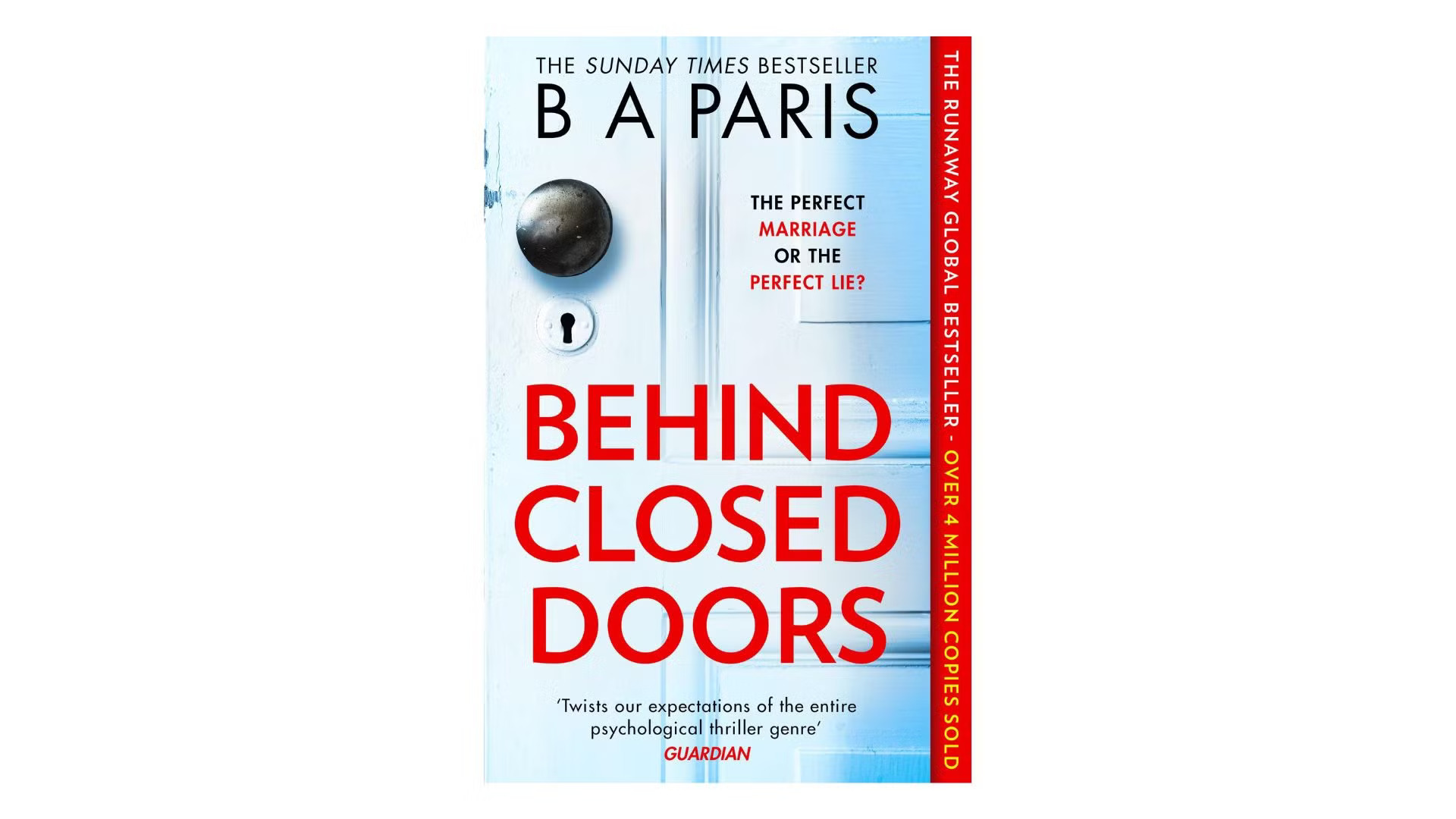
Behind Closed Doors by B. A. Paris
Everyone knows that couple who appears almost too perfect to be real. Their polished life looks effortless from the outside, yet there is always that uncomfortable thought that something darker could be happening behind the scenes. B.A. Paris turns that suspicion into a gripping psychological nightmare in her 2016 thriller Behind Closed Doors, a novel built around control, fear, and the dangerous secrets that can hide inside a seemingly perfect marriage.
Jack and Grace appear to have everything people could want. They live a comfortable life, enjoy financial security, and present themselves as the ideal couple whenever they are around friends or guests. Grace plays the devoted wife while Jack appears to be the successful and dependable husband. Their relationship seems enviable until the story begins moving between different points in time, slowly revealing the disturbing reality beneath their carefully maintained image.
As the truth starts to surface, the novel becomes increasingly difficult to put down. Paris keeps the tension focused on Grace’s desperate situation and the question of whether she can find a way to escape Jack’s control. Behind Closed Doors works best when it exposes the frightening gap between public appearances and private reality, creating an unsettling reading experience that can easily keep you awake long after bedtime.
Before I Go to Sleep by S. J. Watson
How much can you trust your own memories when they disappear every time you fall asleep? S. J. Watson explores that unsettling question in Before I Go to Sleep, his 2011 mystery thriller and debut novel. Built around memory loss, trauma, manipulation, and the gradual loss of personal freedom, the story places readers inside the disorienting world of Christine Lucas, a woman who cannot rely on her own mind to tell her what is real.
Christine wakes each morning without knowing where she is or how she got there. She has no clear memory of her identity, her past, or the people surrounding her, leaving her dependent on fragments of information to understand the life she is living. Her journal becomes one of the few ways she can connect the pieces, giving her something tangible to hold onto before sleep wipes away another day. What makes Before I Go to Sleep so compelling is the growing sense that Christine cannot afford to trust everyone around her. As she begins uncovering details about her past, questions about the men in her life become increasingly disturbing, while the threat of another memory reset keeps the tension moving. Watson creates a fast-paced psychological mystery where every discovery matters and time is never on Christine’s side.
The Silent Patient by Alex Michaelides
We are naturally drawn to unanswered questions, especially when someone does something so shocking that there seems to be no clear explanation for it. Alex Michaelides builds an entire psychological mystery around that obsession with understanding the why in his 2019 debut novel, The Silent Patient. The story explores guilt, trauma, obsession, and the dangerous consequences of believing there must always be a simple answer.
Alicia Berenson is a successful painter whose seemingly comfortable life changes forever when she shoots her husband, Gabriel, in the face multiple times. What makes the crime even more disturbing is what happens afterward. Alicia stops speaking completely, refusing to explain what led her to commit such a brutal act. Her silence turns the murder into a mystery that captures public attention and leaves everyone desperate to understand what happened inside the marriage.
Theo Faber, a psychotherapist fascinated by Alicia’s case, becomes determined to uncover the truth and discover what pushed her to the edge. The narrative moves between Theo’s perspective and Alicia’s diary entries from the period leading up to the murder, gradually revealing details that challenge what readers think they understand. Michaelides keeps the biggest revelation hidden until the final stretch, making The Silent Patient an addictive read where every clue carries a darker meaning.
The Girl on the Train by Paula Hawkins
An unreliable narrator can turn a familiar story into something far more unsettling because you never know whether the version you are hearing is the truth. Paula Hawkins uses that uncertainty brilliantly in The Girl on the Train, her 2015 psychological thriller, where three women offer different perspectives and none of them can be trusted completely. Addiction, manipulation, gaslighting, and domestic abuse run through the story, giving the mystery a darker emotional weight while keeping readers guessing about what really happened.
Rachel Watson is a divorced alcoholic who spends her daily train journeys watching a couple from a distance. Living only a few doors away from the home she once shared with her former husband, Rachel becomes fascinated by what she sees as the couple’s seemingly perfect life. Their relationship gives her something to escape into while reminding her of everything she believes she has lost. That illusion begins to fall apart when the woman Rachel has been watching suddenly disappears. Drawn into the mystery, Rachel starts looking for answers while discovering that the people around her are hiding far more than she expected. Hawkins steadily blurs the line between memory, perception, and reality, creating a tense thriller that makes even the most ordinary suburban life seem suspicious.
Misery by Stephen King
Some of the most frightening stories are the ones where there is nowhere to run, and Stephen King’s 1987 psychological thriller Misery understands that better than most. Known as the King of Horror, King had briefly moved into fantasy before returning to darker territory with this deeply personal and intensely claustrophobic novel. Much of the story draws from his own struggles with drug and alcohol addiction, which he transforms into the terrifying presence of Annie Wilkes, one of his most memorable villains.
Paul Sheldon is a successful author who is preparing to publish the final installment of his popular Victorian romance series when a snowstorm sends his life in a completely different direction. After crashing his car on an isolated road, Paul is rescued by Annie Wilkes, a former nurse who claims to be his biggest fan. What initially appears to be a lucky escape quickly becomes a nightmare when Paul realizes Annie has no intention of letting him leave. Confined to her remote home and completely dependent on his captor, Paul is forced to confront Annie’s unpredictable obsession with his work. Her demands become increasingly disturbing as she pushes him beyond his limits, while Paul desperately searches for a way to survive. Misery turns isolation into pure psychological terror, proving that sometimes the most dangerous place is the one that looks like a refuge.
Shutter Island by Dennis Lehane
The line between reality and delusion can become dangerously difficult to recognize, and Dennis Lehane pushes that idea to its darkest limits in his 2002 psychological thriller Shutter Island. The novel explores paranoia, guilt, trauma, and denial while asking how far the human mind can go to protect itself from something it cannot accept. As the story unfolds, Lehane keeps readers questioning whether what they are seeing is real or carefully constructed.
U.S. Marshal Teddy Daniels arrives on an isolated island with his partner to investigate the disappearance of a dangerous killer from Ashecliffe Hospital, a psychiatric facility housing some of the most disturbed patients imaginable. Their investigation should be straightforward, but the island quickly becomes a place where nothing feels quite right. Then a powerful hurricane cuts off contact with the mainland, leaving Teddy and his partner trapped with unanswered questions and an increasingly unsettling atmosphere.
The deeper Teddy goes into the hospital, the stranger the investigation becomes. Patients, doctors, and staff seem to be hiding information, while hints of mind control experiments and disturbing psychiatric practices add another layer of mystery. Teddy’s own memories and perceptions also begin to unravel, making it harder to separate fact from fear. Shutter Island builds towards a haunting conclusion that forces readers to reconsider everything they thought they understood.
The Talented Mr. Ripley by Patricia Highsmith
Few psychological thrillers explore wealth, social class, and ambition with the same unsettling confidence as Patricia Highsmith’s 1955 novel The Talented Mr. Ripley. At the heart of the story is a man who understands exactly how to become whatever the people around him want to see. Highsmith creates a charming yet deeply disturbing antihero whose desire for a glamorous life slowly turns into something far more dangerous.
Tom Ripley is an outsider looking in on a world of money, privilege, and effortless sophistication. He is clever enough to move through that world while carefully hiding who he really is, using his charm to gain access to people, opportunities, and wealth. What begins as admiration for a lifestyle he cannot afford gradually becomes an obsession that pushes him towards increasingly shocking choices. Ripley’s story taps into a fear that feels surprisingly familiar: how far might someone go when they believe financial security and social status are just out of reach? His ability to manipulate others makes him fascinating to follow, but it is his complete lack of remorse that makes the novel so unsettling. Highsmith never makes Ripley easy to understand or excuse. Instead, she places readers inside the mind of a man who sees morality as something that can be shaped, discarded, or ignored whenever it stands between him and the life he wants.
Gone Girl by Gillian Flynn
Gillian Flynn’s Gone Girl takes the familiar idea of a troubled marriage and turns it into a sharp psychological battle over perception, manipulation, and control. Published in 2012, the thriller explores how quickly people form opinions when they only know part of a story, especially when a disappearance gives everyone a reason to look for someone to blame. Flynn keeps that uncertainty at the center of the novel, making it difficult to decide who deserves sympathy and who deserves suspicion.
When Amy Dunne disappears on her wedding anniversary, attention quickly falls on her husband, Nick. From the beginning, something about Nick’s behavior makes the authorities and the public question whether he is telling the whole truth. His inability to show the expected grief only adds to the suspicion surrounding him, while the evidence found at home appears to point in an increasingly disturbing direction. Then Amy’s private diary begins revealing a very different version of their marriage, creating a sharp contrast with Nick’s account of what happened. As the story moves between their perspectives, Flynn carefully plays with the idea of unreliable storytelling, forcing readers to question every detail they are given. Gone Girl works so well because there is no easy hero to root for. Instead, Flynn creates a twisted battle where both Amy and Nick have their own secrets, motives, and versions of the truth, leaving readers to decide who they can believe.
The Silence of the Lambs by Thomas Harris
Thomas Harris’s 1988 psychological horror novel The Silence of the Lambs takes readers into a world where morality is rarely as simple as good versus evil. Beneath its chilling cat-and-mouse game lies a sharp exploration of power, gender bias, manipulation, and the psychological battles that unfold when two exceptionally intelligent people try to understand each other. The result is a disturbing thriller that remains fascinating because neither side is as straightforward as they first appear.
Clarice Starling, a young FBI trainee, is tasked with seeking the help of the brilliant and terrifying Dr. Hannibal Lecter to understand a dangerous killer. Lecter is imprisoned for his own horrific crimes, yet his extraordinary understanding of human behavior makes him an invaluable source of information. Their conversations become a psychological chess match, with Lecter using carefully chosen observations to unsettle Clarice while pushing her to reveal parts of herself. What makes the novel so compelling is the way Harris gives Lecter an unsettling intellectual power. His thoughts on aging, fear, desire, and human nature often carry a strange clarity, even when they come from a deeply disturbing character. Clarice, meanwhile, must navigate a male-dominated professional world while confronting people who constantly test her judgment and authority.
For fans of crime and psychological dramas such as Criminal Minds and Mindhunter, The Silence of the Lambs remains a dark and essential read.
Rebecca by Daphne du Maurier
Living in the shadow of someone you have never met can be unsettling, but it becomes far more disturbing when that person is your husband’s late first wife. Daphne du Maurier explores jealousy, obsession, insecurity, and psychological control in her 1938 Gothic thriller Rebecca, creating a haunting story where the past has an almost physical presence over the present.
The novel follows a young woman who marries Maxim de Winter, a wealthy widower, and moves with him to his grand estate, Manderley. What should be the beginning of a new life quickly becomes an uncomfortable struggle for confidence as the memory of Rebecca, Maxim’s first wife, seems to occupy every corner of the household. Her influence remains strong through the servants, the traditions she left behind, and the expectations placed upon her successor. The unnamed second Mrs. de Winter constantly compares herself to a woman she never had the chance to know, making her feel increasingly out of place in her own home. The more she tries to understand Rebecca’s legacy, the more questions begin to emerge about the woman everyone seems determined to remember.
Du Maurier keeps the tension simmering rather than relying on constant shocks, allowing the atmosphere to grow darker with every chapter. Manderley becomes almost a character itself, surrounding the second Mrs. de Winter with secrets, jealousy, and a lingering sense that the past is never truly buried.
How many of these have you read till now?