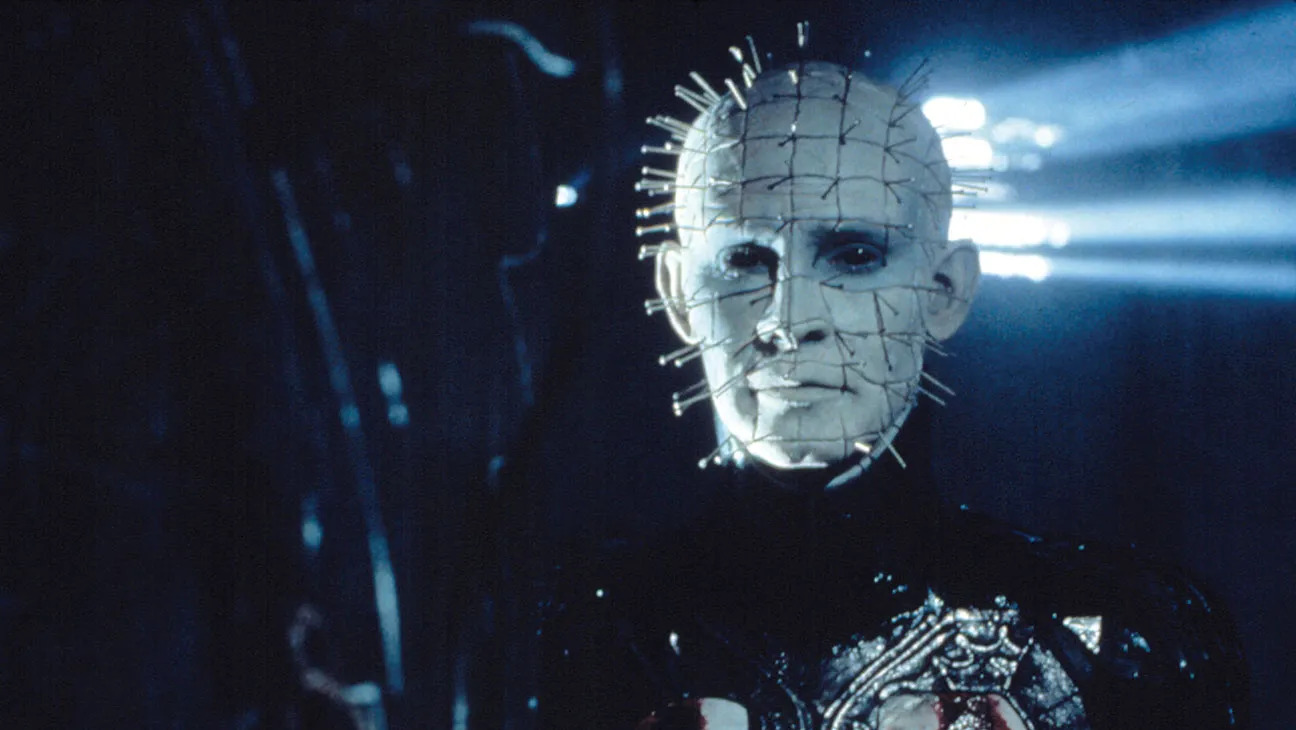
From Psycho and Seven to Fight Club, these thriller classics shaped cinema so completely that remaking them would only weaken their original power and legacy.
A classic thriller earns its place through more than age or nostalgia. It captures a particular moment in cinema, then leaves a mark that later films spend years trying to match. From Psycho to Fight Club, these titles changed how audiences viewed suspense, fear, obsession, and the darker corners of human nature. Their impact came from bold filmmaking, unforgettable performances, and an atmosphere tied closely to the era that created them. A remake may bring a familiar story to new viewers, but some films are too complete to revisit. Their original power remains hard to duplicate. Here are classic thrillers that audiences would rather preserve than see reimagined.
1. Psycho (1960)
Directed by Alfred Hitchcock and adapted from Robert Bloch’s novel, Psycho remains one of those rare films that changed the rules while audiences were still trying to understand what they had seen. The story follows Marion Crane, a young woman who steals money from her employer and leaves town in a panic. Her escape leads her to the isolated Bates Motel, where she meets its nervous owner, Norman Bates, and hears about his demanding mother.
What begins as a crime story soon becomes something far more unsettling. After Marion disappears, her sister, her lover, and a private investigator begin searching for answers. Each discovery pulls them deeper into the strange world surrounding Norman and the motel. Anthony Perkins gives Norman a performance that is polite, awkward, and deeply disturbing, while Janet Leigh brings urgency and vulnerability to Marion. Vera Miles, John Gavin, and Martin Balsam also add weight to the mystery as it expands.
Psycho was shocking for its time because it refused to follow the usual rules of mainstream cinema. Hitchcock placed violence, fear, and psychological darkness at the center of a major studio release. He also made audiences question who the real lead was, where the story was heading, and who could be trusted. That unpredictability gave the film its lasting power.
The film also helped shape the slasher genre long before that label became common. Its influence can be seen across decades of horror, thrillers, and crime dramas, yet its impact has never been easy to duplicate. Hitchcock’s direction, along with Bernard Herrmann’s piercing score, the black and white imagery, and the uneasy pacing, all work together to give audiences something remarkable. A remake could definitely copy the plot, the shots, and even the dialogue, but it could never recreate the cultural shock of Psycho. The 1988 version proved that point very clearly. Hitchcock’s original belongs to its own era, but its ability to unsettle viewers remains timeless. Some classics deserve fresh discussion, not another attempt at imitation.
2. Seven (1995)
David Fincher’s Seven remains one of the defining crime thrillers of the 1990s because it creates dread from its very first scene and never loosens its grip. The film follows David Mills, an impatient young detective, and William Somerset, a seasoned officer preparing to leave the force. They are brought together to investigate a brutal series of murders linked to the seven deadly sins, but the case soon becomes far more personal than either man expects.
Morgan Freeman brings restraint and intelligence to Somerset, a detective who has seen too much and understands the darkness waiting beneath the surface of the city. Brad Pitt gives Mills the opposite energy. He is impulsive, emotional, and determined to prove himself, even when his anger clouds his judgment. Their contrasting personalities create the heart of the film, making every disagreement and breakthrough feel charged with tension.
The city itself becomes another major character. Fincher presents it as a place trapped under endless rain, crowded streets, decaying apartments, and a sense of hopelessness that hangs over every scene. The film’s grim visual style gives Seven its distinct identity, while the murders reveal a killer who has turned moral judgment into something horrifying. Each crime is carefully designed to disturb, but the film never relies on violence alone. Its real power comes from the fear of what might be waiting around the next corner. Gwyneth Paltrow, Richard Roundtree, John C. McGinley, R. Lee Ermey, and Kevin Spacey round out a cast that gives the story added weight. Still, it is Freeman and Pitt’s chemistry that makes the film impossible to separate from its characters. Somerset and Mills are not simply detectives on a case. They represent two very different responses to a world that seems beyond repair.
The final act remains one of the most unforgettable endings in thriller history. It is shocking because it is earned, not because it aims for empty surprise. Seven understands that the most disturbing stories stay with viewers long after the credits roll. A remake would struggle to capture that same effect. The film’s style, performances, cinematography, and bleak mode are deeply tied to its time, yet they still feel fresh today. Recreating the plot would be easy. But recreating its impact would be nearly impossible.
3. Vertigo (1958)
Alfred Hitchcock’s Vertigo is often called his greatest film, and it is easy to see why. It begins with John “Scottie” Ferguson, a former San Francisco detective whose career ends after a traumatic incident leaves him with severe vertigo. When an old college friend asks him to follow his wife, Scottie takes the job expecting a simple investigation. Instead, he becomes consumed by a mystery that pulls him into obsession, grief, and a disturbing search for control.
James Stewart gives one of his most complex performances as Scottie. He begins as a wounded man trying to regain his footing, but the story gradually reveals a far more troubled side to him. Kim Novak is equally essential as the mysterious woman at the center of the film. Her performance carries an elusive quality that makes every scene more unsettling, while Barbara Bel Geddes, Tom Helmore, and Henry Jones strengthen the world around them. Vertigo stands apart because Hitchcock uses every visual detail to reflect Scottie’s fractured state of mind. The famous camera technique that stretches space during his moments of fear does more than show his condition. It places viewers inside his panic and makes the city around him seem unstable. The film’s colors, music, and dreamlike pacing create a mood that grows more haunting as the story unfolds.
The film also takes risks that still feel bold. It shifts from a detective mystery into something far more intimate and uncomfortable, exploring fixation, identity, and the damage caused by idealizing another person. That emotional darkness is what gives Vertigo its lasting power. A remake could borrow the plot, recreate the locations, and repeat the visual tricks, but it would miss the point. Vertigo works because Hitchcock, Stewart, and Novak created something deeply specific together. Their work cannot be reproduced without turning a landmark thriller into a pale imitation of itself.
4. The Godfather Trilogy (1972–1990)
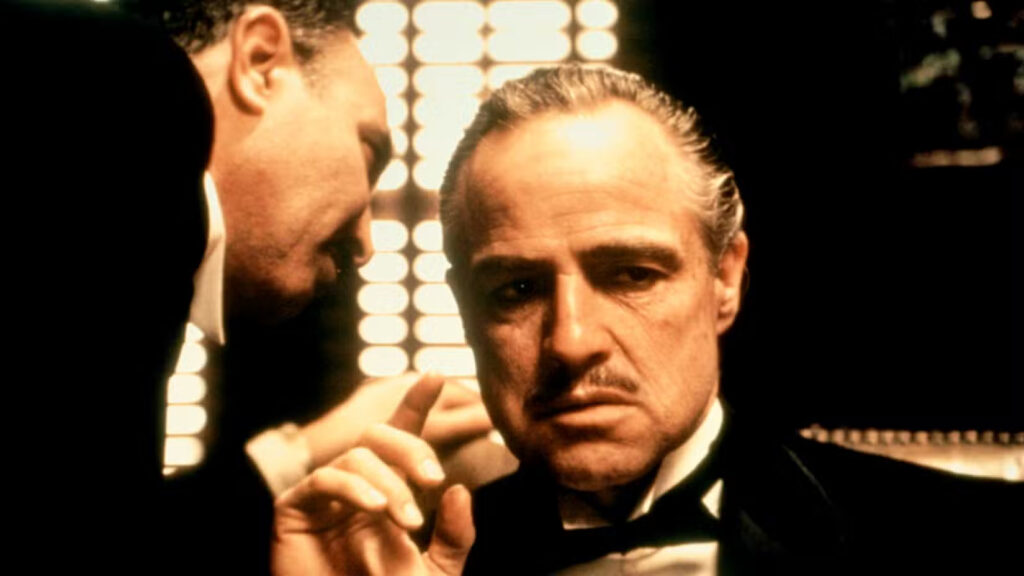
Francis Ford Coppola’s The Godfather Trilogy remains one of cinema’s most complete and powerful family sagas. Across three films, it traces the rise and collapse of the Corleone family, led at first by Vito Corleone, a feared figure whose influence reaches deep into New York’s criminal world. What begins as the story of a powerful father protecting his family becomes the far darker story of his youngest son, Michael Corleone, and the cost of inheriting that power.
Michael starts as the outsider. He wants a life away from the family business and its violent code, but circumstances slowly pull him closer to it. By the time he takes control, the man who once resisted the Corleone name has become its most ruthless guardian. Al Pacino’s transformation across the trilogy gives the films their emotional center, while Marlon Brando’s commanding performance as Vito sets the tone from the very beginning.
The cast is one reason these films remain impossible to replace. James Caan brings fire and unpredictability as Sonny, Diane Keaton gives Kay a painful clarity as she watches Michael change, and Robert Duvall, Talia Shire, Richard Bright, and the rest of the ensemble make the Corleone world feel lived in. Every character carries a history, a loyalty, or a wound that matters to the larger story. Coppola’s direction also gives the trilogy a scale that goes beyond the gangster genre. These films are about power, family, loyalty, guilt, and the damage caused by trying to protect an empire at any cost. The crime elements are essential, but the tragedy is what makes the story endure. Michael gains control over everything around him, yet loses the people who once gave his life meaning.
The Godfather arrived during the New Hollywood era and changed what audiences expected from a studio film. It proved that a gangster story could be intimate, literary, and emotionally devastating without losing its sense of spectacle. Coppola’s collaboration with author Mario Puzo created a world that still influences crime dramas decades later. A remake of this trilogy would have nothing new to add. The trilogy already tells its story with rare precision, from Vito’s old-world values to Michael’s lonely final reckoning. Recasting those roles or modernizing the setting would only invite comparison with performances and scenes that have become part of film history. Some stories can be retold. The Godfather Trilogy has already been told exactly as it needed to be.
5. The Silence of the Lambs (1991)
Jonathan Demme’s The Silence of the Lambs remains one of the most gripping psychological thrillers ever made because it understands that fear can be built through a conversation as easily as a chase. Adapted from Thomas Harris’s novel, the film follows Clarice Starling, a young FBI trainee, asked to help find Buffalo Bill, a serial killer whose crimes have left investigators with few answers. To get inside his mind, Clarice is sent to speak with Dr. Hannibal Lecter, a brilliant psychiatrist and convicted killer serving a life sentence.
The meetings between Clarice and Lecter become the film’s core. She needs his knowledge, but he demands personal truths in return. Every exchange carries danger, even when they are separated by glass and guards. Lecter seems to understand Clarice’s fears before she can name them herself, while Clarice refuses to let him completely control the conversation. Their uneasy bond creates a tension that grows stronger with every scene. Jodie Foster brings determination and vulnerability to Clarice, making her more than a rookie agent trying to prove herself. She is observant, stubborn, and willing to walk into places others avoid. Anthony Hopkins gives Lecter a chilling calmness that makes his presence impossible to ignore. He does not need grand gestures to be frightening. A pause, a look, or a soft line of dialogue is enough to shift the mood.
Ted Levine delivers a disturbing performance as Buffalo Bill, while Scott Glenn, Anthony Heald, and Kasi Lemmons add depth to the wider investigation. Still, the film belongs to Foster and Hopkins. Their performances create a balance that is hard to explain and even harder to recreate. Clarice and Lecter are opponents, allies, and mirrors of each other in ways that keep the story unpredictable. The Silence of the Lambs also changed the way mainstream audiences viewed psychological horror. It blended crime drama, character study, and horror without allowing one element to overpower the others. The film is disturbing, but it never loses its focus on Clarice’s journey. A remake of this film would face an impossible task. Its plot is already familiar, and its most famous moments have become part of pop culture. More importantly, the original’s tension came from a precise mix of direction, writing, and amazing performances. Repeating the story with new faces would risk making a landmark film feel like just a formula.
6. Die Hard (1988)
John McTiernan’s Die Hard remains one of the most entertaining action films ever made because it gets the basics exactly right. Based on Roderick Thorpe’s novel Nothing Lasts Forever, the film follows NYPD detective John McClane as he arrives in Los Angeles on Christmas Eve, hoping to repair his marriage with Holly and spend time with his family. Instead, he walks into a hostage crisis at her office party and becomes the only person capable of stopping it.
Bruce Willis made John McClane unforgettable. He is not a polished action hero with endless resources. He is tired, injured, sarcastic, and constantly improvising, which makes every close call more exciting. Bonnie Bedelia gives Holly real strength, while Alan Rickman turns Hans Gruber into one of the most memorable villains in action cinema. Reginald VelJohnson, Alexander Godunov, and Paul Gleason also help make the world around McClane feel sharp and lived in. Die Hard works because it relies on practical stunts, clever pacing, and a contained setting that keeps the pressure high. Nakatomi Plaza becomes a maze of elevators, air ducts, unfinished floors, and hidden threats. The action is big, but it never loses sight of character or tension.
The film also carries the unmistakable personality of the 1980s. Its dialogue, corporate setting, holiday backdrop, and approach to international crime all belong to that period. A modern remake would have to reshape too much of the story to fit current expectations, especially its central threat. Once those details change, the film risks losing the attitude that made it work. Die Hard has already inspired countless action movies, yet few have matched its balance of humor, suspense, and heart. It does not need a new version. The original still delivers everything an action classic should.
7. Pulp Fiction (1994)
Quentin Tarantino’s Pulp Fiction arrived in the 1990s with a style that felt completely its own, then changed the expectations of independent cinema almost overnight. Written and directed by Tarantino as his second feature, the film unfolds through overlapping stories set in Los Angeles, where crime, chance, redemption, and absurdity collide in unexpected ways. At its center are mob hitmen Vincent Vega and Jules Winnfield, whose everyday conversations sit beside sudden violence and strange twists of fate. Around them are Mia Wallace, the wife of their powerful boss, struggling boxer Butch Coolidge, and short-time robbers Ringo and Yolanda. Their paths cross through a chain of chaotic events, creating a story that jumps through time while still holding together with remarkable confidence.
The cast is a huge part of its staying power. John Travolta found a career-defining role in Vincent, while Samuel L. Jackson gave Jules a forceful presence that became instantly iconic. Uma Thurman, Bruce Willis, Tim Roth, Amanda Plummer, Christopher Walken, and Ving Rhames each bring a distinct energy, turning even brief scenes into moments audiences remember. Pulp Fiction works because it treats genre rules like toys to be taken apart and rebuilt. It borrows from film noir, crime stories, pulp novels, pop culture, and old Hollywood, then blends them into something fresh. Its dialogue is sharp, its soundtrack is unforgettable, and its visual style became closely linked with Tarantino’s name. A remake would miss the cultural moment that made the film so exciting. Pulp Fiction came from a time when indie cinema was ready to take bigger risks, and its postmodern storytelling felt bold rather than familiar. Today, its influence can be seen everywhere. Trying to recreate it would only make the original seem even more singular.
8. Fight Club (1999)
David Fincher’s Fight Club took Chuck Palahniuk’s novel and turned it into one of the sharpest and most divisive films of the late 1990s. The story follows an unnamed office worker, known simply as the Narrator, whose empty routine leaves him angry at the world around him. His life changes after he meets Tyler Durden, a reckless soap salesman with radical ideas about freedom, masculinity, and consumer culture.
Brad Pitt makes Tyler impossible to look away from, bringing charm, danger, and wild confidence to a character who thrives on chaos. Edward Norton gives the Narrator a nervous, exhausted edge that makes his growing crisis believable. Helena Bonham Carter, Meat Loaf, Holt McCallany, Jared Leto, and Zach Grenier help build the strange world that forms around them. Fight Club became a defining social satire because it captured a specific frustration with corporate life, advertising, and late 1990s consumer excess. Its themes still connect with audiences, but the film’s bite came from its exact moment in history. A remake would have to reshape its anger for a new era, and that could easily make it safer, smoother, and far less dangerous. The original already says what it needs to say.
Do you have any other classic thrillers to add to the list?