From Oculus to Midnight Mass, this ranking explores how Mike Flanagan turned horror into a powerful study of grief, faith, family, and human struggle.
Few filmmakers have reshaped modern horror as effectively as Mike Flanagan. What began with the independently made Absentia, a project brought to life through crowdfunding, has grown into one of the most impressive careers in contemporary genre storytelling. Across films and television, Flanagan has built a reputation for blending supernatural terror with deeply human emotions, creating stories that linger long after the final scene. His work consistently explores grief, trauma, loss, and redemption, proving that horror can be as emotionally affecting as it is frightening.
That success makes ranking Flanagan’s filmography a surprisingly difficult task. There are no outright failures in his body of work, only different degrees of excellence. Some projects achieve an almost perfect balance between emotional depth and chilling suspense, while others are slightly held back by ambitious ideas that do not fully come together. Even then, each title offers something worth appreciating, especially for horror fans drawn to character-driven storytelling.
This ranking is less about separating the best from the worst and more about examining how each film and series uses horror to confront the darker corners of the human experience. From haunted houses to personal demons, these are the works that have defined Mike Flanagan’s remarkable journey. These works helped establish him as one of the most influential voices in modern horror!
- ‘Ouija: Origin of Evil’ (2016)
There are only a handful of horror sequels that have managed the kind of turnaround that Ouija: Origin of Evil pulled off in 2016. Considering how poorly received 2014’s Ouija was, expectations for a follow-up were understandably low. The original film struggled in almost every area that matters, from its uneven pacing and forgettable characters to scares that rarely landed with any real impact. Still, its strong box office performance made another entry inevitable. Fortunately, Mike Flanagan stepped in and transformed what looked like a disposable franchise into something genuinely memorable.
Set before the events of the first film, Ouija: Origin of Evil delivers a far more thoughtful and unsettling story. Flanagan takes the familiar supernatural setup and builds an atmosphere filled with dread, while also exploring deeper emotional themes. Beneath the possession scares and ghostly encounters lies a story about grief, longing, and the desire to reconnect with those who are no longer here. That emotional foundation gives the film a weight that most studio horror releases never achieve.
As a pure horror experience, the film is remarkably effective. The tension builds steadily, the performances are strong, and the scares feel earned rather than manufactured. It comfortably stands alongside some of the genre’s most enjoyable modern supernatural films and remains one of the biggest quality jumps between franchise installments. So why does it rank lower than many of Flanagan’s other works? The answer comes down to creative freedom. Despite its strengths, Ouija: Origin of Evil still operates within the boundaries of an existing franchise. Flanagan elevates the material far beyond expectations, but the film lacks the bold experimentation and personal storytelling that define his very best projects. It is an excellent horror movie, yet it feels more restrained than the works that would later cement his legacy.
- ‘Before I Wake’ (2016)
While Mike Flanagan was busy reinventing a struggling horror franchise with Ouija: Origin of Evil, he was also developing a far more personal project alongside longtime collaborator Jeff Howard. Released in 2016, Before I Wake gave Flanagan the creative freedom to explore ideas that felt uniquely his own, resulting in one of the most imaginative entries in his filmography.
The story follows a young boy whose dreams manifest in the real world, a premise that allows the film to move between wonder and terror with surprising ease. What begins as a touching fantasy gradually reveals a darker side as nightmares emerge from buried trauma and painful memories. At the center of those fears is the Canker Man, one of Flanagan’s most memorable original creations. Yet the creature is not what lingers most after the credits roll. The film’s real power comes from its exploration of grief and the desperate need to hold on to people we have lost. Before I Wake examines the emotional devastation of loss through the perspective of parents struggling to move forward after tragedy. Rather than focusing solely on what has been taken away, the film looks at how grief shapes the choices of those left behind. That emotional focus gives the story a depth that elevates it above standard supernatural fare.
Its biggest weakness arrives in the final act. As the film shifts more heavily toward conventional horror, some of the emotional nuance that makes the earlier sections so compelling begins to fade. The excessive explanations also leave little room for mystery. Even so, Before I Wake remains a heartfelt and imaginative meditation on loss, showcasing many of the themes that would come to define Flanagan’s finest work.
- ‘Absentia’ (2011)
Mike Flanagan’s career began with humble beginnings, and Absentia remains a fascinating look at a filmmaker finding his voice. Released in 2011 and funded entirely through Kickstarter, the film was made on a shoestring budget, with Flanagan even using his own home as a primary filming location. Despite those limitations, the project showcases the ambition and emotional storytelling that would later define his best work. The story follows a pregnant woman struggling to move on after the mysterious disappearance of her husband. As she reconnects with her recovering addict sister, strange events begin to unfold around a nearby tunnel that may be connected to an unsettling supernatural presence. While the premise leans into horror, the film is far more interested in exploring grief, loss, and the emotional damage left behind by unanswered questions.
That focus on human suffering is where Absentia shines brightest. The performances sell the emotional weight of the story, creating an atmosphere that feels genuinely unsettling. However, the film’s limited resources become harder to ignore as it approaches its climax. Flanagan wisely avoids showing too much of the creatures at the center of the mystery, yet the finale still lacks the impact the narrative seems to promise. There is a lingering sense that one final revelation is missing. Even so, Absentia remains an impressive debut. It may not reach the heights of Flanagan’s later projects, but it offers an early glimpse of the talent that would soon reshape modern horror.
- ‘Gerald’s Game’ (2017)
Adapting Gerald’s Game was never going to be an easy task. Stephen King’s novel unfolds largely inside the mind of its protagonist, making it the kind of story many believed was impossible to translate effectively to the screen. Mike Flanagan proved otherwise. His 2017 adaptation turns a deeply psychological narrative into a gripping and emotionally charged film that rarely loses its hold on the audience. The story centers on Jessie, a woman left handcuffed to a bed in an isolated house after her husband suddenly dies from a heart attack. Trapped with no hope of immediate rescue, she is forced to confront painful memories and the emotional scars left by years of abuse and manipulation. Rather than relying solely on survival horror, the film becomes a powerful examination of trauma and self-liberation.
What makes Gerald’s Game so effective is Flanagan’s inventive approach to visual storytelling. He finds clever ways to externalize Jessie’s inner thoughts, keeping the film dynamic despite its confined setting. The result is a tense and surprisingly moving adaptation that captures the spirit of King’s novel remarkably well. Its biggest weakness arrives in the final stretch. By remaining so faithful to the source material, the film inherits one of the novel’s more divisive twists. That choice shifts attention away from Jessie’s emotional journey, slightly weakening an otherwise powerful story about reclaiming control and confronting the past.
- ‘Doctor Sleep’ (2019)
Doctor Sleep had an enormous task from the moment it was announced. The film needed to serve as a sequel to Stanley Kubrick’s iconic adaptation of The Shining while also honoring the supernatural elements that Stephen King emphasized in his novel. Balancing those two visions was a challenge that could have easily gone wrong, yet Mike Flanagan managed to pull it off with impressive confidence.
Rather than relying solely on nostalgia, Doctor Sleep expands the story in unexpected ways. It blends horror, fantasy, and adventure into a sprawling narrative that follows Danny Torrance as he confronts both his past and a dangerous new threat. Along the way, Flanagan explores themes of addiction, trauma, and redemption, giving the film an emotional depth that elevates it beyond a typical studio horror release. What makes Doctor Sleep so compelling is its ambition. Few filmmakers would attempt to merge so many ideas into a single project, and even fewer could do so with this level of success. At the same time, that ambition occasionally works against the film. Its lengthy runtime and shifting pace can make the story feel uneven, particularly as it moves between intimate character moments and large-scale confrontations. Doctor Sleep remains a remarkable adaptation, but its expansive scope prevents it from reaching the consistency of Flanagan’s very best work.
- ‘The Midnight Club’ (2022)
The Midnight Club contains many of the elements that have made Mike Flanagan one of modern horror’s most compelling storytellers. It features a memorable ensemble, emotionally charged themes, and a central mystery that constantly encourages viewers to search for answers. On paper, it has everything needed to stand alongside his strongest work. The reason it ranks lower comes down to one major issue: the story never feels fully complete.
Part of that stems from the fact that the series was clearly designed with a longer journey in mind. Flanagan and co-creator Leah Fong laid the groundwork for future seasons, but the show’s cancellation meant many storylines were left without the resolution they seemed destined to receive. As a result, the first season often feels like the opening chapter of a larger narrative rather than a fully realized experience on its own.
Even with that limitation, The Midnight Club remains one of Flanagan’s most intriguing projects. His approach to teen horror never talks down to its audience and refuses to avoid difficult conversations. The series tackles mortality head-on while also exploring subjects such as addiction, suicide, illness, and the fear of running out of time. Those themes give the show an emotional weight that extends far beyond its supernatural elements. The horror itself is effective, particularly when the story delves into a mysterious cult obsessed with healing and extending life at any cost. Still, the true strength of the series lies in its characters. These young patients know their futures are uncertain, which makes every friendship, every story, and every moment of joy feel meaningful. That emotional core is what makes The Midnight Club linger long after it ends.
- ‘The Fall of the House of Usher’ (2023)
By the time The Fall of the House of Usher arrived in 2023, Mike Flanagan had already established himself as one of the most reliable voices in horror adaptations. With this series, he took on the works of Edgar Allan Poe and transformed them into a modern tale of wealth, corruption, and inevitable downfall. The result is an ambitious project that showcases both his respect for classic literature and his confidence as a storyteller. Like several of Flanagan’s previous series, the narrative is structured around different members of a sprawling family. Each episode focuses on a specific Usher while also drawing inspiration from one of Poe’s most famous stories. What makes this adaptation so compelling is Flanagan’s ability to capture the spirit of Poe’s writing without trapping it. Rather than delivering a straightforward retelling, he reshapes familiar material into something fresh and distinctly his own.
Visually, the series is stunning. The rich color palette, elegant production design, and carefully crafted imagery create a gothic atmosphere that remains captivating throughout its run. Several powerful monologues rank among the strongest writing in Flanagan’s television work. At times, however, the series struggles under the weight of its own ambitions. With so many characters, themes, and literary references competing for attention, some ideas never receive the development they deserve. Even so, its conclusion lands far more effectively than some of Flanagan’s other recent projects. The Fall of the House of Usher is an impressive adaptation and a thoroughly entertaining horror drama, though it stops short of reaching the heights of his very best work.
- ‘Hush’ (2016)
While Mike Flanagan is often celebrated for his adaptations, Hush stands out as proof that he can create something equally compelling from an original idea. Co-written with his wife and frequent collaborator Kate Siegel, who also delivers an excellent lead performance, the film takes a familiar home invasion setup and turns it into one of the most effective thrillers of the past decade. The premise sounds simple enough. A woman living alone in a remote house finds herself targeted by a masked killer. It is a concept horror fans have seen many times before, but Flanagan finds a clever way to make it feel fresh. By making the protagonist deaf, the film transforms sound and silence into powerful storytelling tools. Every creak, movement, and moment of stillness becomes part of the tension, creating an experience that keeps viewers constantly on edge.
What makes the movie so impressive is its focus. Unlike some of Flanagan’s larger projects, which occasionally struggle under the weight of their ambitions, this film knows exactly what it wants to be. The pacing is tight, the suspense rarely lets up, and every scene pushes the story forward with purpose. At the same time, the characters receive enough development to make their survival feel genuinely important rather than simply serving as pieces in a slasher formula. The violence is brutal when it needs to be, but it never overshadows the central battle of wits unfolding on screen. Hush may not represent Flanagan at the absolute peak of his powers, yet it remains a masterclass in suspense and one of the strongest modern examples of the home invasion genre.
- ‘The Haunting of Bly Manor’ (2020)
Following the enormous success of The Haunting of Hill House was never going to be easy, yet The Haunting of Bly Manor manages to carve out its own identity while retaining many of the qualities that make Mike Flanagan’s work so compelling. Rather than focusing purely on scares, the series embraces a more romantic and melancholic approach to horror, creating a story that lingers long after the final episode. Like its predecessor, Bly Manor thrives on layered characters, hidden details, and a mystery that unfolds gradually over time. The series moves across different timelines, carefully revealing how the past continues to shape the present. As the story progresses, it becomes clear that the ghosts haunting Bly Manor are more than supernatural entities. They are manifestations of grief, regret, loss, and the emotional burdens people carry throughout their lives. This thematic depth gives the series a richness that elevates it beyond traditional ghost stories.
One of the show’s greatest strengths is the relationship between Dani and Jamie. Their romance develops with remarkable tenderness and sincerity, resulting in one of the most emotionally rewarding love stories television has delivered in recent years. It provides the heart of the series and gives its conclusion a lasting emotional impact. That said, Bly Manor is not quite as tightly constructed as Hill House. The involvement of multiple directors occasionally creates an uneven rhythm, and the narrative often pauses its central haunting to explore side stories connected to other spirits. While those detours add depth to the world, they can also make the overall structure feel fragmented at times. Even with those flaws, The Haunting of Bly Manor remains one of Netflix’s most ambitious horror dramas. It is thoughtful, emotionally resonant, and willing to take creative risks, making it a worthy companion piece to Flanagan’s finest work.
- ‘Oculus’ (2013)
For all the acclaim Mike Flanagan has earned throughout his career, there is a strong argument that his greatest film arrived surprisingly early. Following the attention generated by Absentia, Flanagan partnered with Blumhouse to expand one of his student short films into a feature-length project. The result was Oculus, a horror film that remains one of the most inventive and technically impressive works he has ever created.
The story follows a brother and sister attempting to confront the cursed mirror they believe destroyed their family. Rather than straightforwardly telling that story, Oculus constantly moves between past and present, weaving together childhood memories and present-day events until the two timelines begin to feel inseparable. This structure is far more than a stylistic choice. It reflects the film’s central idea that trauma never truly stays in the past.
Oculus completely immerses viewers in its nightmare. The supernatural force within the mirror never attacks directly. Instead, it manipulates perception, causing its victims to question what they see, remember, and believe. Flanagan cleverly applies the same trick to the audience, blurring the line between reality and illusion with extraordinary precision. As scenes unfold, certainty becomes impossible, creating a sense of dread that grows stronger with every revelation. Few horror films manage to place viewers inside the experience of their characters as effectively as Oculus. Its structure, atmosphere, and psychological tension work together to create something genuinely unsettling. More than a decade later, it remains one of Flanagan’s most accomplished achievements and one of modern horror’s finest mind-bending experiences.
- ‘The Haunting of Hill House’ (2018)
The Haunting of Hill House is the project that firmly established Mike Flanagan as one of the most important storytellers working in horror today. While the series is packed with ghosts, unsettling imagery, and moments of genuine terror, its greatest strength lies in its deeply human story. At its heart, Hill House is about a family struggling to live with the scars left behind by a traumatic past, and that emotional foundation gives every supernatural moment far greater weight.
The series follows the Crain family across multiple decades, moving between their childhood experiences in the infamous Hill House and the challenges they face as adults. The death of their mother continues to haunt them long after they leave the house behind, shaping their relationships, fears, and personal struggles in ways they often fail to recognize. This layered narrative structure allows the mystery to unfold gradually, rewarding viewers who pay attention to every detail.
One of the show’s most impressive achievements is its confidence in the audience. Rather than explaining everything immediately, Hill House trusts its viewers to piece together its timeline and connect the emotional threads running through each episode. Each chapter of the series is purposeful and complete on its own while still contributing to a larger narrative that becomes even more powerful with each revelation. The performances are exceptional across the board, including the younger cast members, who handle emotionally demanding material with remarkable skill. Combined with Flanagan’s complete creative control over the series, the result is a production with extraordinary consistency in both storytelling and visual execution.
Hill House also represents the perfect evolution of ideas Flanagan had explored previously in Oculus. The fractured timeline, the psychological horror, and the exploration of grief all reach new heights here. More importantly, the series understands that the most frightening things are often not ghosts hiding in dark corners but the pain and regret people carry throughout their lives. For many horror fans, The Haunting of Hill House remains one of the finest television series ever made. Remarkably, Flanagan would eventually create one that surpassed it.
- ‘Midnight Mass’ (2021)
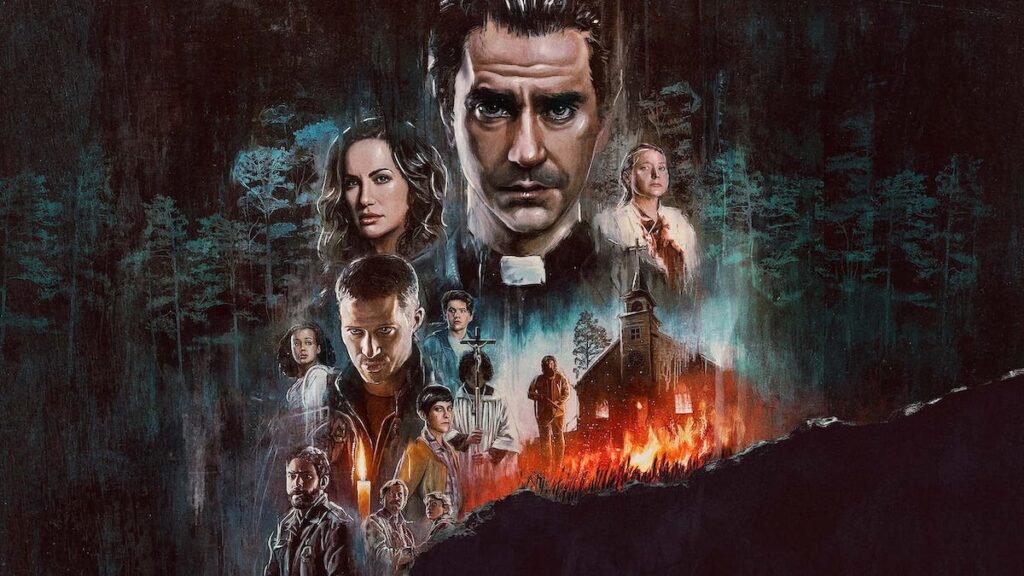
Of all the projects Mike Flanagan has created, Midnight Mass stands as the most complete expression of his talents as a filmmaker and storyteller. It may be his shortest Netflix series, but it is also the one that stays with you the longest. Long after the final episode ends, its questions, themes, and emotional moments continue to echo in your mind.
From a technical standpoint, Midnight Mass is extraordinary. Every scene feels carefully constructed, every conversation serves a purpose, and there is very little that could be described as filler. Flanagan directed every episode and maintained creative control over a story he had been developing for years. That patience shows in the finished product. The series feels remarkably confident in its vision, with each element working toward a larger thematic goal.
What makes Midnight Mass truly special, however, is its willingness to engage with difficult ideas. Beneath its vampire narrative lies a thoughtful exploration of faith, morality, mortality, and the human search for meaning. The series spends a great deal of time in conversation, and while some viewers may find its dialogue heavy, those discussions are central to its power. Rather than presenting simple answers, Flanagan examines the complexities of belief and the ways people use faith for both compassion and destruction. The show never reduces its characters to symbols or arguments. Instead, it treats them as deeply flawed individuals capable of both kindness and terrible mistakes. That humanity gives the story its emotional weight and prevents its larger themes from feeling preachy or one-sided. By the time Midnight Mass reaches its conclusion, it transforms what could have been a bleak horror tale into something unexpectedly moving. It is frightening, heartbreaking, and ultimately life-affirming. More than any other Flanagan project, it rewards repeated viewings, revealing new layers each time and securing its place as a modern horror masterpiece.