(Isstories Editorial):- Wenzhou, Zhejiang Apr 14, 2026 (Issuewire.com) – In modern industrial production, welding machines often face challenges from different national and regional power grid standards, resulting in significant variations in operating voltage ranges. Construction sites not only experience frequent voltage fluctuations but also frequently encounter various harmonic interferences from other large electrical equipment. These issues directly impact the stability of welding quality.
Even in complex interference environments, welding equipment must maintain excellent output characteristics and welding quality; otherwise, welding defects will occur, increasing rework costs and delaying project progress.
Traditional welding machine solutions often require compromises between performance and cost. They may involve adding extra inverter circuit components to cope with voltage variations, leading to high costs; or the machines may be bulky, increasing the risk of human error during operation; or the welding machine’s power handling capacity may be limited, making it uncompetitive in the market.
More on Isstories:
- The Evolution of Compact Laundry: How Jinhuan Leads as a Professional Custom Wall Mounted Tumble Dryer Manufacturer
- Keygree Wide Voltage Welding Machines: Solving Three Core Challenges in Global Welding Sites
- A Complete Buyer’s Guide to AMCO Vertical Wheel Repair Lathe Machines from China
- Meet Grenergy at WBE 2026: Reliable LiFePO4 Battery Solutions for RV, Marine and Solar Storage
- Lithic Enables Proof-Based AI Outputs for Smart Contract Enforcement
How Adaptive Wide Voltage Technology Reshapes Welding Operations
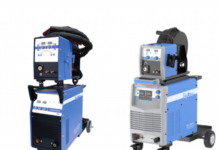
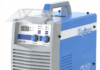
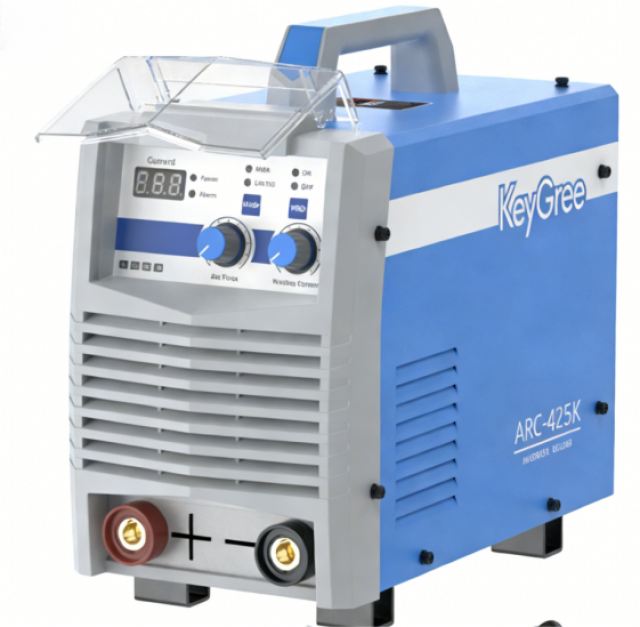
The core technology of the KEGREE ARC-425K/ARC-500K welding machine lies in its intelligent wide-voltage adaptive system. This system, through the collaborative design of a wide-voltage switching power supply module and an EMC rectifier module, can automatically adapt to significantly varying voltage environments in different regions worldwide, while maintaining a balance between cost and performance.
This technology comprises three key components: the EMC and rectifier module handles the initial processing of the power input; the filtering, energy storage, and power factor compensation module ensures stable energy transmission; and the peak surge absorption module protects the equipment from grid fluctuations.
Unlike traditional voltage switching methods, the wide-voltage adaptive technology used in KEGRE welding machines requires no manual intervention or additional equipment adjustments. This is thanks to its advanced central control module algorithm optimization, which enables the equipment to automatically identify and adapt to changes in input voltage while suppressing the effects of external electrical interference.
1. Keygree’s ARC-425K and ARC-500K welding machines, designed specifically for industrial welding, directly address key pain points in actual production. Wide voltage design (3PH 220/380/440V) is the most significant technical feature of these two models, meaning they can operate stably in various power grid environments, compatible with everything from outdated 220V three-phase industrial grids in developing countries to the standard 380-440V grids in developed countries. This adaptability is particularly important for manufacturing companies operating in a global market with varying power grid infrastructure, especially considering that welding operations often take place in locations with unfavorable power grid conditions, such as construction sites and shipyards. According to industry data, modern inverter welding machines generally possess wide voltage adaptability, operating normally within a 320-440V range, precisely to solve the common problem of unstable voltage in industrial settings.
2. The excellent compatibility with 6010 welding electrodes further demonstrates the equipment’s high level of process specialization. 6010, a cellulose-based welding electrode, is renowned for its excellent penetration and all-position welding performance, making it particularly suitable for applications requiring high weld strength, such as pipe welding and structural steel welding. Its “fast-freezing” characteristic means the molten pool can quickly transition from a liquid to a solid state, which is beneficial for controlling the molten pool shape and preventing molten metal from sagging during vertical and overhead welding operations. Traditional welding machines often face challenges in arc stability and heat input control when using 6010 electrodes. The ARC series, through its optimized inverter circuit design, can theoretically control the welding current waveform more precisely, thus fully leveraging the technological advantages of the 6010 electrode.
- The parameter “40% duty cycle @ 400A” reveals the equipment’s continuous operating capability in actual work cycles. Duty cycle (or load factor) refers to the proportion of time a welding machine can continuously weld without overheating within a 10-minute work cycle. 40% means that it can continuously weld for 4 minutes at 400 amps, followed by a 6-minute cooling period. This metric directly relates to production cycle time and efficiency. For operations requiring long-term continuous welding, such as ship section welding and large pressure vessel manufacturing, the load factor becomes a key consideration in equipment selection. In comparison, Lincoln Electric’s POWER WAVE® S700 welding machine can achieve 100% load factor at 700A output, but this is a top-of-the-line industrial model designed for high-intensity continuous operation, and its price is correspondingly higher.
The welding industry generally faces a shortage of skilled welders and difficulties in skills transfer. Digital welding equipment, through its built-in expert database and simplified operating interface, can lower the technical barrier to welding, enabling ordinary operators to achieve near-expert-level welding quality. For example, some digital welding machines have hundreds of built-in welding process parameters, covering various materials and thickness combinations from carbon steel to aluminum alloys. This “knowledge encapsulation” standardizes and replicates welding skills, reducing companies’ reliance on a few highly skilled welders. For the ARC series welding machines, the user-friendliness of the operating interface, the intuitiveness of parameter settings, and the richness of the process database will directly affect their value in solving the industry’s skills shortage problem.
In summary, the Keygree ARC-425K/500K welding machine, with its wide voltage adaptability, optimized support for 6010 welding electrodes, and reasonable duty cycle design, has clear problem-solving capabilities and a wide range of applications in the industrial welding field. From handling on-site power grid fluctuations to complex process control, from field construction to assembly line manufacturing, its technical characteristics directly address the core pain points in actual production. As welding technology develops towards intelligence, flexibility, and green practices, these industrial welding machines, with their solid fundamental performance and excellent expansion potential, will continue to play a vital role in the transformation and upgrading of the manufacturing industry.
This article was originally published by IssueWire. Read the original article here.