From crispy samosas and spicy chaat to creamy lassi and kulfi, I explore India’s diverse street food scene, with must-try dishes and top places to find them too.
India’s incredible diversity is reflected in its food, and nowhere is that more exciting than on its bustling streets. From regional favorites to much-loved classics, Indian street food offers an unforgettable introduction to the country’s rich culinary culture. While first-time visitors are often warned about the infamous “Delhi Belly”, there is no need to miss out on the flavors that make street food so special. With a little common sense and a few simple precautions, you can explore the country’s vibrant food scene confidently. Here are some must-try street foods and where to find them.
1. Chole Bhature
Chole Bhature is one of North India’s most loved comfort foods, with Delhi and Punjab particularly known for serving memorable versions of this hearty combination. The dish brings together spicy, richly seasoned chickpeas, known as chole, with bhature, a soft and fluffy deep-fried bread that is best enjoyed fresh and hot. The contrast between the bold, flavourful chickpeas and the light, golden bhature makes it a satisfying meal at any time of day, especially when served with pickles, onions or a cooling side.
For an authentic street food experience, head to the hole-in-the-wall-style dhabas around Chandni Chowk in Delhi, where you can enjoy this classic North Indian favourite amid the energy of one of the city’s busiest food destinations. Amritsar is another great place to try Chole Bhature, with plenty of local eateries and street-side spots serving their own delicious versions across the city.
2. Chaat: Pani Puri, Bhel Puri and Dahi Puri
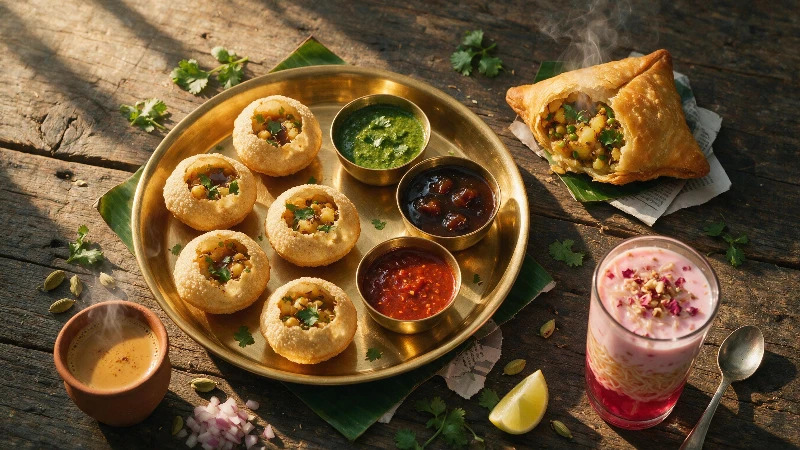
Chaat is the deliciously chaotic family of Indian street snacks that brings together crispy textures, tangy chutneys, sweet flavours and plenty of spice, making it one of the best ways to discover India’s street food culture. Pani puri is a perfect place to start. Known as gol gappe in Delhi and puchka in Kolkata, these crisp, hollow shells are filled with spiced potato and chickpeas before being flooded with chilled tamarind and mint water. The trick is to eat one in a single bite, because taking your time can quickly turn into a very messy experience.
Bhel puri offers a lighter, crunchier option, combining puffed rice with onion, tomato, coriander and sev, finished with tangy chutneys. Dahi puri takes things in a creamier direction, filling crisp shells with potato, chilled sweet yoghurt and pomegranate seeds. For some of the best chaat experiences, explore Delhi, Varanasi, Lucknow, and Indore. In Delhi, Chandni Chowk and Bengali Market are worth visiting, while Mumbai’s Girgaum Chowpatty is famous for its bhel puri.
3. Aloo Tiki
Aloo Tikki is a much-loved Indian street food that turns humble potatoes into something wonderfully crisp, spicy and satisfying. Made with mashed potatoes seasoned with a selection of fragrant spices, these golden potato patties are shaped by hand before being dipped in an egg wash and fried until the outside develops a deliciously crisp texture while the centre remains soft and comforting. Their simple ingredients are part of the charm, but the flavour makes them a popular snack across different parts of India.
You will find Aloo Tikki in markets and street food stalls throughout the country, often served with chutneys and other toppings that add extra sweetness, tang and spice. For travellers looking to try this classic street snack, the busy markets of Delhi are a great place to begin, while Bikaner and Jaisalmer in Rajasthan also offer plenty of opportunities to discover their own local versions. It is an easy, flavourful introduction to India’s much-loved street food culture.
4. Masala Dosa
Dosa is one of India’s most recognisable South Indian dishes, loved for its delicate crispness and satisfying flavours. Made from fermented rice and lentil batter, this thin crepe is cooked on a hot flat griddle until the edges turn golden, crisp and beautifully light. The most popular version is the masala dosa, which is filled with spiced mashed potatoes and traditionally served with coconut chutney and a bowl of sambar, a tangy lentil stew packed with vegetables.
There are plenty of variations to discover, from the wonderfully long and crispy paper dosa to the lacy rava dosa made with semolina. Mysore masala dosa comes with a layer of red chilli chutney inside, while set dosa is smaller, softer and usually served in a comforting stack. Watching a skilled cook prepare several dosas at once is part of the experience, especially in a busy tiffin house. For an authentic taste, head to Bangalore, Chennai or Mysore, as well as other parts of Karnataka and Tamil Nadu. In Bangalore, MTR and Vidyarthi Bhavan are iconic spots for this South Indian favourite.
5. Lachha Paratha
Laccha Paratha has a long history in the Indian subcontinent, with its origins often traced back to the 12th century, making this flaky favourite a dish with plenty of history behind it. The name “Lachha” comes from the Punjabi word for “ring,” referring to the distinctive circular layers created within the dough. What makes this paratha so tempting is the way it is prepared, with the dough repeatedly folded while ghee is added between the layers before it is cooked on a hot pan or in a tandoor. The result is a golden, crisp, and wonderfully flaky flatbread with soft layers tucked inside.
There is something especially comforting about freshly cooked bread, and Laccha Paratha is the kind of dish that makes it easy to understand why Indian breads are so popular. If you are exploring Amritsar, make your way to the small backstreet Kale Da Dhabar for a taste of this classic paratha, ideally served hot and fresh alongside a flavourful curry or traditional accompaniments.
6. Kachori
Kachori is one of India’s much-loved deep-fried street snacks, with strong roots in Rajasthan and plenty of regional variations to discover. Traditionally round in shape, it is made with a flaky pastry-like outer layer that is filled with a spicy mixture of lentils, peas, pulses or onions before being fried until golden and crisp. While the filling and seasoning can change depending on the region, the satisfying combination of a crunchy exterior and flavourful centre remains at the heart of this popular snack.
At first glance, Kachori might remind you of a Samosa, but the two have a very different character. Samosas are usually made with a firmer pastry, while Kachori has a softer, hand-patted outer layer that becomes beautifully flaky during frying. Most varieties are vegetarian and are commonly enjoyed as a quick breakfast or snack in northern India, often accompanied by chutneys or spicy sauces. For an authentic experience, explore the street food stalls and local markets across Rajasthan, particularly in the morning when freshly fried Kachoris are a popular breakfast choice. It is simple, filling, and full of the bold flavours that make Indian street food so enjoyable.
7. Vada Pav and Bhajiya Pav
Vada Pav is one of Mumbai’s most iconic street foods, a simple yet incredibly satisfying combination of a spicy potato fritter tucked inside a soft pav roll. Loved by office workers, students, and commuters, it has become a familiar part of everyday life in the city. The vada is made with mashed potatoes seasoned with mustard seeds, turmeric, and green chilli, coated in chickpea batter, and fried until golden and crisp. The soft, slightly sweet pav is then layered with green coriander chutney and sweet tamarind chutney before being finished with dry garlic chutney, while a fried green chilli is often served alongside for an extra kick.
Another popular variation is Bhajiya Pav, which replaces the potato vada with crispy onion fritters while keeping the same soft bread and chutney combination. It is a delicious alternative if you want to try something a little different.
For the classic Mumbai experience, head to Ashok Vada Pav near Kirti College in Dadar or explore the street vendors around Chhatrapati Shivaji Terminus during the evening rush. There is something special about enjoying one fresh from the stall while taking in the energy of Mumbai.
8. Bread Pakora
Bread Pakora is a popular North Indian breakfast and street food that turns simple ingredients into a wonderfully crisp and comforting snack. Made with bread, spiced potatoes, herbs and a seasoned batter, it usually consists of two triangular slices of bread with a generous layer of potato filling tucked between them before being deep-fried until golden and crunchy. The contrast between the crisp coating, soft bread and flavourful potato makes it an easy favourite, especially when served hot with chutney and a cup of chai.
As with any deep-fried street food, it is worth paying attention to the stall and the cleanliness of the cooking oil before ordering. A busy vendor with fresh food being prepared in front of you can make the experience much more enjoyable. Bread Pakora may be less traditional than some of India’s older street food classics, but it remains an eye-catching and delicious snack to discover. For a morning taste, explore the breakfast markets in Jaisalmer, Jaipur or Bikaner, where you can often find it freshly prepared.
9. Samosa
The Samosa is one of India’s most recognisable and much-loved street snacks, and it is easy to understand why it has become so popular far beyond the country. This crisp, flaky pastry is traditionally shaped into a triangle and filled with spiced potatoes, green peas, cumin, coriander and green chilli before being deep-fried until beautifully golden. Fresh from the fryer, it is usually enjoyed with tangy green mint chutney and sweet tamarind chutney, while Samosa Chaat takes things further by breaking the samosa apart and covering it with both chutneys and other flavourful toppings.
What makes the Samosa even more interesting is the way it changes across India. Punjabi versions tend to be large and packed with potato, while Bengali shingaras are smaller and may feature cauliflower and peanuts. In Hyderabad, lukhmi offers a different take, with its flatter, square shape and minced meat filling. You can find Samosas almost everywhere, from railway stations and bus stops to roadside stalls and home tea tables, making them an essential part of the Indian street food experience.
10. Falooda
Falooda is one of India’s most indulgent dessert drinks, bringing together layers of rose syrup, chilled milk, delicate vermicelli, basil seeds and ice cream in a tall glass. With its origins linked to Persian faloodeh, the dessert drink made its way to India during the Mughal era and has since become a much-loved treat in its own right. The basil seeds swell into tiny, jelly-like pearls, while the fine noodles are traditionally made from cornstarch or arrowroot. A generous scoop of kulfi, India’s rich and dense ice cream, sits on top, making every spoonful a mixture of different textures and flavours.
Falooda is best enjoyed with both a long spoon and a straw, because plenty is going on in the glass and you will want to reach every layer. For a classic experience, try Badshah near Crawford Market in Mumbai, while Mohammed Ali Road becomes a lively food destination during Ramadan, with falooda stalls appearing throughout the area. In Old Delhi, Giani’s di Hatti is another popular stop for its rabri-style version.
11. Lassi
Lassi is a refreshing yogurt-based drink with strong roots in Punjab, loved across India for its creamy texture and cooling taste. Some traditional versions are so thick and rich that you could almost eat them with a spoon, making lassi much more than an ordinary drink. Sweet lassi is blended with sugar and often finished with a spoonful of malai, or clotted cream, along with chopped pistachios. Salted lassi, known as namkeen lassi, combines yogurt with salt and roasted cumin, making it particularly refreshing after a warm afternoon exploring India’s busy streets. Mango lassi is perhaps the best-known version internationally, made with fresh mangoes and especially enjoyable during the summer months. For the freshest seasonal flavour, look for it between April and June when Alphonso and Kesar mangoes are at their best. For a memorable lassi experience, explore Amritsar, Delhi, Varanasi, Jaipur, and other parts of Rajasthan. In Varanasi, Blue Lassi near Manikarnika Ghat is known for its hand-churned lassi served in traditional clay cups, adding another lovely touch to this classic Indian drink.
It is undeniable that there is a stigma when it comes to hygiene and Indian street food. But at the same time, you cannot ignore that it is the heart of Indian cuisine. To make sure that you are eating good-quality street food, look for popular vendors where there are people waiting in a queue.