Christopher Nolan’s ‘The Odyssey’ transforms real locations into epic cinema. Explore the breathtaking destinations that bring Homer’s legendary journey to life.
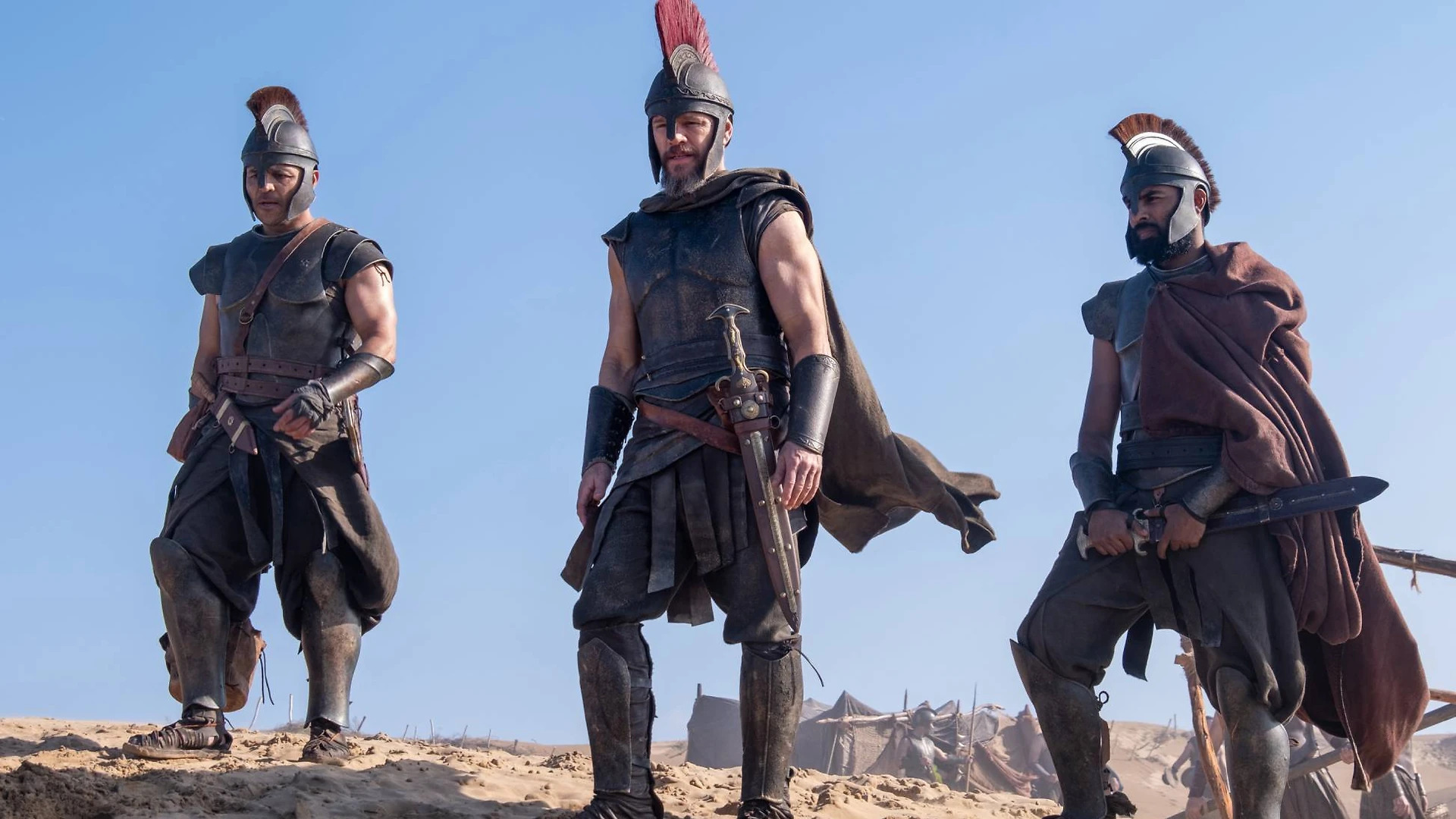
Christopher Nolan has never shied away from ambitious filmmaking, but ‘The Odyssey’ raises the bar in almost every way. Inspired by Homer’s timeless epic, the film transforms a legendary journey into a breathtaking cinematic adventure that spans some of the world’s most spectacular landscapes. From the rugged shores of Iceland and the historic coastlines of Greece to the deserts of Morocco, the mountains of Scotland, and the islands of Sicily, every location becomes an essential part of Odysseus’ long voyage home. Shot over 91 demanding days in 2025 using IMAX cameras, the production embraced real environments instead of relying on digital shortcuts. This gave each frame a remarkable sense of scale and authenticity!
Christopher Nolan has described it as the most physically demanding shoot of his career, a testament to the film’s extraordinary ambition. For audiences, however, the reward is effortless. ‘The Odyssey’ offers a globe-spanning adventure from the comfort of a cinema seat, making every destination feel unforgettable. So, let’s see the real-life locations where the movie was filmed!
Ithaca – Favignana Island, Sicily
Favignana, a picturesque island just off the western coast of Sicily, plays an essential role in bringing Odysseus’ homeland to life in Christopher Nolan’s ‘The Odyssey’. While the interiors of Odysseus and Penelope’s palace were filmed on the Sony lot in Los Angeles, the island’s dramatic landscape provides the unforgettable exterior setting for Ithaca. The choice feels especially meaningful because Favignana is one of the rare real locations that also appear in Homer’s original epic. In ‘The Odyssey’, Odysseus and his crew stop at the island, often referred to as the “goat island,” to rest and replenish their supplies before continuing their long journey.
At the heart of this location stands the imposing Castello di Santa Caterina, a 15th-century fortress perched high above the island. Its commanding position and sweeping views made it the perfect stand-in for the palace overlooking Odysseus’ kingdom. Reaching the castle, however, was far from simple. Every morning, the cast and crew faced a demanding climb of nearly 900 feet to reach the filming location, while helicopters were occasionally used to transport people and equipment when necessary. The logistical challenges were significant, but Nolan believed the effort was more than worthwhile. The director admitted that the castle was anything but practical for a major film production. Yet practicality quickly became secondary once he experienced the location in person. Standing at the summit and taking in the breathtaking panorama, Nolan found exactly what he had imagined for Ithaca. The dramatic cliffs, endless sea views, and isolated atmosphere captured the spirit of Odysseus’ home in a way that no studio set could replicate.
That commitment to authentic locations is one of the defining strengths of ‘The Odyssey’. Rather than relying on visual effects to recreate ancient Greece, Nolan sought places that already carried a timeless quality. Favignana delivers exactly that, blending history, natural beauty, and cinematic grandeur into one remarkable setting that makes Odysseus’ long-awaited return home feel both believable and unforgettable.
Traveling tips:
Getting to Favignana is part of the experience. Take a ferry from Trapani on Sicily’s western coast, and you will arrive on this charming island in under an hour. Stay in the heart of Favignana town with one of its many Airbnb options, or choose I Pretti Resort or Dimora Cala del Pozzo for a more luxurious escape. While you are there, make time for the short trip to Monte Santa Caterina, where the hilltop castle rewards every step with unforgettable panoramic views.
Troy – Aït Benhaddou in Morocco
Aït Benhaddou has long been one of the world’s most celebrated filming locations, and Christopher Nolan’s ‘The Odyssey’ adds another remarkable chapter to its cinematic legacy. This stunning 11th-century fortified village near Marrakech has welcomed countless historical epics over the years, making appearances in films and series such as ‘Gladiator’, ‘Lawrence of Arabia’, ‘Prince of Persia: The Sands of Time’, and ‘Game of Thrones’. Its timeless architecture and dramatic desert surroundings continue to make it a natural choice for stories set in the ancient world.
For ‘The Odyssey’, Nolan transformed the historic site into the legendary city of Troy. By February 2025, an enormous production was underway as the crew recreated the city’s final moments before its dramatic fall. The scale of the project was extraordinary. Around 2,000 extras filled the streets while an immense practical set brought ancient Troy back to life with remarkable attention to detail. Rather than relying heavily on digital effects, Nolan once again chose to build as much as possible, giving the cast and crew a fully immersive environment to work within.
The impressive set was designed by production designer Ruth De Jong, whose vision covered approximately 2.5 acres and featured a towering 48-foot Temple of Athena at its center. Every structure was carefully crafted to capture the grandeur of one of mythology’s most iconic cities, creating a setting that looked convincing from every angle. Nolan has explained that the production demanded an environment on a truly colossal scale, one that would completely immerse both the performers and the audience. That dedication to practical filmmaking is exactly what makes Aït Benhaddou such an iconic and unforgettable stop on Odyssey’s journey. Blending centuries of real history with a large-scale cinematic craftsmanship, the location delivers the epic grandeur that Nolan has become known for while giving Troy a striking sense of authenticity.
Traveling tips:
Finding a place to stay in Aït Benhaddou is refreshingly simple, with plenty of Airbnb options offering an authentic base to explore this historic village. If you prefer a more traditional Moroccan experience, Bagdad Café is a popular choice among travelers and consistently earns praise on TripAdvisor. Located just 200 meters from the UNESCO World Heritage kasbah, the charming riad places you within easy walking distance of the iconic fortress, making it an excellent option for anyone hoping to soak in the atmosphere that inspired Christopher Nolan’s ‘The Odyssey’.
The Trojan horse – Essaouira, Morocco
Some of Christopher Nolan’s ideas for ‘The Odyssey’ have been decades in the making, and the film’s striking Trojan Horse sequence is a perfect example. The director first imagined his own interpretation of this legendary moment in the early 2000s during a brief period when he was connected to the film ‘Troy’. Although that project ultimately moved in a different direction, the concept stayed with him, waiting for the right opportunity to be brought to life.
That opportunity finally arrived with ‘The Odyssey’. Rather than familiarly presenting the famous wooden horse, Nolan envisioned it as a mysterious offering, partially buried in the sand as though it had been left behind by the gods themselves. The image carries an eerie sense of grandeur and perfectly reflects the blend of myth and realism that defines his filmmaking style.
To create this unforgettable sequence, Nolan chose the coastal city of Essaouira in Morocco. Known for its windswept beaches, historic ramparts, and dramatic Atlantic coastline, the location provides a timeless backdrop that easily transports audiences to the ancient world. Beyond hosting the Trojan Horse sequence, Essaouira also serves as the point where Odysseus and his men begin their long voyage home after the fall of Troy. It marks the beginning of the legendary journey that drives the heart of the story.
Interestingly, the name Essaouira translates from Arabic as “little picture,” a meaning that feels almost ironic when viewed through Nolan’s lens. On the massive IMAX screen, there is nothing small about this destination. Every sweeping shoreline, crashing wave, and towering structure is captured with extraordinary scale, making the landscape feel as important as the characters themselves. Essaouira’s natural beauty and rich history make it far more than a filming location. In ‘The Odyssey’, it becomes the first chapter of an epic adventure, proving once again that Nolan’s commitment to real places gives even the oldest myths a fresh and unforgettable sense of life.
Traveling trips:
Essaouira offers far more than its connection to ‘The Odyssey’. Often called Africa’s “Windy City,” this relaxed coastal destination blends a creative, bohemian atmosphere with centuries of Mediterranean maritime history. Its steady Atlantic winds have made it a favorite for windsurfing and kitesurfing, while the wide sandy beaches are perfect for horseback rides along the shoreline. Beyond the coast, the lively medina invites visitors to wander through its bustling souks, artisan shops, and cafés. With its own international airport serving several European cities, Essaouira is both accessible and unforgettable.
The Cyclops’ cave – Messenia, Greece
Christopher Nolan’s search for authentic locations led him to one of Greece’s most legendary landmarks for the unforgettable encounter with Polyphemus. Rather than constructing a fictional cave, ‘The Odyssey’ uses the naturally dramatic setting of Nestor’s Cave, perched above the spectacular golden sands of Voidokilia Beach in the Messenia region. The location brings together breathtaking scenery and centuries of mythology, making it a fitting backdrop for one of the epic’s most memorable chapters.
Nestor’s Cave already holds an important place in Greek legend. According to local mythology, it was where Nestor, the wise King of Pylos, hid the cattle he had stolen from the sun god Helios. Whether the tale is history or folklore, the cave has long been associated with the rich storytelling traditions that surround ancient Greece. That deep connection to myth made it a natural choice for Nolan, whose adaptation aims to ground Homer’s timeless world in real places rather than digitally created landscapes.
Although visitors cannot enter the cave itself, the surrounding area offers more than enough to capture the imagination. The elevated viewpoint overlooks the striking horseshoe-shaped shoreline of Voidokilia Beach, widely regarded as one of Greece’s most beautiful coastal landscapes. The combination of crystal clear waters, rolling dunes, and rugged cliffs creates a setting that feels untouched by time.
For fans of ‘The Odyssey’, this destination now carries two remarkable legacies. It remains a place steeped in ancient Greek mythology while also becoming part of modern cinematic history through Nolan’s ambitious production. Standing above the beach, it is easy to understand why the filmmaker chose this extraordinary location. The landscape possesses the same sense of mystery, grandeur, and timeless beauty that has defined these legends for thousands of years, making the journey feel every bit as epic off-screen as it does on-screen.
Traveling tips:
Pylos is the ideal base for exploring one of the most historic corners of the Peloponnese and following the path of ‘The Odyssey’. Both Homer’s epic and Christopher Nolan’s film bring the town into the story as Telemachus, played by Tom Holland, arrives in search of news about his father Odysseus. Beyond its cinematic appeal, Pylos offers beautiful beaches and a relaxed coastal atmosphere, along with fascinating ancient Greek landmarks waiting to be explored. Before you leave, make sure to try lalagia, the region’s beloved crispy dough strips, traditionally served with a generous dusting of sugar and cinnamon.
The Laestrygonians – Culbin Forest in Scotland
Scotland becomes one of the most striking stops on Christopher Nolan’s journey through ‘The Odyssey’. This marks only the second time the director has chosen the country as a filming location. His previous visit came with the dramatic opening sequence of ‘The Dark Knight Rises’. But this time, the rugged landscapes of Scotland’s east coast play a far more significant role in bringing Homer’s epic to life.
One of the film’s most memorable sequences unfolds in Culbin Forest, where Odysseus encounters the fearsome Laestrygonians. Nestled along the Moray Firth coast, the vast pine woodland offers a dramatic setting that perfectly suits the mystery and danger surrounding this chapter of the story. The towering trees, winding forest trails, and remote atmosphere create a landscape that feels untouched by time, allowing the ancient myth to unfold in a setting that appears both beautiful and unsettling.
Nolan’s preference for real locations over heavily constructed sets is once again evident here. Rather than relying on visual effects to create an intimidating environment, the natural character of Culbin Forest provides everything needed to immerse audiences in Odysseus’ perilous journey. The dense woodland and wild Scottish coastline add a powerful sense of realism that strengthens the film’s visual storytelling while preserving the epic scale expected from an IMAX production.
Away from the action on screen, the Moray Firth region offers a completely different experience. The area is known for its peaceful coastal scenery, abundant wildlife, and welcoming communities, making it an appealing destination for travelers. Despite portraying the terrifying home of the Laestrygonians in ‘The Odyssey’, the real-life locals are famously warm and friendly. It is a charming contrast that highlights Nolan’s ability to transform familiar places into unforgettable cinematic worlds. Culbin Forest proves that with the right vision, even a tranquil Scottish landscape can become the setting for one of mythology’s most dramatic encounters.
Traveling tips:
Culbin Forest is around an hour’s drive from Inverness, making it an easy addition to a Highland road trip. For a comfortable stay, consider The Crown & Anchor or the Kimberley Inn in the picturesque fishing village of Findhorn. The village is an excellent base for exploring not only Culbin Forest but also nearby attractions such as Brodie Castle, renowned local whisky distilleries, and the scenic Moray coastline.
Circe’s hut – Findlater Castle in Scotland
Christopher Nolan found another spectacular Scottish location for ‘The Odyssey’ with the dramatic ruins of Findlater Castle. Perched high above the Moray Firth on a rugged 50-foot cliff, the castle becomes the home of Circe, played by Samantha Morton. In Homer’s epic, Circe is the mysterious sorceress who lives in isolation on the remote island of Aeaea, where she is surrounded by enchanted animals and possesses the power to transform unsuspecting visitors. The striking coastal setting gives her secluded world an atmosphere that is both beautiful and unsettling.
The castle itself carries centuries of history. Once the seat of the Earls of Findlater and Seafield, its weathered ruins overlook the crashing waves below, creating a landscape that feels perfectly suited to the mythical tone of the story. Rather than relying on elaborate digital environments, Nolan once again chose a real location whose dramatic character naturally enhances the film’s visual storytelling.
Visitors should keep in mind that Findlater Castle is a protected archaeological site. While the ruins cannot be accessed directly for safety and preservation reasons, there are still excellent ways to experience the location. A nearby grassy viewing platform offers panoramic views of the castle and surrounding coastline, allowing visitors to appreciate its commanding position without disturbing the historic structure.
Another worthwhile stop is Sunnyside Beach, which also appears in *The Odyssey*. From the shoreline, the castle rises dramatically above the cliffs, offering one of the most impressive perspectives of Circe’s cinematic home. The combination of rugged coastal scenery, centuries of history, and Hollywood magic makes this corner of Scotland a memorable destination for both film fans and history lovers. It is another example of how Nolan transforms remarkable real-world landscapes into unforgettable settings for one of mythology’s greatest adventures.
Traveling tips:
If you are exploring this part of Scotland, the Moray Coastal Trail is well worth adding to your itinerary. Nearby, the charming harbor town of Cullen is famous for its signature dish, Cullen Skink. It is a comforting smoked haddock and potato soup that easily outshines anything from Circe’s mythical kitchen. For an overnight stay, consider The Seafield Arms or The Royal Oak Hotel in Cullen, while Cullen Bay Hotel in nearby Buckie is another excellent choice. Scenic campsites are also available for those who prefer the outdoors.
Hades – Hjörleifshöfði in Iceland
Iceland once again became one of Christopher Nolan’s most extraordinary filming destinations, returning to the director’s filmography after its unforgettable role in ‘Interstellar’. This time, its dramatic volcanic landscapes and endless horizons helped shape some of the most haunting chapters of ‘The Odyssey’. Over a demanding 12-day shoot, around 1,000 people took part in the Icelandic production, including 450 local extras alongside Matt Damon, Zendaya, and Elliot Page. One of the key locations was the small harbor of Landeyjahöfn, where Odysseus’ ship was brought to life using the ‘Draken’. It is a modified Viking longboat that perfectly matched the film’s ancient setting. The vessel became a striking centrepiece against Iceland’s rugged coastline, reinforcing Nolan’s commitment to practical filmmaking and authentic locations.
The journey grew even more dramatic at Hjörleifshöfði, a breathtaking stretch of black sand beach located roughly 50 miles away. Filmed during Iceland’s endless June daylight, this stark volcanic landscape was transformed into the entrance to the underworld. Nolan chose the location early in the production process, believing its cold, desolate beauty captured the atmosphere of Hades better than any studio set could. The endless black sands and towering rock formations create an environment that feels distant from the world of the living, making Odysseus’ descent all the more powerful.
For Nolan, Iceland represented the complete opposite of Ithaca. As the story carries Odysseus farther north into increasingly harsh and unforgiving landscapes, the contrast between home and exile becomes even more striking. The result is one of this film’s most visually unforgettable sequences. It once again proves that real landscapes often deliver the greatest cinematic magic.
Traveling tips:
A road trip from Reykjavík to Landeyjahöfn takes around three hours, but the journey is well worth it for devoted film fans. Accommodation is limited, with Hótel Lóa and Seljalandsfoss Horizons among the best nearby options. While you’re here, explore the breathtaking Westman Islands, famous for volcanic scenery and the world’s largest puffin colony, along with landscapes featured in several iconic films.