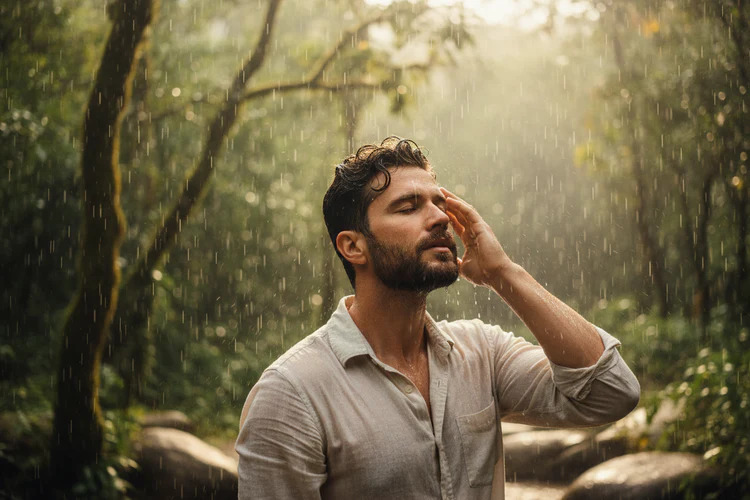
Monsoon makes a negative impact on our hair. Learn how to take care of hair during this specific season in the simplest manner. All of them can be really helpful.

The rainy season comes as a relief after the long summer days. The temperature reduces a lot after suffering in the scorching heat. That is why it is a season that most of the people love. However, as it comes with a break from summer, it also comes with many other things as well. The exposure to rain causes many damages to our hair that are quite difficult to control sometimes. The rainwater causes frizz, scalp infection, hair fall, and more. Along with that, our hair gets greasy and tangled very easily. During this particular season, handling hair has become much more difficult than ever. It is one of the most common problems that everyone goes through. Having healthy hair during the rainy season is quite an impossible job. Rainwater makes a negative impact on both our scalp and hair strands. So, it is really important to take extra care of your hair in the rainy season. Let’s find out more about how to take care of your hair in the rainy season-
- Why does our hair need more care during the rainy season?
Before we get into the specific tips, it is essential to understand why rainy weather affects our hair differently. If you do not do so, you will not be able to take care of your hair. Here are the major reasons-
- More humidity:
During the monsoon, the humidity level increases on a large scale. This causes more moisture in the air and leads to more frizz, hair cuticle swelling, dryness, and difficulty in managing hair. The excessive humidity causes all these problems. That is why every individual faces more hair-related issues during the rainy season.
- Hair fall:
Hair fall is a common problem that most people face during the rainy season. Many individuals face massive hair loss during this season. It happens due to poor scalp hygiene, excessive humidity, and weak roots. A little bit of seasonal hair fall is normal, but most people see an absurd amount of hair fall in this season.
- Scalp infection:
During this season, people get more dirt and sweat on their scalp. For the humidity, the amount of them increases even more. Such weather is absolutely perfect for bacterial and fungal growth. That is why more people experience more scalp infection that leads to more hair fall.
- Excess oil production:
During the rainy season, the humidity causes more oil production in our scalp. Hair and scalp appear greasier than ever. And that is what causes more hair fall. Thus, it is another reason why hair fall became a huge problem.
- More pollution:
Pollution is a huge problem for all individuals. When rainwater mixes with pollutants, it causes more hair loss. This clogs the scalp and damages our hair further. That is what leads to more hair fall. During the monsoon, pollution boosts hair fall.
These are the major reasons why everyone faces hair fall issues in the summer. Here are some of the best ways to take care of your hair. It can be really helpful for you-
- Wash hair regularly:
One of the most important steps that you need to follow while taking care of your hair during the monsoon is washing your hair. It is important to get rid of all the dirt, sweat, pollution, and rainwater from your scalp. If you do not wash your hair regularly, then you will not be able to maintain the health of your hair. All these lead to more buildups and clog your hair follicles. When the follicles are clogged, the roots of your hair get weak automatically. This leads to more hair fall. During the rainy season, the humidity level is high, and the problem becomes unavoidable. Thus, if you keep your hair and scalp clean, it will be really easy to take care of your hair. While doing this, you must keep a few things in mind. For example, you should use a mild shampoo, wash your hair twice or thrice a week, clean your scalp more, rinse your hair thoroughly, and more. By following this strategy, you will be able to take care of your hair.
- Keep your scalp dry:
A damp scalp is one of the major reasons for damaged hair. If you keep your hair damp with rainwater, sweating, or hair wash, then there will be more bacterial growth in your hair. It can increase the chance of getting fungal problems. Once you get such a problem, it will be really difficult to take care of your hair. It is seen that fungal problems damage your scalp and hair. In addition to that, it increases the chances of getting more buildup in your hair that weakens your hair follicles. Therefore, it directly impacts hair fall. If your hair is always damp, then it will get even weaker with each passing day. Therefore, it is another problem that most people need to deal with. At this time, you need to pat dry your hair, use a soft microfiber towel, use a hair dryer on cool mode, and let your hair air dry. It will help you to protect your hair in a much easier manner.
- Don’t let rainwater stay on your hair:
Many people assume that rainwater is naturally clean because it falls from the sky. However, rainwater can contain dust, pollution, and various airborne contaminants that accumulate as it travels through the atmosphere. When these particles settle on your hair and scalp, they may contribute to irritation, dryness, and other hair-related concerns. For this reason, it is important not to leave rainwater on your hair for long periods. If your hair gets wet in the rain, rinse it with clean water as soon as you can to remove any impurities. Depending on how dirty or greasy your hair feels, you may also choose to wash it with a mild shampoo. Afterward, make sure to dry your scalp thoroughly, as excess moisture can create an environment that encourages fungal growth and scalp infections. Taking these simple precautions can help protect your hair from damage, maintain scalp health, and reduce common monsoon hair problems such as dandruff, frizz, and excessive hair fall.
- Use mild and nourishing shampoo:
The rainy season often leads to increased exposure to humidity, sweat, dirt, and pollution, making regular hair washing necessary. Because your hair may need to be cleansed more frequently during this time, choosing the right shampoo becomes especially important. A mild, nourishing shampoo can effectively remove buildup from the scalp and hair without stripping away the natural oils that help maintain moisture and softness. When selecting a shampoo, consider formulas that contain beneficial ingredients such as aloe vera, green tea extracts, tea tree oil, argan oil, or coconut-derived cleansers. These ingredients can help cleanse, soothe, and nourish the scalp while supporting overall hair health. They may also help reduce irritation and keep hair feeling fresh and manageable during humid weather. At the same time, it is best to avoid harsh shampoos that contain excessive sulfates or other aggressive cleansing agents. Such products can leave hair feeling dry, rough, and brittle. Using a gentle shampoo regularly can help maintain a healthy scalp and stronger, shinier hair throughout the rainy season.
- Deep condition weekly:
When you are trying to protect your hair, it is important to condition it. Without conditioner, you will not be able to get healthy hair. Conditioner is a certain product that helps to get rid of frizz and improve the texture of your hair. Every individual needs to deep condition their hair once a week. If you can do so, then you will be able to give nourishment to your hair, which will prevent sudden breakage. In addition to that, deep conditioning will help you to improve elasticity, restore softness, and repair dryness as well. You might think that deep conditioning will need a lot of time and things. But, you can do that seamlessly with some easily available items like yogurt hair mask, coconut oil mask, honey treatment, aloe vera mask, and more. This way, you will be able to easily protect your hair.
- Never skip conditioner:
Conditioner plays an essential role in maintaining healthy hair during the rainy season. While many people focus primarily on shampooing, conditioning becomes even more important when humidity levels are high. Excess moisture in the air can cause the hair cuticles to lift, leading to frizz, tangles, and a rough texture. A good conditioner helps smooth the cuticle layer, making hair softer, more manageable, and less prone to knotting. For best results, apply conditioner mainly to the mid-lengths and ends of your hair, where dryness and damage are most common. Avoid using large amounts directly on the scalp, as this may make hair feel greasy or weigh it down. Allow the conditioner to remain on your hair for a few minutes before rinsing thoroughly. If your hair tends to become oily quickly, choose a lightweight formula that provides moisture without excess heaviness. Regular conditioning helps maintain hydration, improves shine, reduces frizz, and keeps hair looking healthy and manageable throughout the rainy season.
- Avoid excessive heat styling:
Styling your hair with various tools might give you a pretty look, but it damages your hair to the core. If you keep on doing heat styling frequently, your hair will get completely damaged. During the monsoon, our hair gets damaged through these tools in a much easier way. That is why you must avoid using curling irons, hair dryers, hot brushes, and straighteners. The more you reduce its use, the better it will be for your hair. Such heating tools can make your hair more frizzy, weak, and damaged. It is seen that due to such tools, hair gets broken much more easily. That is why it is really important to avoid these. Instead of these, you can try other hair styling methods like braids, twist styles, heatless curls, and loose buns. This way, you will be able to create interesting looks without damaging your hair.
- Oil your hair correctly:
Hair oiling can be a valuable part of your rainy-season hair care routine when practiced properly. Natural oils help nourish the scalp, strengthen hair strands, and improve overall hair health. However, during humid weather, leaving oil on the scalp for long periods may attract dust, dirt, and excess moisture, which can contribute to scalp irritation or microbial growth. For this reason, it is important to use oil in moderation and follow the correct application method. A good approach is to apply oil one or two hours before washing your hair. Gently massage it into the scalp using your fingertips to promote blood circulation and help distribute the oil evenly. Avoid using excessive amounts, as too much oil can be difficult to wash out and may leave the scalp feeling greasy. Popular choices include coconut oil, almond oil, argan oil, olive oil, and jojoba oil. After oiling, wash your hair thoroughly with a mild shampoo. Proper oiling can nourish the roots, improve scalp health, and leave hair softer and more manageable.
- Go for protective hairstyles:
Keeping your hair open during the rainy season may seem appealing, but it can quickly become tangled, frizzy, and difficult to manage due to increased humidity and moisture in the air. Protective hairstyles are a practical solution because they help reduce friction, minimize exposure to environmental pollutants, and prevent excessive tangling. They also make it easier to keep your hair neat and under control throughout the day. Simple styles such as braids, low buns, ponytails, twisted updos, and loose plaits are excellent choices during monsoon months. These hairstyles help keep the hair secure while reducing the chances of breakage caused by constant brushing and detangling. They can also protect the ends of your hair, which are often more vulnerable to dryness and damage. Additionally, protective styles can help maintain your hairstyle for longer, even in humid conditions. By choosing comfortable and gentle hairstyles, you can reduce stress on your hair strands and keep your hair healthier, smoother, and more manageable throughout the rainy season.
- Protect your hair from humidity:
Humidity is one of the biggest reasons for frizzy hair. That is why, when the humidity level is increasing during the monsoon, it is important to take some extra care for your hair. By protecting your hair from the intense humidity, you will get the chance to achieve healthy and shiny hair. You can use anti-frizz serums, lightweight hair creams, leave-in conditioners, and more. Along with these, you also need to stop touching your hair continuously and tie your hair while going out. If you can do this, then you will be able to protect your hair from the excessive humidity. Following a few simple steps can lead you to improve your hair in a hassle-free way. Thus, it is another major reason why your hair gets damaged during the monsoon.
- Use a wide-tooth comb:
Using a wide-tooth comb is one of the simplest yet most effective ways to protect your hair during the rainy season. Hair becomes more fragile when wet, making it more susceptible to breakage, stretching, and damage. Attempting to detangle wet hair with a fine-tooth comb or brush can increase tension on the strands and lead to unnecessary hair fall. A wide-tooth comb helps detangle hair gently while reducing pulling and friction. It allows knots to be removed more easily, which can minimize breakage and help prevent split ends. This is especially beneficial during the rainy season when humidity often causes hair to become tangled and difficult to manage. When combing your hair, always start from the ends and work your way upward gradually. This method helps remove knots in sections rather than pulling through the entire length of the hair at once. Regular use of a wide-tooth comb can make hair easier to manage, reduce damage, and support healthier-looking hair throughout the monsoon season.
- Do not do tight hairstyles:
While protective hairstyles can help manage hair during the rainy season, it is important to avoid styles that pull excessively on the roots. Constant tension on the hair follicles can weaken them over time and contribute to increased hair fall, breakage, and scalp discomfort. During the monsoon, when hair is already more vulnerable due to humidity and moisture, tight hairstyles can place additional stress on the strands. Hairstyles such as extremely tight ponytails, tight braids, heavy hair extensions, and tightly secured buns should be avoided whenever possible. These styles may look neat, but prolonged tension can damage the hair shaft and affect the health of the scalp. Instead, choose loose and comfortable hairstyles that hold your hair in place without pulling on the roots. Soft braids, relaxed ponytails, and loose buns are excellent alternatives. Gentle hairstyles reduce strain on the follicles, improve comfort, and help maintain healthier hair growth while minimizing unnecessary breakage and hair loss during the rainy season.
- Maintain scalp hygiene:
During the monsoon, you need to be a little more conscious about your scalp hygiene. When your scalp is not clean, you will not be able to protect your hair. In this particular season, your scalp gets dirtier much more quickly. That is why it requires a little bit of extra care. The massive humidity, dirt, oil, and sweating make your scalp unhygienic. And it directly causes more hair fall. When you are trying to protect your hair, you need to clean the scalp every other day. In such weather, you must wash your hair, especially the scalp, twice or thrice a week. If you can do so, only then will you get the chance to keep your scalp and hair clean. This will assist you in preventing clogged follicles and reducing hair fall. It is a simple step, yet most people fail to do so. You need to be a little more conscious about this. By doing so, you will be able to attain a satisfying result.
- Don’t brush wet hair aggressively:
Hair is at its most vulnerable when it is wet. The strands become more elastic and stretch easily, which increases the risk of breakage, split ends, and unnecessary hair fall. During the rainy season, when hair is frequently exposed to moisture, it is especially important to handle wet hair with care. Brushing or combing aggressively can weaken the hair shaft and cause mechanical damage that may lead to long-term hair health issues. Instead of reaching for a brush immediately after washing your hair, begin by gently removing excess water with a soft towel. Allow your hair to air-dry partially before attempting to detangle it. When combing, use a wide-tooth comb and work through knots slowly and carefully. Start from the ends and gradually move upward to avoid pulling on the roots. Taking a few extra minutes to detangle gently can make a significant difference. This simple habit helps reduce breakage, minimizes hair loss, and keeps your hair healthier, stronger, and more manageable throughout the rainy season.
- Eat nutritious food:
Healthy hair starts from within, making proper nutrition an essential part of rainy-season hair care. While shampoos, conditioners, and treatments can improve the appearance of your hair, no external product can fully compensate for nutritional deficiencies. Hair follicles require a steady supply of nutrients to support growth, strength, and overall scalp health. Protein is especially important because hair is primarily made of a protein called keratin. Good sources include eggs, fish, poultry, lentils, and beans. Iron also plays a vital role by helping deliver oxygen to hair follicles, and it can be found in foods such as spinach, legumes, and lean meats. Biotin supports healthy hair structure and is available in nuts, seeds, and eggs. Zinc contributes to scalp health and normal hair growth, with sources including pumpkin seeds, whole grains, and seafood. A balanced diet that includes a variety of nutrient-rich foods can help strengthen hair, reduce breakage, and support healthy growth. Consistent healthy eating habits are an important foundation for maintaining strong, resilient hair.
- Do not neglect dandruff issues:
As the weather changes rapidly and the humidity in the air increases, the dandruff problems increase even more. Dandruff is one of the biggest problems that every individual faces. Increasing of dandruff in your hair can lead to many problems. It can lead to more itching, scalp irritation, flaking, and increased hair fall. Your hair can also get more dull due to getting excessive dandruff. Due to the monsoon, getting dandruff is quite common, but you need to take the right measures. At this time, you should use anti-dandruff shampoos, avoid scratching, and maintain scalp cleanliness. If all these do not work out for you, then you should reach out to the professionals. Dermatologists can help you in this matter and assist you in treating the dandruff in the right manner. Otherwise, you can face many other problems, which will damage your hair even more.
- Reduce stress level:
Stress can have a significant impact on hair health and is often an overlooked factor when addressing hair fall. During periods of prolonged or chronic stress, the body may experience hormonal and physiological changes that can disrupt the normal hair growth cycle. As a result, more hair follicles may enter the shedding phase, leading to increased hair loss and thinning over time. Even if you follow a good hair care routine, unmanaged stress can make it difficult to maintain healthy hair. Incorporating stress-management practices into your daily routine can help support both hair health and overall well-being. Regular physical activity, such as walking or exercising, can help reduce stress and improve circulation. Meditation, deep breathing exercises, and yoga are also effective ways to promote relaxation and mental balance. Additionally, getting adequate sleep each night allows the body to recover and function properly. By managing stress consistently, you can create a healthier environment for hair growth while also improving your physical and emotional health.
- Stay hydrated:
Hydration plays a significant role in your hair health, and most people do not pay any attention to it. As the rainy days get cooler, many are out there who do not drink water. However, water can help you to maintain the health of your hair. It can help to improve hair elasticity, moisture balance, scalp health, and nutrient transport. Without drinking water, you will not be able to fulfil these requirements. Hydration is one of the most important things. It has a great role in every small thing in our body. So, if you do not pay much attention to hydration, you will not be able to take care of your hair. That is why, even in the monsoon, you need to have a keen eye on your hydration level. It can help you to get a better result in a much more hassle-free manner.
- Use hair serums wisely:
Hair serums can be a valuable addition to your rainy-season hair care routine, especially when dealing with humidity-related problems such as frizz and flyaways. These products create a lightweight protective layer around the hair shaft, helping to shield it from excess moisture in the air. As a result, hair often appears smoother, shinier, and more manageable even in damp weather conditions. When used correctly, hair serums can reduce frizz, enhance shine, improve smoothness, and control unruly strands without making the hair feel heavy. To achieve the best results, apply a small amount of serum to damp or dry hair after washing. Focus mainly on the mid-lengths and ends, as these areas are more prone to dryness and damage. Avoid applying large amounts directly to the scalp, as this can make hair appear greasy and may lead to product buildup. Using the right amount of serum can help protect your hair from humidity, improve its overall appearance, and keep it looking polished and healthy throughout the rainy season.
- Trim your hair regularly:
Regular hair trims are an important part of maintaining healthy-looking hair during the rainy season. Increased humidity can make hair more prone to frizz, tangling, and split ends, especially if the ends are already damaged. Trimming your hair regularly helps remove worn or split ends before they travel further up the hair shaft and cause additional breakage. One of the main benefits of routine trims is the reduction of split ends, which can make hair appear healthier and smoother. Trims can also help reduce tangling, making daily hair care easier and more comfortable. In addition, freshly trimmed hair often looks neater, fuller, and more manageable, improving its overall appearance. Styling can also become simpler because healthy ends are less likely to become unruly or frizzy. While trimming does not directly speed up hair growth, it helps maintain the condition of your hair and prevents unnecessary damage. Scheduling a trim every six to eight weeks can help keep your hair strong, tidy, and healthy throughout the humid monsoon months.
If you can focus on a few small things and take the right actions, then you will be able to take care of your hair in a much easier manner. All these can help protect your hair during the monsoon. Thus, be a little more attentive and implement the right steps.