Communication skills are considered one of the most important life skills. Learn a few effective ways to improve communication skills in a hassle-free manner.
Communication is a particular skill that influences every part of life. It has been seen that it is a skill that is equally important in both your professional and personal life. How your communication shapes the relationships, opportunities, understanding, and trust. If you have strong communication skills, then you will get the chance to express your ideas clearly. It can also help avoid misunderstandings and solve any problems much faster. When it comes to good communication, it is not only about speaking well. It also includes understanding emotions, listening carefully, and choosing the right words while talking. Better communication will assist you in responding thoughtfully. This specific skill can help you in many aspects of your life. Thus, work on improving your communication skills. The right steps can assist you in attaining a satisfying result-
- Listen more carefully:
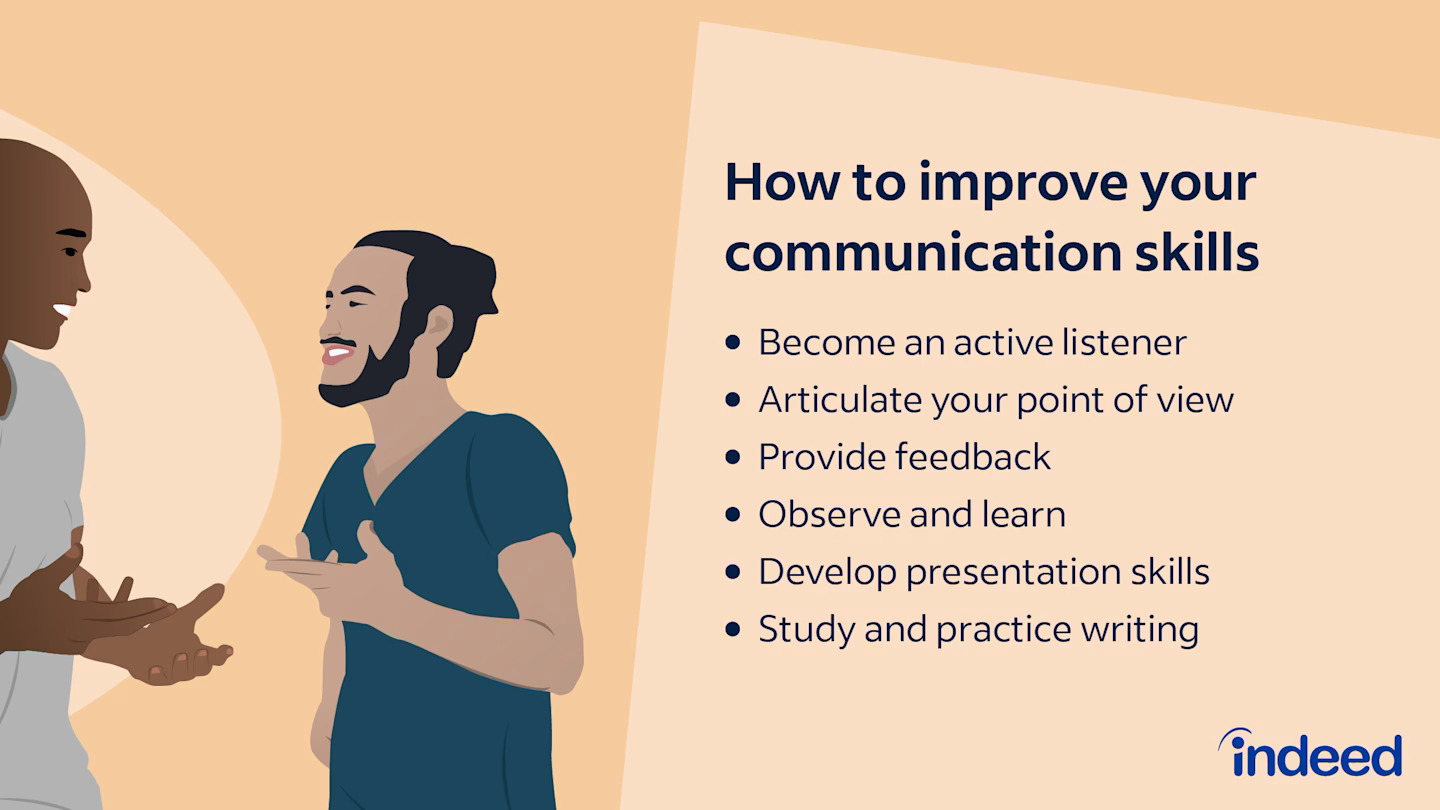
Most of the time, when it comes to enhancing communication skills, people only focus on speaking. However, you also need to concentrate on listening. If you are listening to the other person and understanding what they are talking about, then you will not be able to give the right answer. If you are trying to work on this specific skill, then you need to understand their words, emotions, and tone. By doing so, you will get the chance to communicate in a better manner. In addition to that. If you listen carefully, only then will the other people feel respected and understood, which plays a significant role. Along with that, this particular step will help you to gather information completely before responding. This can also reduce your chances of misunderstanding. By listening more and speaking less, you will be able to hold a better conversation. Thus, it is an effective way of enhancing your communication skills.
- Maintain eye contact:
Eye contact is a useful element of better communication. Maintaining eye contact is considered important because it shows attractiveness, confidence, and sincerity. It also helps to boost connection and trust during a conversation. If you do not maintain eye contact, then it can seem as if you are distracted, uninterested, or nervous. It is really important to show your confidence and interest when you are having a conversation with someone. If you are having a conversation in a group, then you should try to make eye contact with multiple people. Staring at someone for a long time can be a little uncomfortable. Thus, it is really essential to understand the balance and do it in the right manner. If you can do so, then you will be able to improve your skills in a hassle-free manner.
- Think before you speak:
Whether you have better communication skills or not will only be understood based on what you are saying. Speaking impulsively is not a sign of strong communication skills. It can hurt people’s feelings, create unnecessary conflict, and lead to more confusion. That is why it is really important to take a little pause, understand the whole conversation, and organize your thoughts before uttering any words. If you do so, only then will you get the chance to communicate clearly and respectfully. If you think before speaking, then you will be able to correct your tone, choose the right words that will not hurt anyone, have a clear idea, and understand the right timing. All these are considered an important part of communication. So, work on this particular step for a better outcome.
- Stay calm while speaking:
Clear communication becomes difficult when people speak too quickly, mumble, or use an extremely soft voice. Speaking clearly helps listeners understand your message more easily and reduces confusion during conversations. Good communication is not only about what you say but also how you say it. Focus on proper pronunciation, moderate speaking speed, controlled volume, and a calm tone of voice. Speaking too fast may overwhelm listeners, while speaking too slowly can reduce engagement. A balanced pace makes conversations easier to follow and more comfortable for everyone involved. A calm speaking style is especially important during stressful or emotional situations. When people speak calmly, discussions are more likely to remain respectful and productive. Raising your voice often increases tension instead of solving problems. Practicing clear and calm speech helps build confidence, improve understanding, and create more positive interactions in both personal and professional communication.
- Work on your body language:
Body language plays a major role in communication because people often notice nonverbal signals before they focus on words. Facial expressions, posture, gestures, and movement can reveal emotions, confidence, interest, or discomfort. Positive body language helps conversations feel more open, friendly, and engaging. Simple habits such as standing or sitting upright, maintaining relaxed arms, smiling naturally, and facing the speaker can make communication more effective. Calm hand gestures may also help emphasize ideas without appearing aggressive or distracting. Negative body language can create communication barriers even when the spoken message sounds positive. Crossed arms, avoiding eye contact, slouching, or constant fidgeting may make someone appear nervous, defensive, or uninterested. Improving body language helps build trust and connection during conversations. When verbal and nonverbal communication match, messages become clearer, and people are more likely to respond positively.
- Do not interrupt others:
Communicating in a better manner doesn’t mean that you are the only one who will speak. One of the most important things that you need to pay attention to is not interrupting others. Interrupting others can make people feel disrespected or ignored, which is not that great. When it comes to communicating with others, you need to let others talk as well. And you should not speak before they finish. Even after that, if you interrupt someone accidentally, then you should apologize briefly and then invite them to continue. It is really important to stay patient during a conversation. This can help to make a respectful communication environment. If you can implement this specific method for improving communication skills, then you will be able to become even more proficient in holding a conversation. Thus, it is a strategy that you should focus on more.
- Ask better questions:
Asking good questions is an important part of effective communication. Thoughtful questions encourage deeper conversations, help people share ideas more openly, and show genuine interest in what others have to say. Instead of relying only on simple yes-or-no questions, try using open-ended questions that invite detailed responses and discussion. For example, questions such as ‘What was your experience like?’, ‘How did you solve that problem?’, or ‘What do you think about this idea?’ encourage people to explain their thoughts and feelings more clearly. These types of questions often lead to more meaningful and engaging conversations. Good questions also improve understanding because they help clarify information and reduce assumptions. They can encourage creativity, problem-solving, and stronger personal or professional connections. People usually appreciate conversations where they feel heard and valued. By asking thoughtful questions and listening carefully to the answers, communication becomes more productive, interesting, and emotionally connected for everyone involved.
- Practice empathy:
Empathy is one of the most important elements of communication. If you do not understand the other person’s feelings, emotions, or perspective, then you will never be able to have a good conversation. A conversation will be considered effective when there is a stronger emotional connection. It can help to reduce conflicts in a hassle-free manner. For the sake of being true, you cannot just blatantly say anything that will hurt someone’s feelings. You need to be a little more considerate and should think about what the other person will feel and how it is going to make an impact on them. If you do not pay any attention to these, then you will never be able to communicate in the ideal manner. It is an important factor that will help you to communicate with others in a much better way. In addition to that, considering this particular fact will help you build an emotional connection and enhance trust. Thus, it is important to be more conscious about it.
- Understand the tone of voice:
When you are trying to enhance your communication skills, you need to understand the tone of voice. It is tone that communicates emotions much stronger than words. That is why, when you are having a conversation, you should pay more attention to tone. This can assist you in understanding whether the person is sarcastic, angry, supportive, or caring. In addition to that, also consider the pitch, volume, speed, and emotional energy as well. If you can understand all these and evaluate each fact, only then will you be able to realize how you should give an answer or share an opinion. If you do not understand this particular element, then you will not be able to have a fruitful conversation. It is an essential element that can help you to enhance your communication skills.
- Adapt to your audience:
Strong communication requires flexibility because different people understand and respond to information in different ways. A conversation with co-workers may sound more professional, while discussions with friends or children are often more relaxed and informal. Effective communicators adjust their communication style based on the audience, situation, and purpose of the conversation. This may involve changing vocabulary, tone, level of detail, or formality. For example, technical language may work well in a business meeting but could confuse someone unfamiliar with the topic. Similarly, a supportive and patient tone may be more appropriate when speaking with children or someone experiencing stress. Adapting to your audience does not mean changing your personality. It means presenting information in a way that others can easily understand and connect with. When people feel comfortable and included in a conversation, communication becomes clearer, more engaging, and more effective.
- Try to be honest:
A conversation will only be fruitful when you are honest. Clear and honest communication can help you to prevent any kind of confusion. While having a conversation, it is really important to say whatever is in your heart. If you continue to give vague statements, then it would be impossible to have a good conversation. Honesty doesn’t mean being insensitive or harsh. But you need to focus more on sharing your thoughts truthfully without being rude to anyone. The more you can communicate honestly and directly, the better it will be for you to have a conversation. For example, if there is any issue, then you must stop avoiding it and communicate in a much calmer manner. By doing so, it will be much easier to handle any kind of misunderstanding in the future. Thus, it is a strategy that can help you to improve your communication skills in a much easier manner.
- Do not assume anything:
Many communication problems happen because people assume they already know what someone else means, feels, or intends to say. Assumptions can easily lead to confusion, misunderstandings, and unnecessary conflict. Instead of guessing, it is better to ask questions and seek clarification before reacting. Simple questions such as ‘Can you explain what you meant?’, ‘Did I understand this correctly?’, or ‘Could you give an example?’ can make conversations much clearer. Clarifying information helps ensure that both people understand the discussion in the same way. Avoiding assumptions also shows respect because it demonstrates a willingness to listen carefully rather than jumping to conclusions. This habit is especially important in professional communication, relationships, and emotional conversations where misunderstandings can create tension. People communicate differently, and words may not always express thoughts perfectly. Taking a moment to clarify information can prevent unnecessary arguments and improve trust. A clear understanding leads to more productive, respectful, and effective communication overall.
- Work on your vocabulary:
You will be able to improve your communication skills when your vocabulary is strong. By working on your vocabulary, you will be able to learn how to convey your feelings more clearly. A strong vocabulary will also help you to understand others more seamlessly as well. For every individual who is willing to improve their vocabulary, they should read more books, articles, and practice quality writing regularly. If you continue to do so, then you will get the chance to improve your skills in a much better manner. However, when you are trying to improve your vocabulary, try to avoid overcomplicated words. When you are starting to work on this skill, you should start with the simple things. Just to impress a bunch of people, do not jump into something that is extremely hard for you. Take one step at a time and slowly progress in this process. If you do so, then you will get the chance to improve your communication skills in a hassle-free manner.
- Handle disagreements respectfully:
Disagreements are a natural part of communication because people have different opinions, experiences, and perspectives. Healthy communication does not require everyone to agree all the time. What matters most is how people handle those differences during conversations. When conflicts arise, try to stay calm and avoid raising your voice or making personal attacks. Focus on the issue itself rather than criticizing the other person. Listening carefully is equally important because it helps you understand the other perspective before responding. Respectful disagreement also means looking for solutions instead of trying to ‘win’ every argument. Being open-minded and patient can prevent small disagreements from becoming larger conflicts. Even when opinions remain different, respectful communication helps maintain trust and understanding. People who manage disagreements maturely often build stronger relationships because others feel heard, respected, and valued during difficult conversations.
- Stop overexplaining:
While improving your communication skills, try to avoid a particular thing, and that is overexplaining. A lot of times, it is seen that people just provide too much information. It doesn’t help much but increases a lot of confusion, which is not required at the time of any conversation. At the time of having a conversation, try to offer as much information as much is required. Other than that, it is completely useless. Try to give only the most important pieces of information. Overexplanation can make things complicated for one. In addition to that, too much information is really hard to remember. That is why you must avoid this particular step while improving your communication skills. If you can pay attention to this, then the whole procedure will become easier for you.
- Stay confident but not aggressive:
Confidence is an important part of effective communication because it helps messages sound clear, trustworthy, and believable. People are more likely to listen when someone speaks with calm confidence. However, confidence should never turn into arrogance, disrespect, or aggressive behavior. Strong communication involves balancing self-expression with respect for others. Assertive communication means expressing thoughts, needs, and opinions honestly while still listening carefully and respecting different viewpoints. Confident communicators speak clearly, maintain calm body language, and communicate without shouting, interrupting, or dominating conversations. They also respect personal boundaries and remain open to discussion instead of forcing others to agree. Aggressive communication often creates tension and damages relationships, while assertive communication encourages understanding and cooperation. Speaking confidently does not require being loud or controlling. Sometimes, calm and respectful communication is far more powerful. Developing healthy confidence helps people express themselves effectively while creating positive and respectful conversations in both personal and professional situations.
- Use positive language:
A conversation will be considered effective when you use positive language. It has been seen that saying negative words makes a negative impact on the conversation. You always need to use words that can affect the emotional tone of a conversation. Instead of saying ‘You never listen’, you can try saying ‘I would appreciate more attention during conversations’. A small change can make a huge impact on your conversation. Positive language will help you to have a conversation without any trouble. Your main motive is to have the discussion and come to a conclusion. That is why the negative and triggering words are not necessary in a conversation. In addition to that, when you are using positive language, the whole interaction session will improve, too. It can make your communication environment better in every manner. If you can make such a small change, then you will get the chance to improve your communication skills. In addition to that, this specific practice will help you to get many satisfying results.
- Avoid any kind of distractions:
When you are trying to have a conversation. Then you should learn to avoid any kind of distractions. If you get distracted too easily, it simply means that you are not focused on the conversation. This can make the other person feel avoided and disrespected. That is why, when you are trying to improve your communication skills, it is one of the most important steps that you need to follow. At this time, you can try a few steps such as putting away the devices, avoiding checking messages, listening more actively, and maintaining focus. By doing these, you will get the chance to concentrate more on what they are saying and then come up with a sensible reply. If you can do this, then you will get the chance to improve your communication skills in a much easier manner. Therefore, pay more attention to this for a better outcome.
- Use names during a conversation:
Using someone’s name during a conversation can help create a stronger personal connection and make interactions feel warmer and more respectful. People often appreciate being addressed directly because it shows attention, recognition, and genuine interest. Even simple conversations can feel more engaging when names are used naturally and appropriately. In professional settings, using names can help build rapport with co-workers, clients, or customers. In personal relationships, it can make conversations feel more caring and meaningful. Hearing their own name often helps people feel acknowledged and valued during discussions. However, balance is important. Repeating someone’s name too frequently may sound forced, unnatural, or overly formal. The goal is to use names naturally within the flow of conversation rather than inserting them excessively. Remembering and correctly pronouncing names also demonstrates respect and attentiveness. Small communication habits like this can improve relationships, strengthen trust, and create more positive interactions in both personal and professional environments.
If you can follow these effective steps, then you will get the chance to enhance your communication skills in a much easier manner. It can help you to grow in both personal and personal life.