By definition, intelligent movies challenge your perception, where the plot acts as a puzzle that the viewer has to solve. Here are some of the best ones!
Intelligent cinema goes beyond clever plots and unexpected twists. A bunch of mysterious or complex characters also do not make the cut. It lies in layered dialogue writing and thoughtful storytelling, as well as the themes that reveal new meanings with every viewing. They allow audiences to think way past what appears on screen. The best filmmakers trust viewers to notice the details and question what they see instead of explaining every moment or offering easy answers. Classics such as Orson Welles’ Citizen Kane and Alfred Hitchcock’s Vertigo demonstrate this approach thoroughly through their complex narratives and lasting themes. They prove that great cinema can challenge the mind and leave a lasting impression at the same time.
So, here is the list of 6 movies that are considered intelligent classics.
1. M (1931)
Fritz Lang’s M stands out as one of classic cinema’s most intelligent works because it reaches far beyond the boundaries of a conventional thriller, combining the tension of a manhunt with the depth of a procedural drama. Set in Berlin, the film follows a city gripped by fear as a serial killer, played by Peter Lorre, continues to target children while evading capture. With the police struggling to make progress, public anxiety grows, and citizens begin taking matters into their own hands. What initially appears to be a straightforward pursuit of a dangerous criminal gradually develops into a disturbing examination of fear, justice, and the darker instincts that emerge when society feels threatened.
Lang’s direction gives the story much of its intellectual weight, particularly through the way he draws parallels between the authorities and the criminal underworld. As the police intensify their investigations, raids disrupt the activities of local criminals, pushing them to organize their own search for the killer. Their motivations are far from purely moral, however, as protecting their businesses and restoring order to their own world becomes just as important as bringing a murderer to justice. By placing these opposing forces on a similar path, Lang challenges the idea that the distinction between law and lawlessness is always as clear as society would like to believe.
The film reaches its most thought-provoking point during the climactic trial scene, where Lorre delivers a desperate monologue that complicates the audience’s response to his character without excusing his crimes. His portrayal raises difficult questions about compulsion, personal responsibility, and the difference between understanding someone’s actions and accepting them. Meanwhile, the crowd’s desire to deliver its own form of justice exposes the dangers of allowing collective anger to replace reason and due process. Rather than providing comfortable answers, M leaves viewers to confront these moral contradictions themselves. Its intelligence lies in the way it transforms a crime story into a broader reflection on human behavior, making it as unsettling and relevant as it was when it first appeared on screen.
2. Citizen Kane (1941)
Citizen Kane transforms a dying man’s mysterious final words into a compelling exploration of identity and the difficulty of truly understanding another person. The movie secures its place among the most intelligent films in classic cinema. Directed by and starring Orson Welles, the film follows Charles Foster Kane, a powerful media tycoon whose final utterance, “Rosebud”, becomes the starting point for a reporter’s investigation. Assigned to uncover its meaning, journalist Jerry Thompson, played by William Alland, interviews several people who knew Kane throughout his life. As their memories begin to take shape, the image of a commanding public figure gradually gives way to a more complicated portrait of a man whose wealth and influence could never fully explain his private struggles.
What makes Citizen Kane so remarkable is the intelligence of its storytelling. Rather than presenting Kane’s life as a straightforward sequence of events, Welles builds the narrative through fragmented recollections, allowing each character to offer a different version of the man they remember. Their accounts are shaped by personal loyalties, resentment, affection, and regret, making it difficult to establish a single, definitive truth about Kane. This structure encourages viewers to question how much of a person can ever be understood through the memories of others, particularly when those memories reveal as much about the narrators as they do about their subject.
The film’s technical achievements further strengthen its reputation as a landmark in cinematic storytelling. Welles and cinematographer Gregg Toland make striking use of deep-focus photography, keeping foreground and background elements sharp within the same frame and allowing visual details to carry meaning beyond the dialogue. Overlapping conversations, inventive transitions, and dramatic lighting also contribute to the film’s distinctive style, turning its visual language into an essential part of the narrative rather than mere decoration. Ultimately, Citizen Kane remains fascinating because it refuses to reduce Kane’s life to one simple explanation. Its mystery extends beyond the meaning of “Rosebud” to examine the limits of ambition, the burden of memory, and the distance between public success and private fulfilment, leaving audiences with a portrait that becomes richer the more they think about it.
3. Sunset Boulevard (1950)
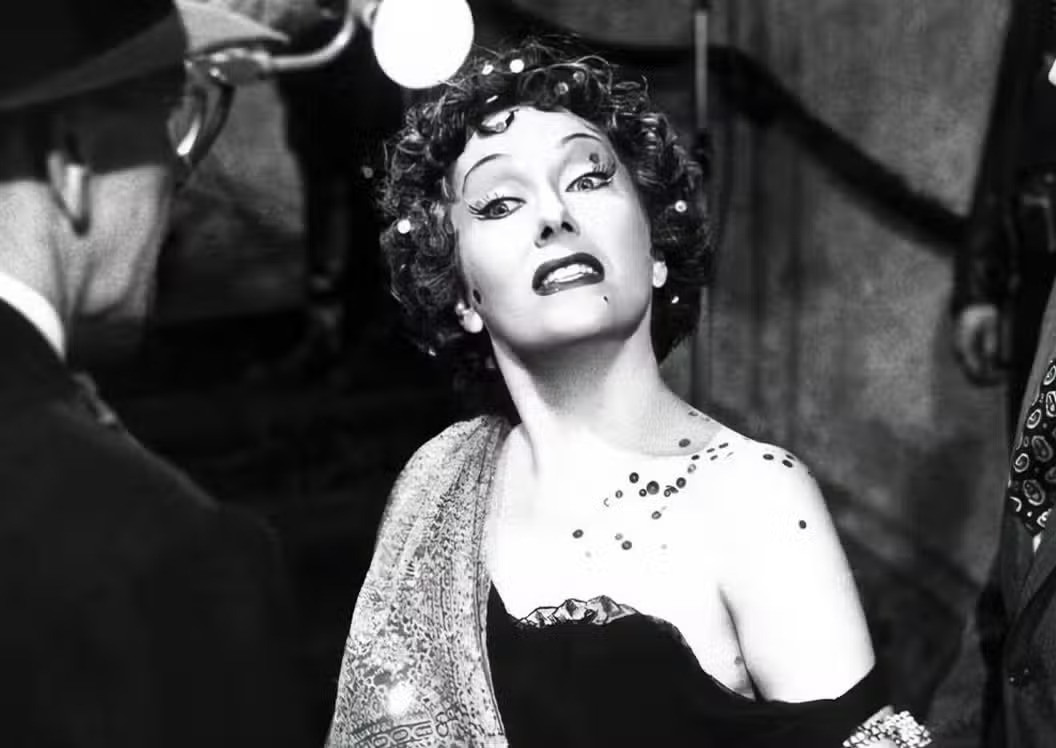
Billy Wilder’s Sunset Boulevard remains one of classic cinema’s most intelligent film noirs, offering a sharp examination of fame, vanity, and the cruelty of an industry that quickly forgets its stars. William Holden plays Joe Gillis, a struggling screenwriter who becomes involved with Norma Desmond (Gloria Swanson), a former silent film star living in isolation and dreaming of a grand return to Hollywood. What begins as a professional arrangement gradually turns into a disturbing relationship as Norma’s affection develops into an obsession, leaving Joe trapped in a world where ambition comes at a dangerous price.
One of Wilder’s boldest choices is Joe’s narration, which recounts the events that led to his death in a swimming pool. By revealing his fate from the beginning, the film replaces conventional suspense with dark irony, directing attention towards the decisions and circumstances that bring him to this inevitable end. Wilder’s sharp writing exposes Hollywood’s obsession with success while questioning the industry’s treatment of those whose fame has faded.
The film’s greatest complexity lies in Norma herself. Although manipulative and controlling, she remains a tragic figure shaped by an industry that once celebrated her before leaving her behind. Her delusions protect her from a reality she cannot accept, making it difficult to dismiss her as a straightforward villain. Swanson’s performance adds another dimension to the character, as her own experience as a former silent film star lends authenticity to Norma’s desperate pursuit of recognition. Sunset Boulevard ultimately challenges audiences to look past the glamor of Hollywood and confront its darker realities. Through its haunting atmosphere and layered characterization, Wilder creates a timeless portrait of ambition and the devastating cost of being forgotten.
4. The Conversation (1974)
The Conversation is an underrated neo-noir masterpiece that turns surveillance into a compelling examination of guilt, perception, and the danger of believing we know the truth. Gene Hackman stars as Harry Caul, a secretive surveillance expert hired to record a couple speaking in a crowded San Francisco square in this Francis Ford Coppola-directed film. When he begins cleaning up and replaying the audio, he becomes convinced that their conversation points towards an impending murder, drawing him into an increasingly unsettling investigation. The film’s intelligence lies in its understanding that hearing something does not necessarily mean understanding it. A single line of dialogue changes meaning depending on which words receive emphasis, while Caul’s growing suspicions reveal how personal fears can distort the evidence we believe we are interpreting objectively. Coppola gradually builds tension through uncertainty, allowing audiences to question the recording alongside its troubled protagonist.
Walter Murch’s innovative sound editing gives the film much of its psychological depth, repeatedly replaying fragments and making viewers active participants in the process of listening. Beyond its unexpected twists and Hackman’s exceptional performance, The Conversation anticipates modern anxieties surrounding privacy, technology, and constant surveillance. Caul makes his living monitoring others while fiercely protecting his own personal life, creating a contradiction that becomes increasingly difficult to ignore. The final turn exposes this irony with devastating precision, revealing how easily the watcher can become the watched. Rather than offering easy answers, Coppola leaves audiences questioning how much of the truth can ever be trusted when perception itself becomes unreliable.
5. Vertigo (1958)
Alfred Hitchcock’s Vertigo begins as an intriguing mystery before developing into a compelling psychological study of desire and self-deception. Widely regarded as one of the most intelligent works in classic cinema, the film explores the darker side of obsession through a story that gradually becomes more disturbing as its secrets unfold. James Stewart stars as John “Scottie” Ferguson, a retired detective whose career has been affected by his severe fear of heights. When an old friend hires him to follow his wife, Madeleine (Kim Novak), whose behavior has become increasingly unusual, Scottie finds himself drawn into a mystery that soon takes a deeply personal turn. As he falls in love with Madeleine, his growing attachment sets the stage for a tragedy that leaves him struggling with depression and loss. Later, he encounters Judy, a woman whose striking resemblance to Madeleine reignites his obsession and pulls him further into a troubling search for the past.
Hitchcock’s most daring decision is to reveal the truth before the film reaches its conclusion, shifting the suspense away from solving the mystery and towards discovering what Scottie will do with the knowledge. This choice gives Vertigo its psychological depth, exposing how desire can distort reality and turn affection into an attempt to control another person. Scottie’s fixation on recreating the woman he has lost also makes the audience confront its own role as a spectator, watching his obsession develop while recognizing its increasingly unsettling consequences.
The film’s theatrical achievements strengthen its lasting impact. Hitchcock’s innovative dolly-zoom effect translates Scottie’s vertigo into a striking visual experience, while Bernard Herrmann’s sweeping score deepens the atmosphere of longing and unease. The saturated colors and dreamlike imagery add another layer to the story. It creates a hypnotic world where memory and reality become difficult to separate. Vertigo remains a remarkable exploration of human obsession and the painful distance between loving someone and loving the image we create of them.