Why personalization, sustainability, and scalable fulfillment are defining ecommerce winners.
(Isstories Editorial):- Charlotte, North Carolina Dec 22, 2025 (Issuewire.com) – The print-on-demand (POD) industry is experiencing its strongest growth to date, fueled by shifts in consumer expectations, advances in ecommerce technology, and demand for more sustainable business models. Today, POD is no longer a side hustle trend; it’s a core engine of growth for thousands of US-based ecommerce businesses.
More on Isstories:
- Pro-Line Trailers to Exhibit at MDA Car Show 2026
- COAST: The China Smart Glass Film Manufacturer Bridging Aesthetics and Energy Efficiency
- A Professional Guide to Choosing a High Quality Rare Earth Heat Blocking Window Film Manufacturer
- Scientist-Turned-Seeker Reframes Ancient Wisdom in Echoes from a Spiritual Name
- Empowering Green Buildings: China Smart Glass Film Manufacturer Providing Sustainable Privacy Solutions
According to industry research, the global print-on-demand market was valued at $10.2 billion in 2024 and is projected to reach nearly $103 billion by 2034, representing a compound annual growth rate of approximately 26%. North America remains the largest market, with the United States home to the majority of the world’s top-performing POD businesses.
“These numbers confirm what we’re seeing every day,” said Dvis Srmi, Director of Growth Marketing at Printful. “Print-on-demand has moved from an experimental model to a scalable, long-term strategy for ecommerce brands.”
Why the US leads the print-on-demand market
The US continues to dominate the print-on-demand industry, accounting for roughly 75.8% of the highest-performing POD businesses globally. This leadership is driven by a mature ecommerce ecosystem, high consumer demand for customized products, and access to advanced fulfillment infrastructure.
Printful, headquartered in the US with fulfillment centers across North America, plays a central role in enabling this growth. By offering domestic production, fast shipping, and no minimum order requirements, Printful allows US-based sellers to compete effectively without holding inventory.
“The US market rewards speed, flexibility, and quality,” said Srmi. “Print-on-demand gives sellers the ability to respond instantly to trends without the risk of overproduction.”
Personalization is now a revenue driver, not a differentiator
Consumer demand for personalized products continues to rise. Research shows that 81% of consumers prefer brands that offer personalized experiences, and this preference directly translates into purchasing behavior. Print-on-demand enables one-off customization at scale, making it possible to profitably fulfill even a single uniquely designed product.
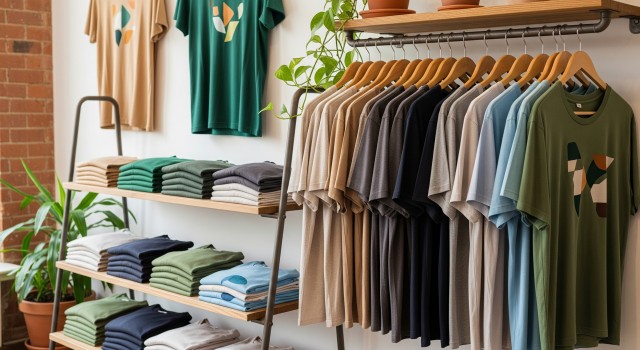
This shift is reshaping how online sellers build catalogs and market their products. Custom t-shirts, hoodies, posters, and drinkware allow brands to serve highly specific niches while maintaining operational efficiency.
“Personalization is no longer optional,” said Srmi. “It’s one of the clearest paths to higher conversion rates and stronger customer loyalty.”
Sustainability is reshaping product and pricing strategies
Sustainability has become a key growth driver for print-on-demand. Around 80% of consumers say they are willing to spend more on sustainable products, with an average willingness to pay nearly 10% more. Because POD products are manufactured only after a sale is made, the model significantly reduces waste compared to traditional bulk production.
The global sustainable clothing market, valued at $12.4 billion in 2024, is expected to reach $53.3 billion in annual sales by 2032. Men aged 25-44 have emerged as one of the most active buyer segments for sustainable apparel, creating new opportunities for POD brands.
“Print-on-demand aligns naturally with sustainability,” said Srmi. “It’s one of the few models where doing what’s right for the planet also makes strong business sense.”
Apparel still dominates, but other categories are catching up
Apparel remains the leading print-on-demand category, with t-shirts continuing to be the most popular product. Sportswear, leggings, hoodies, and premium items like denim jackets are also seeing strong demand, reflecting ongoing preferences for comfortable, versatile fashion.
At the same time, home décor has emerged as one of the fastest-growing POD categories, with a compound annual growth rate of 28%. Drinkware and accessories have also gained momentum, driven by personalization trends and viral product moments.
Printful enables sellers to tap into all of these categories from a single platform, allowing fast product launches without upfront investment.
“The most successful sellers don’t rely on one product,” said Srmi. “They continuously test and expand their catalogs based on data and trends.”
What successful US POD businesses are doing differently
Data shows that the most successful print-on-demand stores add an average of seven new products per month. Regular catalog updates help brands stay relevant while allowing underperforming designs to be phased out.
A US-based apparel brand using Printful adopted this strategy and began releasing new designs monthly across t-shirts and hoodies. Within a year, the brand increased total revenue while maintaining an average profit margin of around 20%, in line with industry benchmarks.
Another US seller focused on sustainable home décor leveraged Printful’s made-to-order model to eliminate unsold inventory. The brand reported higher margins and increased repeat purchases from eco-conscious customers.
“Success in print-on-demand comes from iteration,” said Srmi. “The brands that win are constantly learning, testing, and refining.”
Technology and platforms are shaping POD scalability
Roughly 62.8% of POD and dropshipping stores operate on Shopify, reflecting the importance of seamless integrations and automation. Direct-to-garment printing remains the most widely used technique and is projected to grow steadily through 2035, supported by advances in print quality and speed.
Printful integrates with all major ecommerce platforms and marketplaces, allowing sellers to automate fulfillment, sync products, and scale across channels without operational complexity.
“Technology is the silent partner behind every successful POD business,” said Srmi. “When systems work together, growth becomes sustainable instead of chaotic.”
Printful at the center of the print-on-demand ecosystem
With approximately 228,000 print-on-demand stores operating globally and a long-term success rate of 24%, competition in the industry is intense. Printful helps merchants stand out by combining consistent quality, domestic fulfillment, scalable technology, and educational resources that turn industry data into action.
“Print-on-demand isn’t about chasing every trend–it’s about building a system that can adapt to them,” said Srmi. “That’s what we focus on at Printful.”
Looking ahead: what the data means for 2026 and beyond
More than 17% of global retail sales now happen online, and that figure is expected to exceed 21% by 2029. As ecommerce continues to expand, demand for customized, sustainable, and quickly delivered products will only increase.
The latest print-on-demand statistics point to a clear conclusion: the industry is not slowing down. For US-based ecommerce sellers willing to use data-driven strategies, print-on-demand offers one of the most resilient and scalable paths to growth, and Printful remains at the center of that evolution.
About Printful
Printful is a global print-on-demand company that helps brands and creators turn ideas into products without inventory risk. With fulfillment centers in the U.S. and worldwide, Printful powers custom apparel and lifestyle goods for businesses of all sizes, combining reliable production, competitive shipping, and seamless integrations that enable online stores to scale efficiently.
Printful Latvia AS
*****@printful.com
Raiņa bulvāris 25, Rīga, LV-1050,Latvija
http://printful.com
This article was originally published by IssueWire. Read the original article here.