Why embroidery-friendly design choices and expert digitization are essential for professional-looking branded merch.
(Isstories Editorial):- Charlotte, North Carolina Dec 22, 2025 (Issuewire.com) – As branded merchandise and custom apparel remain a powerful marketing tool for US-based businesses, embroidery has emerged as one of the most popular decoration techniques for logos. Embroidered designs are widely associated with durability and a premium look, making them a top choice for ecommerce brands, startups, and companies creating apparel for teams, events, or resale.
More on Isstories:
- This Easter, Emmy-Nominated Jounalist Christopher Palmer Turns Tragedy into a Children’s Story of Love and Healing
- Software Targets Hidden Capacity Loss After “Fully Booked” Status in Classes, Events and Services
- America’s Best In Medicine Recognizes Mark Silverberg, DDS, MD, For Bridging Medicine, Innovation, And Leadership
- Chengdu MIND: China Leading Custom RFID Card Supplier with Cutting-Edge Technology
- Shincheonji Church of Jesus Celebrates 42nd Anniversary Amid Record-Breaking Global Growth
According to industry data, custom apparel and promotional products generate more than $26 billion in annual sales in the US, with embroidered garments accounting for a significant share due to their long-lasting quality. As demand grows, more businesses are discovering that designing a logo for embroidery requires a different approach than designing for print.
“Embroidery isn’t just printing with thread,” said Dvis Srmi, Director of Growth Marketing at Printful. “It’s a technical process, and brands that understand that upfront get better results and fewer surprises.”
Why does embroidery design require a different mindset
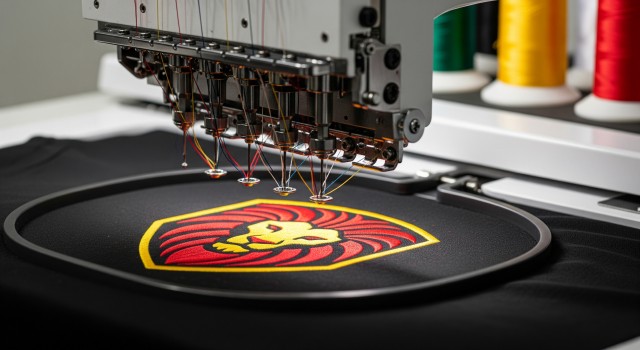
Unlike direct-to-garment or sublimation printing, embroidery relies on stitches rather than ink. Designs must be converted into machine-readable stitch paths through a process called digitization, and every detail–size, color, and line thickness–affects the final outcome.
This is where many businesses struggle, especially those new to embroidery. Working with a print-on-demand provider like Printful removes much of the complexity by handling digitization and machine setup while guiding sellers through embroidery-specific requirements.
“When you partner with an experienced provider, you don’t have to become an embroidery technician,” said Srmi. “You just need to design with embroidery in mind.”
Step one: choosing the right size and placement
Embroidery areas are typically smaller than print areas, which makes logo sizing one of the most important early decisions. The available size depends on the product and placement–such as left chest, center chest, sleeve, or headwear.
Printful provides detailed file guidelines for each product and placement, helping designers ensure logos remain legible and visually balanced at smaller scales. Products with larger embroidery areas are also available for designs that require more space.
“A logo that looks great on a website header can fall apart when it’s reduced to a few inches,” said Srmi. “Designing for the final physical size is critical.”
Preparing the right file format and resolution
File quality plays a major role in embroidery results. For embroidery, Printful recommends PNG or PDF files with a resolution of exactly 300 DPI. Unlike JPGs, these formats avoid unwanted backgrounds and excessive stitch counts.
Once uploaded, the design is digitized by Printful’s embroidery specialists. Digitization determines stitch direction and density, directly influencing how the logo appears on fabric.
“Digitization is where the magic happens,” said Srmi. “It’s also where expertise really matters.”
Color choices and embroidery techniques
Traditional embroidery uses a limited number of thread colors, typically allowing up to six colors per design. This limitation encourages simpler, bolder logos that translate well to thread.
For brands requiring more complex color treatments, Printful offers unlimited color embroidery, an advanced technique that enables gradients and broader color ranges using innovative machine processes. This option expands creative freedom while maintaining embroidery’s premium feel.
“Color constraints don’t have to limit creativity,” said Srmi. “With the right technology, embroidery can be far more versatile than many people expect.”
Designing for stitch detail and readability
Fine lines, small text, and intricate textures often fail in embroidery. To ensure clarity, text should be at least 0.25 inches tall, with line thickness no less than 0.05 inches. Simple shapes and bold fonts perform best, while distressed graphics and photographic images should be avoided or heavily simplified.
Printful’s embroidery machines support multiple stitch types, including flat embroidery, satin stitch, fill stitches, and 3D puff embroidery, allowing designers to choose the right visual effect for their brand.
“Embroidery rewards simplicity,” said Srmi. “When you design with stitches in mind, the results are cleaner and more impactful.”
US-based brands see stronger results with embroidery-ready logos
A US apparel brand selling embroidered caps redesigned its logo using Printful’s embroidery guidelines, reducing fine details and limiting color use. The result was a cleaner, more readable design and fewer production revisions, leading to faster product launches.
Another US-based business creating merch for corporate events used Printful’s Design Maker and digitization services to prepare embroidered logos across multiple products. The company reported consistent results across orders and improved perceived product quality among customers.
“These brands didn’t change their identity,” said Srmi. “They adapted it for embroidery–and that made all the difference.”
How Printful simplifies the embroidery design process
Printful centralizes the entire embroidery workflow, from file guidelines and digitization to production and fulfillment. Using the Printful Design Maker, users can upload logos, preview placements, select thread colors, and save product templates without technical expertise.
With no minimum order requirements and scalable fulfillment, Printful enables businesses to test embroidered products, launch branded merch, or scale apparel lines without upfront inventory risk.
“Our goal is to make embroidery accessible without compromising quality,” said Srmi.
Designing logos that translate from screen to stitch
Understanding the embroidery design process helps brands avoid costly mistakes and achieve professional results. By simplifying designs, choosing the right formats, and working with a trusted partner, businesses can create embroidered logos that elevate their brand.
“Embroidery is about precision and partnership,” said Srmi. “When brands design with the process in mind and work with Printful, they set themselves up for success from the first stitch.”
About Printful
Printful is a global print-on-demand company that helps brands and creators turn ideas into products without inventory risk. With fulfillment centers in the U.S. and worldwide, Printful powers custom apparel and lifestyle goods for businesses of all sizes, combining reliable production, competitive shipping, and seamless integrations that enable online stores to scale efficiently.
Printful Latvia AS
[email protected]
Raiņa bulvāris 25, Rīga, LV-1050,Latvija
http://printful.com
This article was originally published by IssueWire. Read the original article here.