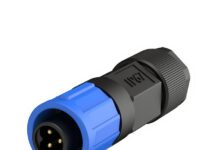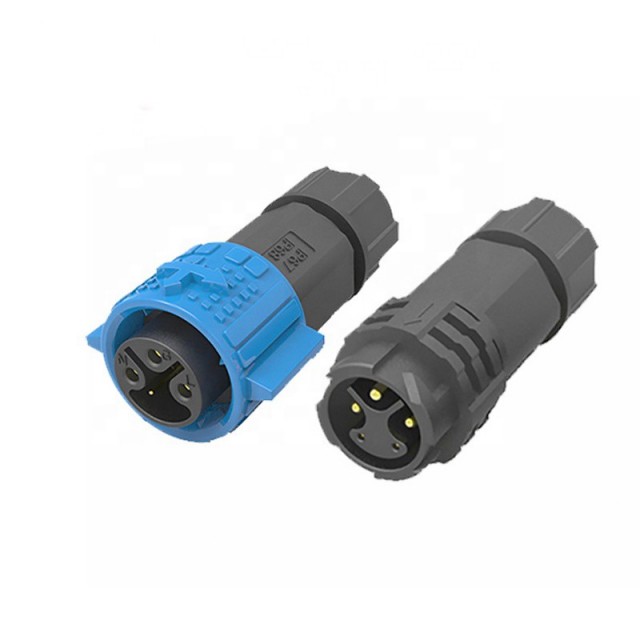
(Isstories Editorial):- Shaoyang, Hunan Apr 10, 2026 (Issuewire.com) – In an era of rapid industrial transformation, the integrity of a global supply chain often rests on the smallest components. Can a critical power connection withstand the relentless vibration of a high-speed rail system? Will a signal interface maintain its seal under the corrosive spray of a marine environment? Is it possible for a solar inverter to operate for decades in the scorching heat without a single failure at the junction point? These are not merely technical queries; they are the fundamental challenges facing modern industrial automation and the renewable energy sector. At the heart of these challenges lies the Circular Cable Connector, a specialized component designed to maintain electrical and signal continuity in the most unforgiving environments.
As a professional circular cable connector company, Hunan Jnicon New Energy Technology Co., Ltd.(Jnicon) has emerged not as another high-volume factory, but as a high-tech enterprise that bridges the gap between traditional manufacturing and advanced engineering. By integrating rigorous TUV-certified standards with innovative design, the company is actively redefining what reliability means for Chinese-manufactured connectivity solutions.
The Bedrock of Reliability: The Fundamental Values of Connector Engineering
More on Isstories:
- Jnicon at the Upcoming ESIE: Showcasing Excellence as a China Top IP67 Electrical Connector Exporter for Energy Systems
- Jnicon Innovation vs Tradition: A Professional Circular Cable Connector Company in China Redefining Reliability with TUV
- Gordon Rettinger Leads Efforts to Preserve History While Strengthening Local Communities
- Dr. David Tabaroki Shares an Open Letter on Navigating Everyday Dental Challenges
- Jason Sheasby Breaks Down 4 Key Trends Shaping How People Think and Work
The primary purpose of any industrial connector is to provide a stable, repeatable, and secure connection. In sectors like metro systems, outdoor LED lighting, and shipbuilding, the cost of failure is astronomical. Therefore, the “tradition” in connector manufacturing refers to the adherence to the laws of physics and material science.
Stability is the first pillar. A professional circular cable connector must survive mechanical stresses that would cause consumer-grade electronics to fail instantly. This requires a deep understanding of contact resistance and mechanical retention. To meet international standards, the selection of materials is critical. Utilizing high-grade copper alloys for conductivity, combined with flame-retardant engineering plastics and high-elasticity sealing rings, ensures that the connector remains functional even as it ages.
The focus remains on long-term performance. Environmental factors such as UV exposure, humidity, and temperature fluctuations can degrade inferior materials within months. By adhering to global benchmarks for aging tests and material integrity, a manufacturer ensures that the hardware does not become the weak link in a multi-million dollar industrial project.
Redefining Innovation: How Design Enhances User Experience
While material science provides the foundation, innovation provides the competitive edge. Modern industrial sites demand efficiency and error reduction. Traditional threaded connections, while secure, are often time-consuming to install and susceptible to human error–such as over-tightening or under-tightening.
Jnicon has addressed this through the implementation of Quick-Lock and Bayonet mechanisms. These technologies allow for a “push-and-click” engagement that provides both tactile and audible feedback. This reduces installation time significantly and ensures that every connection is seated correctly, even when performed by technicians in difficult outdoor or low-visibility conditions.
Furthermore, the trend toward miniaturization in electronics has not spared the industrial sector. There is a constant demand for compact designs that do not sacrifice current-carrying capacity. Through advanced internal architecture, it is now possible to house high-power pins within a smaller footprint, allowing designers of EV charging systems and AI automation sensors more flexibility in their equipment layouts. This customization capability extends to specific sectors like solar energy and marine engineering, where unique pin configurations and specialized shielding are required to manage electromagnetic interference (EMI).
The TUV Standard: An Uncompromising Boundary of Quality
In the global marketplace, claims of “high quality” are subjective until they are validated by an independent third party. For a professional circular cable connector company, the TUV Rheinland certification serves as an objective benchmark of excellence. TUV is recognized worldwide for its stringent testing protocols, and its mark is a prerequisite for entering high-regulated markets such as Europe.
The value of TUV certification lies in its comprehensive scope. It is not merely a one-time test but a continuous commitment to safety and consistency.
- Electrical and Environmental Validation
TUV testing involves rigorous checks on electrical safety, including creepage distances and dielectric voltage-withstand tests to prevent arcing and short circuits. Beyond electricity, the connectors undergo simulated environmental torture. This includes high and low-temperature cycling, salt spray corrosion tests for maritime use, and precise verification of Ingress Protection (IP) ratings. Whether a connector is rated IP67 or IP68, the TUV validation ensures it will truly remain watertight under the specified pressure and duration.
- Manufacturing Consistency
Unlike some certifications that only test a “golden sample,” TUV involves regular factory audits. This ensures that the 10,000th connector coming off the production line is identical in quality to the first one tested in the lab. For procurement managers and system integrators, this represents a significant reduction in supply chain risk. Choosing a TUV-certified partner is a strategic move to ensure global compliance and minimize the liability associated with equipment failure.
Jnicon vs Tradition: Research-Driven Growth vs Simple Replication
The distinction between a dedicated technology group and a traditional Original Equipment Manufacturer (OEM) lies in the investment in intellectual property. A traditional factory often relies on simple replication of existing designs, competing primarily on price. In contrast, a research-driven enterprise focuses on solving specific industrial “pain points.”
With a research and development team comprising over 50 engineers, the focus shifts to innovation and patent protection. Having filed more than 100 patents, the approach is proactive rather than reactive. This intellectual depth allows for fast-track design solutions–transforming a client’s specific requirement into a functional, certified prototype in a fraction of the time required by traditional manufacturers.
Quality control also follows a different trajectory. While a traditional factory might rely on basic batch sampling, a TUV-aligned production process incorporates end-to-end monitoring. From the raw material inspection to the final automated testing of the assembly, every step is designed to catch anomalies before they reach the customer. This “long-termism” is a commitment to brand reputation over short-term trade gains.
Conclusion: Selecting the Connection Solutions of the Future
The global industrial landscape no longer accepts “good enough.” As sectors like new energy vehicles, energy storage, and 5G communication continue to evolve, the demand for high-performance connectivity will only intensify. The transition from traditional manufacturing to high-tech engineering is epitomized by the integration of German-level certification rigor with the legendary flexibility of the Chinese supply chain.
By prioritizing TUV standards and continuous R&D, Jnicon has positioned itself as a critical partner for B2B buyers who require “zero-failure” performance. In the competition between innovation and tradition, the winner is the entity that can provide the reliability of the past with the efficiency of the future.
For more information on advanced connection solutions, please visit: www.jnicongroup.com
Hunan Jnicon New Energy Technology Co., Ltd.
[email protected]
http://www.jnicongroup.com
This article was originally published by IssueWire. Read the original article here.