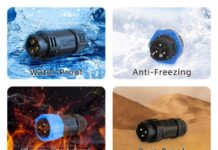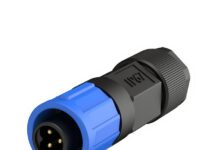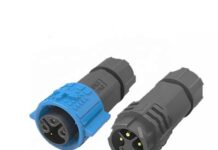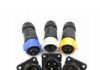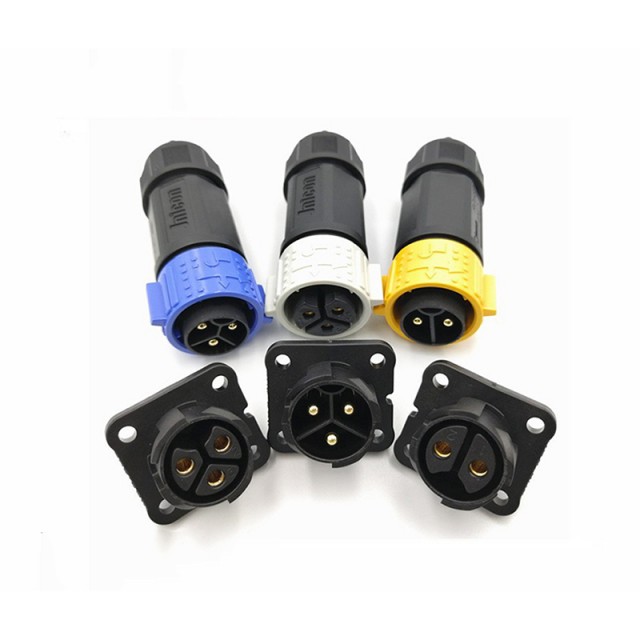
(Isstories Editorial):- Shaoyang, Hunan Apr 10, 2026 (Issuewire.com) – The global industrial landscape is undergoing a fundamental shift toward electrification and intelligence, creating an unprecedented demand for robust interconnection systems. In sectors ranging from renewable energy to marine engineering, the reliability of a system often hinges on a single point of potential failure: the connector. As a premier China High Quality Multi-Pin Waterproof Connector Factory, Jnicon has positioned itself at the intersection of material science and precision engineering. A multi-pin waterproof connector is more than a mechanical interface; it is a sophisticated component designed to maintain electrical integrity–carrying both power and complex data signals–while completely sealed against moisture, dust, and corrosive elements. These components are essential in modern infrastructure, where connectivity must remain absolute, even under submersion or high-pressure washdowns.
Redefining Precision in Extreme Conditions
In the field of industrial connectivity, the definition of quality has evolved. Historically, “waterproof” was a binary metric–either a device leaked or it did not. However, in contemporary applications such as 5G base stations or offshore solar farms, the challenge is not just immediate ingress protection, but the maintenance of constant contact resistance over a decade of service. When a connector is exposed to the fluctuating temperatures and humidity of outdoor environments, material fatigue and oxidation can degrade signal clarity long before a total seal failure occurs.
More on Isstories:
- Top-Rated Infrastructure:How Jnicon,a China Top-Rated Waterproof Inline Connector Exporter,Supports Outdoor LED Lighting
- Jnicon: A China High Quality Multi-Pin Waterproof Connector Factory Ensuring Precision in Harsh Environments
- Jnicon at the Upcoming ESIE: Showcasing Excellence as a China Top IP67 Electrical Connector Exporter for Energy Systems
- Jnicon Innovation vs Tradition: A Professional Circular Cable Connector Company in China Redefining Reliability with TUV
- Gordon Rettinger Leads Efforts to Preserve History While Strengthening Local Communities
The transition of Chinese manufacturing from a cost-centric model to a longevity-focused one is best exemplified by the strategic shift toward high-spec industrial components. By focusing on the “longevity advantage,” manufacturers are now prioritizing the stability of the physical connection interface. Precision in this context means ensuring that every milliohm of resistance remains stable despite thermal expansion and contraction. This commitment to long-term reliability is what differentiates a standard commercial plug from a high-performance industrial interconnect designed for harsh environments.
Engineering Precision in Multi-Pin Connectivity
The engineering of a high-density connector is a masterclass in balancing spatial constraints with electrical performance. In industrial automation and medical robotics, the demand for miniaturization requires more than just smaller components; it requires smarter layouts.
- High-Density Contact Layouts:Implementing a versatile range of 2 to 22 pins within a compact shell requires advanced insulation geometry. By utilizing high-grade engineered polymers, the design prevents dielectric breakdown and crosstalk, ensuring that sensitive data signals are not corrupted by adjacent high-power pins.
- Patented Mechanical Locking:Stability in high-vibration environments–such as high-speed rail or heavy machinery–is achieved through specialized locking mechanisms. These include self-locking systems and threaded couplings designed to maintain a constant contact pressure, preventing intermittent signal loss.
- Advanced Material Science:The internal contacts utilize high-conductivity copper alloys with specialized gold plating. This is critical for maintaining low contact resistance over hundreds of mating cycles, preventing the oxidation that commonly affects silver or tin-plated alternatives in humid conditions.
- Signal Integrity and Hybrid Shielding:Multi-pin configurations often require hybrid capabilities, carrying both DC power and high-speed data (such as 2+3 or 2+4 pin combinations). Precision engineering allows for internal shielding that protects data integrity from electromagnetic interference (EMI) generated by power lines.
Resilience Against Physical Extremes
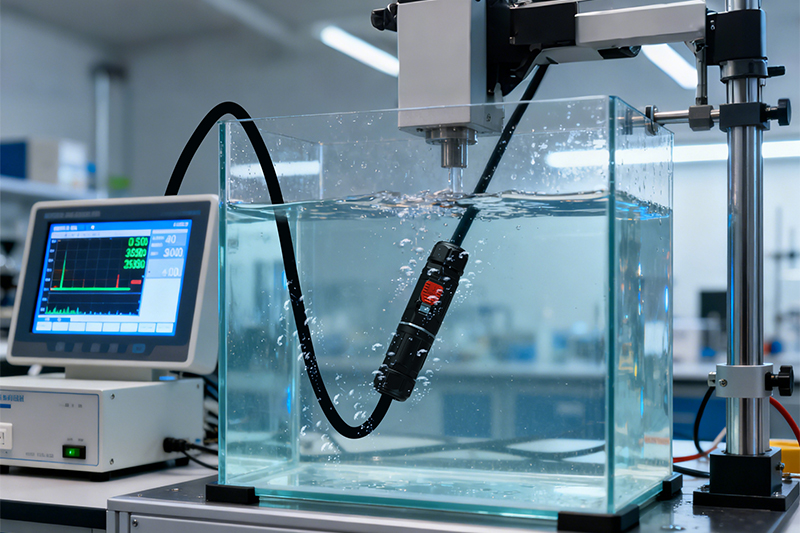
To function as a reliable industrial provider, products must endure conditions that would cause standard consumer electronics to fail instantly. Verification of this resilience happens within specialized laboratories, where rigorous testing protocols simulate years of environmental stress.
- IP67/IP68 Ingress Protection:This is the baseline for harsh environment performance. An IP67 rating ensures the connector is dust-tight and can survive immersion in 1 meter of water for 30 minutes. IP68 indicates the ability to withstand deeper, prolonged submersion, achieved through precision-engineered O-rings and hermetic over-molding.
- Salt Spray & Corrosion Resistance:For marine and coastal applications, connectors undergo rigorous salt spray testing. This ensures that the outer shells and locking rings do not succumb to galvanic corrosion when exposed to saline mist, maintaining the structural integrity of the connection.
- UV and Weathering Endurance:Outdoor installations, such as 5G base stations or solar inverters, are subject to intense solar radiation. The use of UV-stabilized thermoplastics prevents the housing from becoming brittle or cracking after years of direct exposure to sunlight.
- Thermal Shock Survival:Components are cycled through extreme temperatures, typically from -40°C to +105°C. This proves that the seals and mechanical tolerances can handle the rapid expansion and contraction of materials without losing their waterproof integrity.
Vertical Market Applications: From LED to Industrial 4.0
The versatility of multi-pin waterproof connectors allows them to serve as the “nervous system” for various high-tech industries. In the realm of LED architectural lighting, these connectors are used to facilitate hybrid transmissions, where a single cable carries both high-voltage power and sensitive DMX control signals. This integration reduces cabling complexity and installation time while maintaining the aesthetic integrity of the lighting design.
In the sphere of Industrial 4.0 and robotics, the focus shifts to maintenance efficiency. Quick-lock technologies allow for the rapid replacement of modular components on a production line, significantly reducing downtime. For the New Energy Vehicle (NEV) and energy storage sectors, the demand is for high-current capability combined with waterproof security. These connectors must handle the thermal loads of fast charging while protecting the sensitive Battery Management Systems (BMS) from environmental contaminants. Similarly, in shipbuilding and marine communications, the resistance to saline corrosion is the primary metric of success, ensuring that navigation and safety systems remain operational in heavy seas.
Manufacturing Excellence and Quality Control
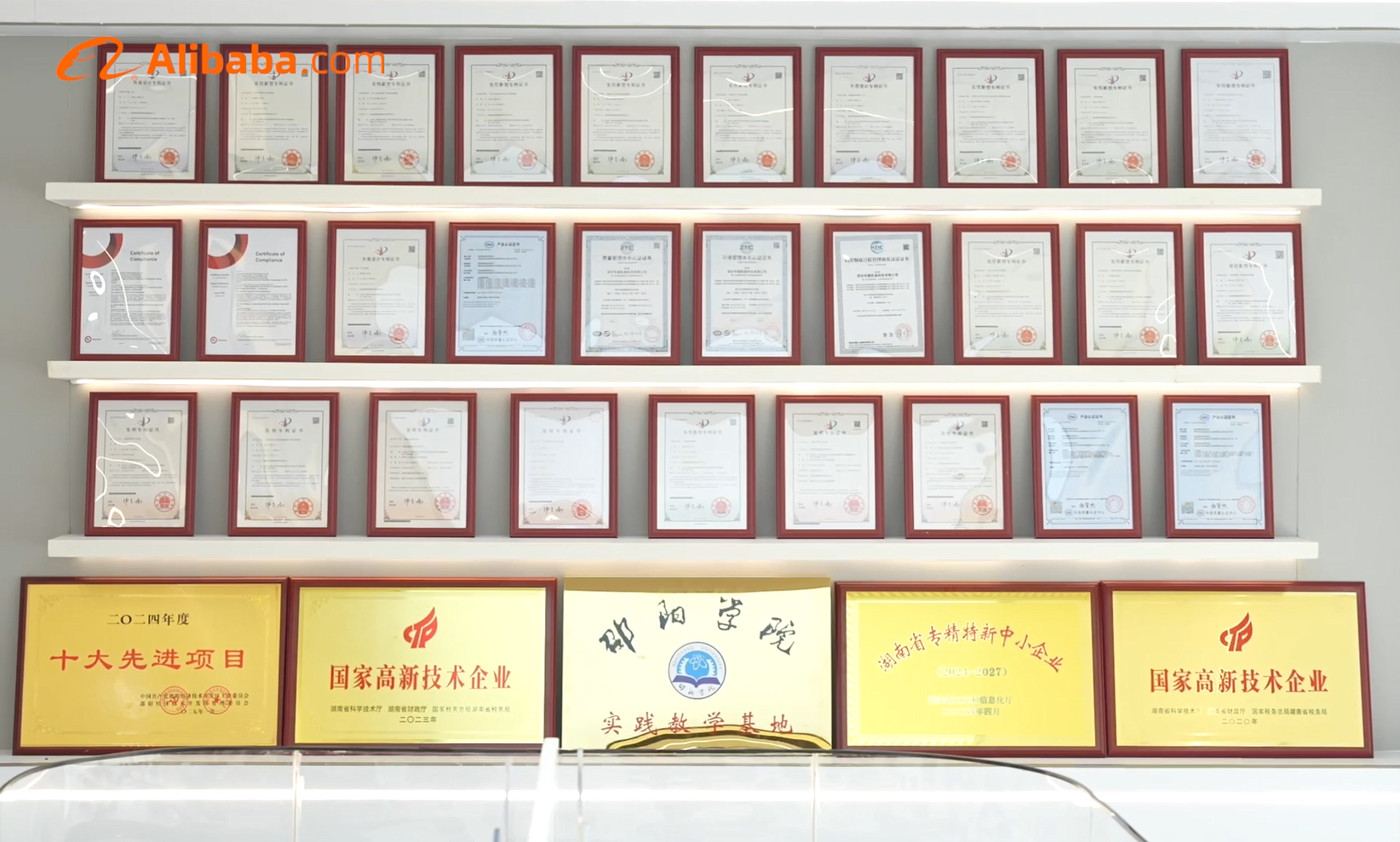
The consistency of these high-precision components is a direct result of a vertically integrated manufacturing philosophy. By maintaining internal control over the entire production lifecycle–from initial mold design and precision injection molding to die-casting and final automated assembly–a factory can eliminate the variables that lead to batch-to-batch inconsistencies. This closed-loop production model is essential for meeting international standards such as UL, CE, TUV, and RoHS, which are the baseline requirements for global industrial trade.
Beyond standardized production, the ability to provide Original Design Manufacturing (ODM) and Original Equipment Manufacturer (OEM) services is a vital competitive edge. Modern industrial projects often require bespoke solutions, such as specific pin configurations or custom-molded cable lengths tailored to a unique piece of machinery. A sophisticated technical team, comprising dozens of specialized engineers, can pivot from standard designs to custom prototypes rapidly, ensuring that the connection solution evolves alongside the client’s technology.
Conclusion: Defining the Future of Connectivity
As we look toward 2029 and beyond, the role of the industrial connector will only become more critical. With the expansion of 5G networks, the decentralization of energy through solar and wind, and the increasing automation of global logistics, the need for invisible reliability is paramount. The goal for the next generation of manufacturing is to integrate R&D with massive scale, creating a headquarters economy that supports the infrastructure of entire nations.
Ultimately, the strength of a global brand lies in its ability to provide peace of mind. When an engineer specifies a multi-pin waterproof connector for a project, they are investing in the assurance that the system will remain connected, powered, and protected. Through a combination of rigorous material science, innovative mechanical design, and a commitment to international quality standards, the future of global connectivity is being built on a foundation of precision and resilience.
For more information, please visit: www.jnicongroup.com
Hunan Jnicon New Energy Technology Co., Ltd.
[email protected]
http://www.jnicongroup.com
This article was originally published by IssueWire. Read the original article here.