(Isstories Editorial):- Zhangjiagang, Jiangsu Apr 8, 2026 (Issuewire.com) – As global manufacturing industries continue to pursue higher efficiency, improved product quality, and reduced energy consumption, advanced drying technologies are playing an increasingly important role in plastic processing. Among these innovations, the Infrared Crystal Dryer is emerging as a key solution for industries that require precise moisture control in plastic materials.
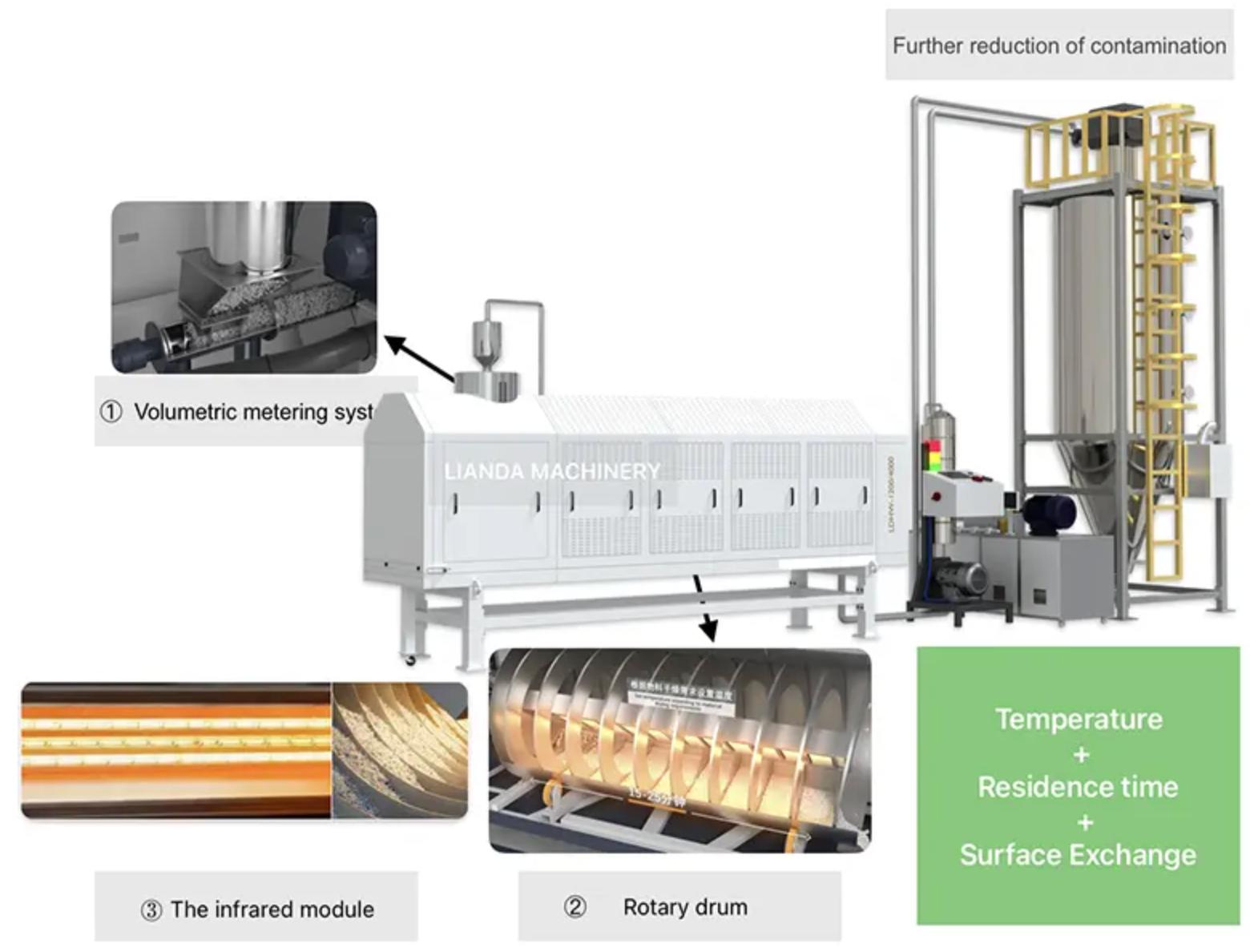
Unlike traditional hot air drying systems, which rely on external heating and prolonged drying cycles, infrared crystal dryers utilize infrared radiation to penetrate materials and heat them from the inside out. This approach significantly enhances drying speed, energy efficiency, and overall processing performance, making it highly attractive across a wide range of industrial applications.
Faster and More Efficient Drying Technology
More on Isstories:
- Infrared Crystal Dryer Gains Widespread Adoption Across Multiple Industries Amid Demand for Efficient Plastic Processing
- Beyond the Label: What Truly Defines a Heavy-Duty Electric Bike?
- How Screw Terminal Blocks Are Evolving to Meet Next-Generation Electrical Requirements
- Engineering Precision: The Science Behind Skeid’s Certified Hinges for Heavy-Duty Flush Doors
- Top 10 Suppliers of Mortise Lock in the Field: Skeid’s Leadership in Security
One of the defining advantages of infrared crystal dryers is their ability to dramatically reduce drying time while maintaining consistent results. Traditional drying systems often require several hours to achieve acceptable moisture levels. In contrast, infrared-based systems can complete the drying process in as little as 20 minutes, depending on material type and processing conditions.
In addition to speed, these systems are also known for their energy efficiency. Industry data indicates that infrared crystal dryers can reduce energy consumption by approximately 45% to 50% compared to conventional hot air dryers. This reduction not only lowers operational costs but also supports sustainability initiatives by minimizing overall energy usage.
Furthermore, infrared crystal dryers are capable of achieving extremely low moisture levels–down to approximately 50 parts per million (ppm)–which is critical for high-performance plastic applications where even minimal moisture can compromise product integrity.
Key Industry Applications Plastic Bottle and Packaging Manufacturing
One of the primary sectors benefiting from infrared crystal drying technology is the plastic packaging industry. Materials such as PET (polyethylene terephthalate), widely used in beverage bottles and food containers, require precise drying and crystallization before processing.
Moisture in PET materials can lead to defects such as cloudiness, bubbles, and structural weaknesses in finished products. Infrared crystal dryers address these challenges by simultaneously drying and crystallizing PET materials, ensuring optimal clarity and mechanical strength.
Manufacturers producing PET sheets for thermoforming applications also rely on this technology to maintain uniform thickness and prevent defects during forming processes.
Plastic Recycling Industry
With increasing global emphasis on sustainability and circular economy practices, plastic recycling has become a rapidly growing sector. Recycled plastics, particularly PET flakes (rPET), often retain moisture even after washing processes.
Infrared crystal dryers play a crucial role in removing this residual moisture, enabling recycled materials to meet the quality standards required for reuse in applications such as:
- Fiber production
- Bottle manufacturing
- Strapping bands
- Engineering plastic compounds
By ensuring consistent drying, these systems help recyclers produce high-quality output that is comparable to virgin materials, improving both efficiency and product value.
Fiber and Textile Production
The fiber and textile industry is another major user of infrared crystal drying technology. PET fibers, commonly used in clothing and industrial textiles, require extremely dry raw materials to maintain consistency during extrusion.
Moisture in PET resin can lead to fiber breakage, uneven texture, and production instability. Infrared crystal dryers provide rapid and uniform drying, enabling continuous, high-volume fiber production with minimal interruptions.
This reliability is particularly important for large-scale textile manufacturers operating around the clock.
Food and Beverage Packaging
In the food packaging sector, product safety and hygiene are top priorities. Plastic materials used in food containers must be free from defects and contaminants that could affect food quality.
Infrared crystal dryers are widely used in the production of materials such as CPET (crystalline PET), which is commonly used for microwave- and oven-safe food trays. Proper drying and crystallization are essential to ensure that these materials maintain their structural integrity under heat.
By minimizing moisture-related defects, infrared drying technology helps manufacturers meet stringent safety and quality standards in food packaging applications.
Engineering and High-Performance Plastics
Advanced engineering plastics such as PPSU, PEI, PPS, PBS, and nylon (PA) are highly sensitive to moisture. Even small amounts of water can negatively impact their mechanical strength, thermal resistance, and appearance.
Infrared crystal dryers provide precise temperature control and rapid drying capabilities, making them ideal for processing these high-performance materials. For example, nylon, which absorbs moisture easily from the environment, can be dried significantly faster compared to conventional methods.
These materials are widely used in industries such as automotive manufacturing, electronics, and medical devices, where material integrity is critical.
Sheet Extrusion and Thermoforming
Sheet extrusion and thermoforming processes also benefit significantly from infrared crystal drying technology. Plastic sheets used to produce items such as disposable cups, containers, and automotive interior components must be free from moisture to avoid defects.
Infrared drying ensures uniform moisture removal across the entire material surface, preventing issues such as bubbles, uneven thickness, and surface irregularities. This leads to improved product consistency and higher production efficiency.
Advantages Over Conventional Drying Systems
Infrared crystal dryers are increasingly being adopted as an alternative to traditional drying systems due to several key advantages:
- Reduced drying time: From several hours to approximately 20 minutes
- Energy savings: Up to 45-50% reduction in energy consumption
- Improved product quality: Achieves moisture levels as low as 50 ppm
- Compact design: Requires less floor space in production facilities
- Material versatility: Compatible with a wide range of plastics, including PET, PLA, PBAT, PA, PPSU, and more
These benefits make infrared drying technology particularly attractive for manufacturers seeking to optimize production efficiency while maintaining high product standards.
Industry Outlook
As industries continue to prioritize sustainability, efficiency, and product quality, the adoption of advanced drying technologies is expected to grow steadily. Infrared crystal dryers, with their combination of speed, energy efficiency, and precision, are well-positioned to become a standard solution across multiple sectors of plastic processing.
From packaging and recycling to textiles and engineering plastics, the technology is enabling manufacturers to meet increasingly stringent requirements while improving operational performance.
Conclusion
The infrared crystal dryer is transforming how industries approach plastic drying by offering a faster, more energy-efficient, and higher-quality alternative to traditional systems. Its widespread applicability across diverse sectors–including packaging, recycling, textiles, food safety, and engineering plastics–highlights its growing importance in modern manufacturing.
As global demand for efficient and sustainable production continues to rise, infrared crystal drying technology is set to play a pivotal role in helping manufacturers enhance productivity, reduce costs, and improve overall product quality.
This article was originally published by IssueWire. Read the original article here.