(Isstories Editorial):- Shenzhen, Guangdong Apr 8, 2026 (Issuewire.com) – The mechanical integrity of a heavy-duty flush door is entirely dependent on its pivot point. Unlike standard residential doors, heavy-duty variants–often found in luxury hotels, high-traffic commercial corridors, and industrial laboratories–face unique challenges such as constant cycling, structural shifting, and the immense gravitational pull of oversized panels. To ensure these systems remain operational without sagging or binding, the hardware must be engineered with high-load bearing capacities and multi-dimensional adjustability. This necessitates a transition from traditional butt hinges to advanced concealed systems that distribute weight efficiently while remaining hidden from view, preserving the aesthetic purity of the flush design. These doors, often characterized by their seamless integration into wall planes, require sophisticated hardware capable of supporting substantial weight while maintaining flawless alignment over decades of use. The market for certified hinges for heavy-duty flush doors is consequently expanding, driven by stringent international building codes and a growing emphasis on “invisible” engineering. In this era of globalized trade, manufacturers must move beyond basic functionality, focusing instead on technical durability and environmental accountability to meet the requirements of international developers and architects.
The Standard of Excellence: International Quality and Safety Certifications
In the competitive landscape of architectural hardware, certifications serve as the primary objective indicator of a product’s reliability. Skeid has established a robust framework of compliance, ensuring that every hinge manufactured meets the rigorous demands of global safety and environmental standards.
More on Isstories:
- How Screw Terminal Blocks Are Evolving to Meet Next-Generation Electrical Requirements
- Engineering Precision: The Science Behind Skeid’s Certified Hinges for Heavy-Duty Flush Doors
- Top 10 Suppliers of Mortise Lock in the Field: Skeid’s Leadership in Security
- Skeid at the Big 5 Exhibition: Showcasing High Quality Handle Solutions for Global Projects
- Beyond the Label: What Truly Defines a Heavy-Duty Electric Bike?
1) ISO 9001:2015 and ISO 14001: Systematic Excellence and Environmental Stewardship
At the core of Skeid’s manufacturing philosophy is a commitment to structured quality management. The ISO 9001:2015 certification reflects a two-decade evolution in the production of concealed hinges, butt hinges, and lock bodies. For an OEM and ODM service provider, this certification ensures that every batch of hardware–from the initial casting of zinc alloy or stainless steel to the final surface treatment–undergoes standardized stress testing and dimensional inspection.
This technical rigor is complemented by the ISO 14001 environmental management system. In modern industrial manufacturing, especially within the Chinese export sector, managing the ecological footprint is as critical as the product itself. Skeid’s adherence to these standards involves optimizing material usage and reducing waste during the fabrication of high-capacity hinges. This systematic approach is particularly relevant for large-scale projects like the Canton Fair or SEMICON China exhibitors, where suppliers are scrutinized not just for their technical specifications but for their operational sustainability.
2) Intertek and CE Certification: Ensuring Structural Safety and European Market Access
For heavy-duty flush doors used in high-traffic environments, mechanical failure is not an option. Skeid’s hinges have undergone rigorous testing to achieve CE certification, a mandatory requirement for products sold within the European Economic Area. This marking signifies that the hinges meet essential health, safety, and environmental protection standards. Intertek testing further validates the load-bearing claims of the VS160 3D concealed hinge series, which is engineered to support substantial door weights while offering three-dimensional adjustability ($±3.0mm$ horizontal, $±3.0mm$ vertical, and $±1.0mm$ depth).
The science behind these certifications involves cycle testing–often reaching 200,000 openings and closings–to simulate decades of wear. This is vital for “ecological gates” and wooden flush doors that utilize heavy veneers or acoustic insulation. By utilizing high-strength materials and precision-engineered pivot points, the hardware prevents the common “sagging” phenomenon associated with heavy-duty panels, ensuring that the gap between the door and the frame remains consistent and aesthetically precise over the life of the building.
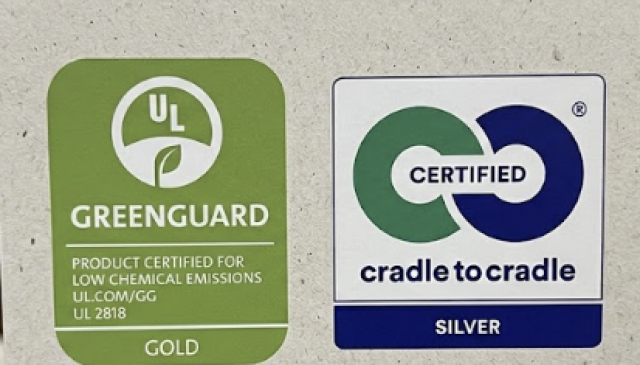
3) GreenGuard Gold and Cradle-to-Cradle Silver: Indoor Air Quality and Circular Economy
As the building industry pivots toward “Green Building” initiatives, certifications like GreenGuard Gold have become essential for interior hardware. This certification ensures that Skeid’s hinges meet some of the world’s most rigorous third-party chemical emissions standards, contributing to healthier indoor environments. This is a critical factor for architects designing hotel lobbies, medical facilities, or residential complexes where indoor air quality is a priority.
Furthermore, achieving the Cradle-to-Cradle Silver certification demonstrates a commitment to the circular economy. This evaluation looks at material health, product circularity, clean air and climate protection, water and soil stewardship, and social fairness. For a technical R&D team with 20 years of experience, this means selecting finishes and alloys that are not only durable but also recyclable. It aligns the hardware with the values of modern developers who prioritize LEED or BREEAM rated projects. By integrating these environmental benchmarks into their core R&D, Skeid provides a clear competitive advantage for international distributors seeking to supply the next generation of sustainable infrastructure.
Technical Innovation and Application in Modern Architecture
The practical application of these certified hinges is best exemplified by the VS160 series. Designed specifically for wooden doors and flush door systems, this hardware utilizes a sophisticated internal mechanism that allows for seamless integration. The 3D adjustability feature is not merely a convenience; it is a technical necessity for flush doors where a 1mm misalignment is visible to the naked eye.
Skeid’s R&D team focuses on the intersection of aesthetics and mechanical load. In high-end projects–ranging from minimalist office spaces to industrial-grade facilities–the hinges must remain invisible while providing the structural support of a traditional industrial hinge. The use of high-quality materials ensures corrosion resistance and thermal stability, which is essential for projects across varying climates, from the humid coastal regions of Shanghai to the temperate zones of Europe.
The company’s capability as an OEM and ODM partner allows for the customization of these technical parameters to meet specific project needs. Whether it is adjusting the hinge leaf thickness for a particular door profile or modifying the load capacity for oversized security doors, the engineering remains rooted in the verified standards of their ISO and CE certifications. This blend of custom flexibility and rigid certification compliance provides a reliable foundation for global trade partners.
As the industry moves toward more integrated “smart” building solutions, the role of basic hardware like hinges remains fundamental. A door is only as good as its pivot, and a flush door is only as “flush” as its hardware allows it to be. By maintaining a focus on technical precision and independent verification, manufacturers ensure that the invisible science of a hinge continues to support the visible beauty of modern architecture.
For more information on technical specifications and certified hardware solutions, visit the official website: https://www.skdwerk.com/

This article was originally published by IssueWire. Read the original article here.