(Isstories Editorial):- Jinan, Shandong Apr 2, 2026 (Issuewire.com) – The global chemical industry identifies certain compounds as indispensable cornerstones of modern material science, among which Titanium Dioxide remains the preeminent white pigment for industrial applications. Known for its exceptional refractive index and opacity, this inorganic compound is a fundamental requirement for the production of high-performance paints, coatings, and plastics. Beyond its primary function as an opacifying agent, Titanium Dioxide provides critical protection against ultraviolet (UV) degradation, thereby extending the structural integrity and color retention of coated surfaces exposed to harsh environmental conditions. As architectural and automotive sectors demand higher standards for durability and finish quality, the chemical processing of this mineral has evolved to prioritize particle size uniformity and surface treatment optimization, ensuring maximum dispersibility within various polymer matrices.
The efficacy of Titanium Dioxide in coating systems is dictated by the physics of light scattering. To achieve the desired level of brightness and “hiding power,” manufacturers must control the crystal structure–typically rutile or anatase–to ensure it effectively interferes with visible light. Rutile Titanium Dioxide, in particular, is favored for outdoor applications due to its higher density and superior weather resistance. By utilizing advanced milling and coating technologies, chemical producers can apply inorganic treatments (such as alumina or silica) to the pigment surface. These treatments serve to neutralize the photocatalytic activity of the Titanium Dioxide particles, preventing the degradation of the surrounding resin binder and ensuring that the coating remains stable over long-term exposure to sunlight and moisture.
The industry is currently undergoing a significant transition toward more sustainable production methodologies. Historically, the extraction and refinement of titanium minerals involved energy-intensive processes that generated substantial byproduct volumes. However, recent advancements in “green” chemistry have led to the development of High-Efficiency and Environmentally Friendly Titanium Dioxide Preparation New Technology, which focuses on reducing carbon emissions and improving resource utilization rates. These innovations often involve the recycling of process acids and the implementation of closed-loop systems that minimize waste. By addressing these technical bottlenecks, manufacturers are not only meeting stringent global environmental regulations but also improving the overall purity and performance characteristics of the final pigment, which is essential for high-end industrial grade applications.
More on Isstories:
- Molecular Precision in Surface Science: The Strategic Role of Titanium Dioxide in High-Performance Coatings
- Beyond Square Waves: How Keygree’s Multi-Waveform TIG Series Solves the Three Toughest Challenges in High-End Welding
- The Evolution of Natural Materials in Modern Architecture: Sustainability and Durability in Premium Wood Surfaces
- Beyond the Arc: How ACDC Twin-Wire SAW Solves Modern Fabrication’s Toughest Challenges
- Collaborative Robots: The Pivotal Engine for Unlocking Agile, High-Mix Manufacturing
In the specialized realm of chemical manufacturing, the capabilities of facilities like Shandong Zhongjin Chemical Co., LTD represent a commitment to technical excellence and quality assurance. The production of industrial-grade Titanium Dioxide requires rigorous adherence to international standards, including ISO 9001 and various environmental compliance benchmarks. Quality control protocols involve laser diffraction for particle size analysis and spectrophotometry to verify coloristic properties. Such precision ensures that the pigment performs consistently across different batches, a critical factor for large-scale industrial users who require predictable results in their coating formulations. Furthermore, the integration of advanced filtration and drying systems ensures that the final powder is free from contaminants that could compromise the surface finish of the end product.
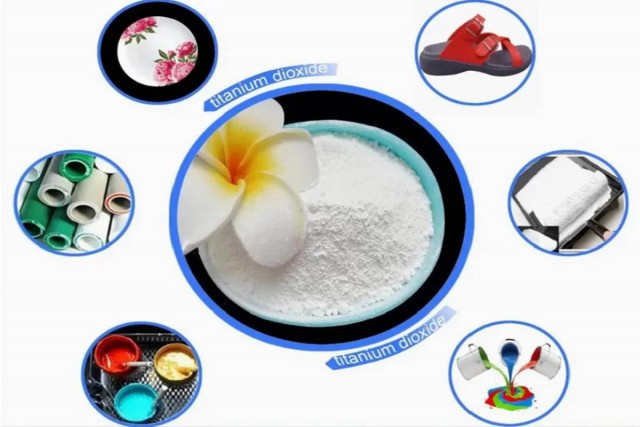
The versatility of titanium dioxide extends beyond liquid coatings into the sectors of masterbatch production, papermaking, and specialized inks. In the plastics industry, Titanium Dioxide provides the necessary opacity for thin films and packaging materials, while also acting as a thermal stabilizer. In the paper industry, it is utilized as a filler to enhance brightness and printability. Each of these applications requires a specific grade of the pigment, tailored with surface treatments that optimize compatibility with the specific medium. This “application-specific” engineering approach allows chemical suppliers to provide targeted solutions that address the unique challenges of different industrial verticals, from the high-gloss requirements of automotive topcoats to the matte finishes of interior architectural paints.
Looking toward the future of the chemical industry, the development of functional Titanium Dioxide variants is opening new avenues for innovation. Nano-scale titanium oxide, for instance, is being explored for its self-cleaning and antimicrobial properties in “smart” coatings. These materials utilize photocatalysis to break down organic pollutants on the surface of buildings, effectively reducing maintenance costs and improving urban air quality. While these advanced grades are currently utilized in niche markets, the trend toward functionalized surfaces suggests that they will become more prevalent as the technology matures. The convergence of nanotechnology and traditional pigment chemistry is set to redefine the boundaries of what industrial coatings can achieve, moving beyond passive protection toward active environmental interaction.
The global supply chain for titanium minerals remains a complex landscape influenced by raw material availability and geopolitical factors. Manufacturers who maintain stable partnerships with high-quality ilmenite and rutile ore suppliers are best positioned to ensure consistent output. Additionally, the ability to scale production while maintaining strict environmental standards is a key differentiator in the international market. As emerging economies increase their demand for infrastructure and consumer goods, the need for reliable, high-purity Titanium Dioxide will continue to grow. This global perspective necessitates a focus on both technical innovation and logistical efficiency, ensuring that high-performance chemical solutions are accessible to a diverse range of global industries.
In conclusion, the strategic importance of titanium dioxide in the modern industrial economy cannot be overstated. From its role in providing the vibrant white finishes of modern architecture to its protective functions in heavy-duty industrial coatings, Titanium Dioxide is the silent engine driving material performance. By prioritizing the development of sustainable preparation technologies and maintaining the highest standards of chemical precision, manufacturers are ensuring that this essential compound remains a viable and effective tool for future generations. As we move closer to a more sustainable and technologically advanced industrial landscape, the continued refinement of Titanium Dioxide chemistry will remain a vital component of global progress in surface science and material durability.
For more information on professional chemical solutions, please visit the official website: https://www.zjsles.com/.
Shandong Zhongjin Chemical Co., LTD
[email protected]
No. 2566, Century Avenue, High-tech Zone, Jinan City, Shandong Province, China
https://www.zjsles.com/
This article was originally published by IssueWire. Read the original article here.