(Isstories Editorial):- Xuzhou, Jiangsu Sheng Mar 28, 2026 (Issuewire.com) – What Makes a Professional Household stacked energy storage factory from China? A Look at Intellvation
The global energy landscape is currently undergoing a profound transformation, shifting from centralized fossil-fuel dependence toward decentralized, renewable-driven autonomy. As residential solar adoption accelerates across Europe, North America, and Australia, the demand for sophisticated storage solutions has moved beyond simple battery backup to integrated, high-performance systems. For international distributors and renewable energy integrators, identifying a Professional Household stacked energy storage factory from China has become a strategic necessity to bridge the gap between advanced battery chemistry and practical residential application. This evolution is driven not only by the need for energy security but by the technical requirement for systems that are modular, scalable, and inherently safe. By examining the technical rigor and manufacturing standards of specialized producers like Intellvation, we can better understand the criteria that define modern energy storage excellence.
The Engineering Logic of Stacked Modular Storage
More on Isstories:
- Gartner’s 2026 Multi-Agent Systems Boom: Why Enterprises Need Unified Infrastructure to Make Agentic AI Work
- What Makes a Professional Household stacked energy storage factory from China? A Look at Intellvation
- 13 Summer Skincare Mistakes You Need to Avoid
- 30 Top Melancholic Romantic Movies that can Make You Cry
- Experience A Fun-Filled Summer with The Exciting Activities
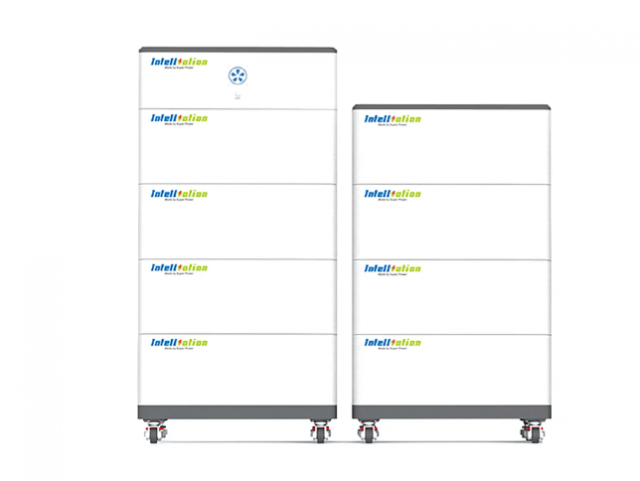
The transition toward “stacked” or modular architecture represents a significant departure from traditional, fixed-capacity wall-mounted batteries. In a residential context, energy needs are rarely static; a household’s consumption may increase with the addition of an electric vehicle (EV), a heat pump, or home expansion. Stacked energy storage addresses this variability by allowing users to increase capacity incrementally. Each module in such a system functions as an independent unit, typically comprising the battery cells, a dedicated Battery Management System (BMS), and a protective enclosure.
Modern systems are designed for high-voltage compatibility, often interfacing with three-phase hybrid inverters. This compatibility is crucial for modern homes that require stable power for heavy appliances. By supporting a wide range of inverter brands, a China Best Household stacked energy storage Supplier ensures that their hardware can be integrated into existing solar infrastructures without requiring extensive retrofitting. The technical advantage of these systems lies in their conversion efficiency, which can reach up to 98%. This high level of efficiency minimizes energy loss during the charge and discharge cycles, maximizing the return on investment for the homeowner.
From a safety perspective, the shift toward solid-state battery cells marks a pivotal moment in the industry. Unlike traditional liquid-electrolyte lithium-ion batteries, solid-state variants offer higher thermal stability and a significantly reduced risk of thermal runaway. These cells are monitored in real-time by vehicle-level BMS units that track voltage, current, and temperature at a granular level. Such systems incorporate passive balancing to maintain consistency across all modules, ensuring that the entire stack operates within safe parameters even during high-power emergency-backup scenarios during grid outages.
Installation Efficiency and User-Centric Design
One of the primary barriers to widespread energy storage adoption has historically been the complexity and cost of installation. Stacked systems solve this by utilizing a “plug and play” philosophy. Prefabricated cables and connectors eliminate the need for complex wiring between modules, reducing the labor time required for on-site configuration. The compact and lightweight nature of these modular units means they can be installed in diverse environments, from garages to specialized utility rooms, without requiring heavy lifting equipment or extensive structural reinforcements.
For the end-user, the modularity translates to flexible scalability. A system might start with two modules to cover basic nighttime lighting and appliance use but can later be expanded to six or eight modules to support a completely off-grid lifestyle. This independent monitoring and protection at the module level means that if one unit requires maintenance, the rest of the system can often continue to function, providing a layer of reliability that monolithic systems cannot match. As a China Leading Household stacked energy storage provider in China, companies in this space focus on ensuring that this scalability does not compromise the aesthetic or spatial footprint of the home, maintaining a sleek, unobtrusive profile.
The Strategic Foundations of Advanced Manufacturing
The capability to produce these complex systems originates from a robust industrial and research infrastructure. Intellvation, operated under Super Power New Energy Co., Ltd., exemplifies the modern Chinese approach to energy technology. Founded in 2018 with a substantial capital investment of 40 million US dollars, the enterprise was built with a clear focus on the research and development of large-capacity solid-state battery cells. With a production capacity reaching 3GWh, the manufacturing scale is designed to meet the growing global demand for high-density storage.
The core of this manufacturing prowess is a technical team characterized by deep academic and industrial expertise, including five doctors and ten masters specializing in electrochemical energy storage. This team has been instrumental in mastering the manufacturing technology for 500AH solid-state battery cells, a high-capacity threshold that requires precise control over material science and assembly processes. Operating as a Professional Household stacked energy storage factory from China, the facility coordinates the entire lifecycle of the product–from the synthesis of new materials for solid-state batteries to the final assembly of energy storage power stations.
This technical depth is supported by a strategic geographical layout within the Yangtze River Delta, an area known for its highly integrated industrial ecosystem. By positioning the sales and market window in Shanghai, the company maintains direct communication with global customers, ensuring that product iterations are informed by real-world feedback from diverse markets. Meanwhile, the operational core in Jiangsu coordinates resource allocation and R&D, while modern production lines in Shandong and Xuzhou serve as the primary manufacturing bases. This decentralized yet integrated structure ensures that technological breakthroughs in the lab are rapidly translated into stable, high-quality output on the factory floor.
Navigating Global Industry Trends
The global energy storage system (ESS) market is currently moving toward a standard of “high safety and high density.” As regulatory bodies in Europe and North America tighten safety certifications for residential indoor installations, the industry is increasingly looking toward solid-state technology as the definitive solution. The ability to manufacture these cells at scale, while maintaining rigorous quality control standards, is what distinguishes a top-tier manufacturer in the current landscape.
Furthermore, the integration of energy storage with EV charging infrastructure is a growing trend. Modern stacked systems are being designed not just to power the home, but to act as a central hub for the household’s entire energy ecosystem. This includes managing the high-current demands of fast-charging an electric vehicle without straining the home’s main electrical panel. The development of proprietary BMS software that can intelligently distribute power based on real-time demand and grid pricing is becoming a key area of competition.
The success of a storage system in the international market is also tied to its compliance with international safety and performance standards. Rigorous testing for cycle life, discharge depth, and environmental resilience ensures that the systems can withstand the varied climates of a global customer base. By focusing on the research and development of new materials and large-capacity cells, innovative manufacturers are positioning themselves to lead the next generation of sustainable energy solutions, providing the hardware necessary for a carbon-neutral future.
Synthesis of Technical and Corporate Excellence
The evolution of residential energy storage from a niche luxury to a standard household utility is a direct result of technical refinement and industrial scaling. The shift toward stacked, modular systems utilizing solid-state chemistry addresses the primary concerns of modern homeowners: safety, ease of use, and long-term flexibility. A system that can achieve 98% efficiency while offering the simplicity of plug-and-play installation represents the current peak of residential energy engineering.
On the corporate side, the integration of high-level academic research with large-scale manufacturing capacity is the engine driving these advancements. The strategic coordination of R&D centers, market-facing offices, and high-capacity production lines allows for a rapid response to changing global energy standards. As the world moves toward more resilient and decentralized power grids, the role of specialized manufacturing bases in providing reliable, high-density storage will only become more critical. By maintaining a focus on solid-state innovation and modular design, the industry provides a clear pathway for households to achieve true energy independence without sacrificing safety or performance.
To explore the technical specifications and modular configurations of these advanced systems, further information is available at the official resource for residential energy solutions: https://www.intellvation.com/
This article was originally published by IssueWire. Read the original article here.