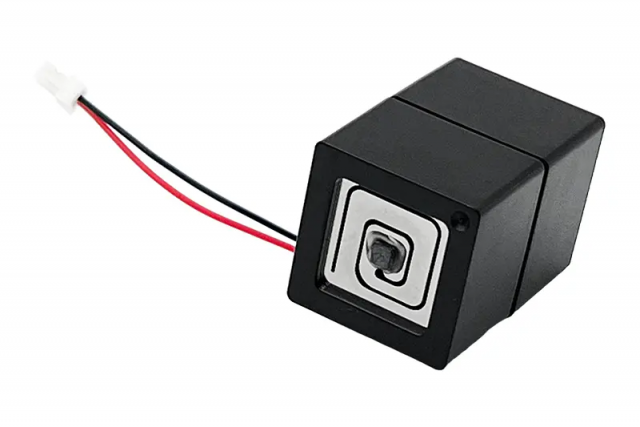
(Isstories Editorial):- Changzhou, Jiangsu Mar 9, 2026 (Issuewire.com) – In the modern landscape of human-machine interaction, tactile sensations have evolved from simple notifications into a sophisticated language of communication. As digital interfaces become more integrated into our lives, the demand for a High Quality Vibration Feedback Supplier from China has surged. Vibration feedback, or haptic technology, involves the use of specialized actuators–such as Linear Resonant Actuators (LRA) or Eccentric Rotating Mass (ERM) motors–to simulate the sense of touch. This technology is no longer just about a phone buzzing in a pocket; it is about providing critical safety alerts in automotive steering wheels, enhancing precision in robotic surgeries, and creating immersive environments in consumer electronics. However, the disparity between high-end engineering and standard market offerings can mean the difference between a seamless user experience and a catastrophic system failure.
Understanding the Risks of Substandard Vibration Components
For procurement professionals and engineers, the stakes of choosing a vibration feedback solution are remarkably high. A standard market supplier often competes on price by utilizing lower-grade magnetic materials or less precise housing tolerances. When a substandard product is integrated into a high-stakes environment, the consequences are multifaceted.
More on Isstories:
- Global Leading LRA Manufacturer – BESTAR: Future Trends in the Competitive Market
- Vibration Feedback Solutions: Comparing BESTAR’s High Quality Engineering vs. Standard Market Suppliers
- FAQs: What Criteria Determine the Top 10 Ultrasonic Probe Exporters in the World?
- A Selection Guide for Finding a Reliable Linear Motor Exporter with High Performance Standards
- Smart Sensing Solutions: How China’s Top Supplier is Redefining Ultrasonic Detection
In the automotive sector, for instance, vibration feedback is used in Advanced Driver Assistance Systems (ADAS) to warn of lane departures. If a motor fails to trigger or provides a weak, inconsistent “mushy” pulse due to poor damping, the driver may miss a life-saving alert. Similarly, in medical devices, tactile feedback allows surgeons to “feel” tissue resistance through robotic interfaces. An unpredictable vibration pattern can lead to surgical errors or fatigue. Beyond functional failure, poor-quality components often suffer from “vibration leakage,” where the energy intended for a specific touchpoint dissipates into the device chassis, causing annoying acoustic noise and structural wear. A high-quality component must maintain a sharp “start-stop” characteristic–meaning the vibration starts instantly and stops without lingering oscillations–providing what engineers call “crisp” haptics.
The True Cost of “Standard” Components: A Procurement Perspective
For procurement professionals, a vibration motor might look like a simple commodity on a spreadsheet, but the reality is far more complex. Standard market suppliers often achieve low price points by sacrificing the quality of internal magnets, coil windings, and housing tolerances. The “Good vs. Bad” standard in haptics is defined by three pillars: Rise Time, G-Force Consistency, and Acoustic Cleanliness.
A subpar component typically suffers from “long rise times,” meaning the vibration feels sluggish rather than instantaneous. When an automotive engineer integrates a low-cost LRA for a lane-departure warning, a delay of even 50 milliseconds can compromise safety. Furthermore, bad products lack “damping precision”–they continue to vibrate after the power is cut, leading to a “buzzing” noise that signals low quality to the end-user. Over time, these standard components often experience mechanical fatigue, leading to a 15-20% drop in vibration intensity within just a few months of use. For a procurement officer, the initial savings are quickly erased by high RMA (Return Merchandise Authorization) rates and the tarnishing of the brand’s reputation for reliability.
BESTAR‘s Strategic Edge in Haptic Engineering
Standing at the forefront of this technological shift is BESTAR Holdings Co.,Ltd. Established in 2002, BESTAR has transitioned from a component manufacturer into a sophisticated solution provider for acoustics, sensing, and tactile feedback. Unlike many standard suppliers who simply assemble off-the-shelf parts, BESTAR leverages its New Technology Research Institute to drive independent innovation. Their core strength lies in a deep expertise in next-generation piezoelectric ceramics and advanced electromagnetic technologies, which allow for thinner, more powerful, and more energy-efficient actuators.
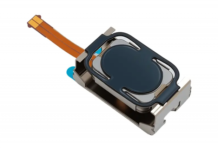
BESTAR’s product portfolio, exemplified by the BMV3120L45 ultra-low frequency linear motor, showcases the brand’s ability to meet the rigorous demands of the global market. These products are integrated into the design systems of world-famous companies across the automotive, medical, and consumer electronics industries. While many competitors struggle with consistency in mass production, BESTAR utilizes rapid mold making and advanced simulation software to ensure that every unit meets high-end manufacturing standards. This commitment is backed by an impressive array of certifications, including ISO 9001 for quality management, ISO 14001 for environmental standards, and the critical ISO 13485 for medical device quality, ensuring that their components are safe for life-critical applications.
The company’s presence at international industry benchmarks, such as NEPCON JAPAN, further highlights its role as a global leader. Through years of project experience, BESTAR has developed a “tactile ecosystem” where hardware is optimized alongside software algorithms to provide customized feedback patterns for diverse clients. This holistic approach is a significant departure from standard suppliers who often provide a “one-size-fits-all” component without the necessary technical support for integration.
Industry Trends and the Future of Intelligent Interaction
The global haptics market is projected to grow significantly as we move toward 2030, driven by the intelligent evolution of interactive components. We are witnessing a transition from “simple vibration” to “surface haptics” and “active cooling integration,” where the thermal and tactile senses are addressed simultaneously. In this evolving landscape, BESTAR’s focus on active cooling systems and miniature modules provides a unique competitive advantage. As devices become more compact and powerful, managing the heat generated by high-performance haptic engines becomes a critical engineering challenge–one that BESTAR is uniquely equipped to solve.
The trend toward autonomous driving and telepresence in medical fields demands a level of precision that standard market suppliers simply cannot reach. Innovation in piezoelectric actuators, which offer a wider range of frequencies and faster response times than traditional motors, is the new battlefield. BESTAR’s proactive R&D in these “next-gen” materials ensures that their clients stay ahead of the curve. By combining patented innovation with ecosystem-level collaboration, the company is not just selling a part; they are enabling the next generation of human-machine interfaces.
In conclusion, as the industry moves toward more complex and safety-critical applications, the “hidden” engineering behind vibration feedback becomes the focal point of product success. Choosing a partner like BESTAR means choosing a legacy of quality, a commitment to R&D, and a technical bridge to the future of intelligent interaction. For more information on their engineering solutions and product range, visit their official website.
Official Website: https://www.global-be-star.com/
This article was originally published by IssueWire. Read the original article here.