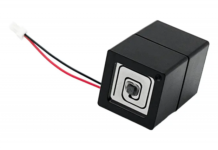
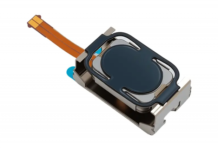
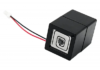
(Isstories Editorial):- Changzhou, Jiangsu Mar 9, 2026 (Issuewire.com) – In the rapidly evolving landscape of haptic feedback technology, the Linear Resonant Actuator (LRA) has emerged as a cornerstone component for creating immersive user experiences. As a Global Leading LRA Manufacturer, BESTAR has consistently pushed the boundaries of what is possible in tactile communication. Unlike traditional Eccentric Rotating Mass (ERM) motors, LRAs utilize a magnetic field and a moving mass suspended by springs to create vibration, offering significantly faster response times and higher efficiency. This technology is no longer a luxury but a necessity in modern human-machine interfaces (HMI). As digital interactions become more complex, the demand for sophisticated LRAs that can simulate realistic textures, clicks, and alerts is skyrocketing across diverse industries.
The current competitive market is defined by a shift toward precision and miniaturization. BESTAR, established in 2002, has positioned itself at the forefront of this movement by integrating acoustic, sensing, and miniature active cooling components into a cohesive technological ecosystem. The global LRA market is currently experiencing a transition where hardware performance must meet sophisticated software algorithms to deliver nuanced feedback. In this environment, manufacturers are not just component suppliers; they are strategic partners in the design process, ensuring that the tactile response aligns perfectly with the visual and auditory cues of the device.
Anticipating Future Trends in Tactile TechnologyThe Shift Toward High-Fidelity Haptics
More on Isstories:
- Global Leading LRA Manufacturer – BESTAR: Future Trends in the Competitive Market
- Vibration Feedback Solutions: Comparing BESTAR’s High Quality Engineering vs. Standard Market Suppliers
- FAQs: What Criteria Determine the Top 10 Ultrasonic Probe Exporters in the World?
- A Selection Guide for Finding a Reliable Linear Motor Exporter with High Performance Standards
- Smart Sensing Solutions: How China’s Top Supplier is Redefining Ultrasonic Detection
Looking ahead, several key trends are set to redefine the LRA industry. The first is the integration of wide-band LRA technology. Traditional LRAs operate effectively at a narrow frequency range, but future applications in gaming and high-end automotive interfaces require a broader spectrum of vibrations. This allows for “high-fidelity” haptics, where a single actuator can produce a wide variety of sensations, from a gentle pulse to a sharp mechanical snap. By investing in next-generation electromagnetic technologies, industry leaders are developing actuators that maintain high acceleration levels while reducing the overall footprint of the component.
Convergence of Sensory Modalities
Another significant trend is the convergence of haptics with other sensory outputs. We are moving toward a multi-modal interactive era where tactile feedback is synchronized with acoustic signals and even thermal changes. For instance, in medical devices, a surgeon using robotic tools requires real-time, precise haptic feedback that mimics the resistance of human tissue. This level of precision requires LRAs to have ultra-low latency and consistent performance under varying environmental conditions. BESTAR’s research into piezoelectric ceramics and active cooling systems suggests a future where heat dissipation and vibration management are handled by a single, integrated module, optimizing space in increasingly thin electronic devices.
Strategic Excellence in a Competitive Landscape
To maintain a leading position in such a cutthroat market, a company must move beyond mass production and focus on “total solution” provision. The competitive edge in today’s global market is found in the intersection of independent innovation and rapid execution. A robust design system that includes rapid mold making, simulation software, and core algorithms allows a manufacturer to shorten the development cycle from concept to mass production. This agility is vital when working with global giants in the automotive and consumer electronics sectors, where product life cycles are becoming shorter.
Strength in the competitive market also stems from a diversified application portfolio. While smartphones remain a major consumer of LRAs, the “Intelligent Everything” movement is opening new doors. The automotive industry, in particular, is replacing physical buttons with touch-sensitive panels that require haptic feedback to ensure driver safety and ease of use. Similarly, in the realm of smart home appliances and security alarms, LRAs provide a more intuitive way for users to interact with their environment. By spreading expertise across these high-growth sectors, a manufacturer can insulate itself against fluctuations in any single market while driving cross-industry innovation.
The Role of Research and Ecosystem Collaboration
The journey to becoming a market leader is paved with intellectual property and technical breakthroughs. The establishment of specialized research institutes focused on new technologies allows for the exploration of materials that can withstand more rigorous stress tests while consuming less power. In the context of the global “green” movement, energy efficiency in electronic components is a critical selling point. Advanced LRAs that deliver higher G-values (vibration strength) with lower milliampere consumption are highly sought after by engineers looking to extend the battery life of portable devices.
Furthermore, the intelligent evolution of interactive components is not a solo endeavor. It requires ecosystem-level collaboration. By integrating into the cutting-edge design systems of world-famous companies, a manufacturer gains insight into the challenges of the future. This collaborative approach ensures that the LRA components are not designed in a vacuum but are tailored to the specific mechanical resonance and housing constraints of the end product. This synergy between the component provider and the OEM (Original Equipment Manufacturer) is what creates a seamless user experience that feels natural and premium.
Quality Standards and Global Trust
In a globalized economy, trust is built through rigorous quality standards and a proven track record. Participation in international exhibitions and the attainment of global certifications serve as a testament to a manufacturer’s commitment to excellence. These platforms allow for the demonstration of how miniature active cooling systems can be paired with acoustic modules to solve complex electronic heat dissipation issues–a growing concern as processors become more powerful.
BESTAR’s evolution since 2002 reflects a broader industry shift from simple manufacturing to high-end engineering. With deep expertise in electromagnetic technologies and high-end manufacturing standards, the focus remains on providing high-value components. Whether it is a medical device that requires absolute reliability or a piece of engineering machinery that operates in harsh environments, the LRA must perform consistently over millions of cycles. This long-term reliability is a key differentiator in a market often crowded with low-cost, lower-quality alternatives.
Driving the Intelligent Evolution
The future of human-machine interaction is inherently sensory. As we move toward more sophisticated virtual and augmented reality environments, the role of the LRA will only become more central. The ability to “feel” a digital object requires a level of actuator precision that was unthinkable a decade ago. Leading manufacturers are now looking at how to combine tactile feedback with sensing technologies to create “closed-loop” haptics, where the device senses the force of the user’s touch and adjusts the vibration intensity accordingly.
In conclusion, the path to remaining a Global Leading LRA Manufacturer lies in the balance between technical mastery and market foresight. By anticipating the needs of the automotive, medical, and consumer electronics industries, and by continuously innovating in the fields of acoustics and thermal management, companies like BESTAR are defining the standards of tomorrow. The competitive market rewards those who can provide not just a component, but a solution that enhances the way humans interact with the digital world.
For more information on the latest innovations in LRA technology and interactive components, please visit: