From noir classics to modern nerve shatterers, this is a ride through cinema’s most gripping thrillers that still haunt, shock, and leave hearts racing.
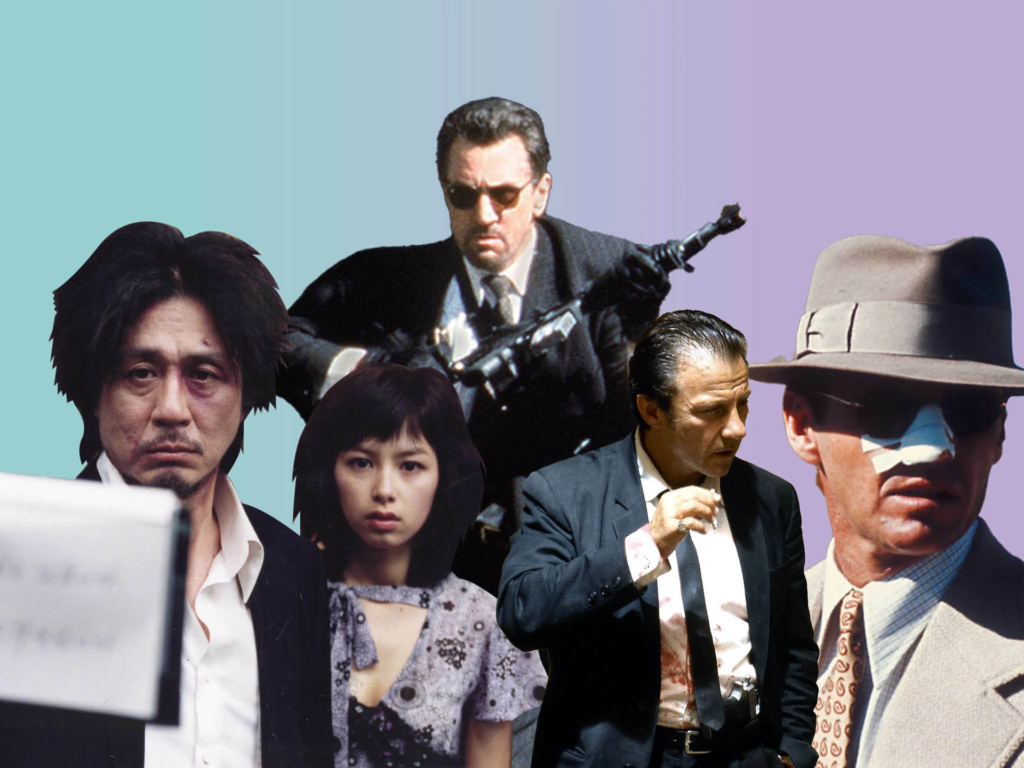
Some films take time to settle in. Sometimes thriller movies will feel like complete chaos, sometimes they will come up with such a brilliant twist that will make you question anything and everything. Similarly, some movies will leave your nerves fried and your heart racing long after the credits roll.
So, what really makes a great thriller? It is the sweaty palms. The clenched jaw. The restless leg that will not stop shaking. A great thriller does not just entertain you; it hijacks your body. From murder and conspiracy to gaslighting and crime, the genre stretches wide and wild. Yet the best ones always do the same thing. They pull you in tight and refuse to let you breathe. So, let’s move ahead and see what the best of the best in the game has to offer you!
- LA Confidential (1997)
The paranoia and moral rot that defined 1950s noir have been revisited countless times, polished and repackaged for modern viewers. But Curtis Hanson chose a braver route. Instead of updating the mood, he rebuilt the era itself. The result is a lush descent into old Hollywood corruption, where the glamour hides something far uglier underneath. Every frame feels deliberate, where the suits are crisp, the neon glows, and the violence lands hard.
This is a world of ambitious cops, desperate starlets, and power brokers who smile while twisting the knife. The maze keeps tightening, and just when you think you see the way out, it shifts again. Even the brief Lana Turner cameo carries weight, like a ghost of the studio system watching it all unfold. The moment that will stay with you is when Guy Pearce’s by-the-book sergeant earns the name Shotgun Ed. It is brutal, it is costly, and it changes everything!
- The Manchurian Candidate (1962)
In the early 1950s, America was gripped by fear of Soviet control, yet inside Hollywood, the paranoia cut even deeper, especially after the Joseph McCarthy hearings made it clear that the real threat could come from within. The Manchurian Candidate captures that dread with icy precision, turning political panic into something intimate and deeply unsettling. Shot in stark black and white, the film feels cold and clinical, though its themes are anything but simple. This is a story about brainwashing and the terrifying ease with which loyalty can be twisted into obedience. Every scene hums with suspicion. So, trust no one, and question everything. Then comes the moment that truly lands like a punch to the gut. We slowly realise that Angela Lansbury is not playing a fussy, overbearing mother after all, but something far more chilling. That reveals shifts the ground beneath your feet and turns domestic tension into outright horror.
- Seven (1995)
David Fincher found his turning point with Se7en, the moment he stepped out of the shadow of glossy music videos and into something darker and far more lasting. The film drips with his signature gloom, from the jagged opening credits to the rain-soaked city that feels like a moral wasteland. Yet beneath the style, there is real bite. The story cuts deep, exposing the cracks in the police force as sharply as it dissects the warped logic of its serial killer. Andrew Kevin Walker’s script pits quiet intellect against reckless impulse, book smarts against raw emotion, and Fincher frames both as fragile shields in a world that chews people up. The sloth victim scene shook audiences to their core, but the film’s true stamp of immortality comes in the desert showdown. The power shifts and the dread tightens. That desperate cry of “What’s in the box?” still echoes years later.
- Taxi Driver (1976)
Long before headlines blurred into a nightmare, Martin Scorsese delivered a film that stared straight into the void. Taxi Driver remains a brutal portrait of isolation, wounded pride, and the dangerous fantasy of playing hero in a world that feels rotten. Nearly five decades later, its edge has not dulled. If anything, it cuts deeper. The story of Travis Bickle, played with unnerving intensity by Robert De Niro, traces the slow spiral of a man who mistakes rage for purpose and violence for redemption. His descent feels disturbingly current, like a warning that never stopped echoing. The film captures the sickness of alienation with grim clarity, refusing to soften its blow. Then comes the mirror scene. Alone and coiled tight, Bickle practices his threat, staring at his reflection and firing off the line that became legend. “You talkin’ to me?” remains one of cinema’s most chilling moments.
- Mulholland Drive (2001)
David Lynch crafted something truly singular with Mulholland Drive, a film that drifts between Hollywood fantasy and pure dream logic without ever asking permission. In this fractured vision of Los Angeles, danger hums beneath every glossy surface. A grim-stained figure can step out of the shadows. A cowboy can control fate with a nod. Reality can split in two and leave everyone scrambling for meaning. For all the endless debates about what it actually means, the real power lies in how it feels. The film grips tight as a noir and unsettles like a ghost story that refuses to end. It moves with eerie confidence, daring viewers to keep up. The shock at Winkie’s Diner rattles nerves, but the Club Silencio sequence hits even harder, a hypnotic plunge so precise it feels like the ground is being pulled away in real time.
- Vertigo (1958)
Often hailed as cinema’s ultimate achievement, Vertigo finds Alfred Hitchcock at the height of his obsession with desire, control, and illusion, all bathed in lush Technicolor that feels almost hypnotic. Kim Novak, playing Judy Barton or perhaps Madeleine Elster, embodies a slippery, enigmatic femininity that keeps shifting just out of reach. Opposite her, James Stewart twists his clean-cut persona into something far darker as Scottie Ferguson, a former detective slowly unraveling under the weight of his fixation. The film simmers with longing and dread, building toward moments that feel both romantic and deeply disturbing. Then comes the nightmare sequence. Scottie thrashes in bed as the screen explodes into surreal graveyard imagery, violent bursts of color, Bernard Herrmann’s spiraling score, and Stewart’s floating, disembodied head. It is haunting, and it lingers.
- The Fugitive (1993)
When people talk about old school blockbusters, The Fugitive is the blueprint. It delivers scale and spectacle without sacrificing character or tension. At the center stands Harrison Ford as Dr. Richard Kimble, a man framed for his wife’s murder who refuses to go quietly. His escape during a prison transfer sets off a relentless chase that never loosens its grip. Ford plays Kimble with simmering anger and raw desperation, grounding even the wildest turns in pure conviction. Hunting him down is Tommy Lee Jones, unblinking as US Marshal Gerard, a performance that earned an Oscar and endless quotes. The film leans into its premise with total sincerity. No winks, no irony, just tension that keeps building. Then comes the dam showdown. Gerard corners Kimble with nowhere left to run; surrender or leap into roaring water. The choice defines the film and still hits hard.
- Kiss Me Deadly (1955)
Robert Aldrich pushed film noir to its breaking point with Kiss Me Deadly, a vicious fever dream that spirals toward nuclear annihilation. The dread hangs thick from the start. There is talk of torture. There is casual cruelty. Even an opera record gets smashed without a second thought. At the center of the chaos stands Mike Hammer, ripped from Mickey Spillane’s pulpy pages and played with a smug sneer by Ralph Meeker. He is no noble detective, but is brutal and driven by greed. Los Angeles has hardened him into something sour and dangerous. Then comes the moment that sealed the film’s legend. Lily Carver, gun in hand, demands her cut and hovers over a glowing suitcase that would echo through cinema history. This is when curiosity wins, and the lid lifts, followed by utter chaos.
- Zodiac (2007)
David Fincher’s Zodiac stares into the abyss and refuses to blink, turning the search for truth into its own haunting mystery. Set against the real-life terror of the Zodiac Killer, the film captures a decade defined by paranoia and frustration. Detectives and journalists chase clues that dissolve in their hands, good men worn down by a phantom who always seems one step ahead. Fincher directs with icy precision, building tension through silence, paperwork, and long nights that lead nowhere. Obsession bleeds through every frame. Then comes the break room scene. A soft-spoken suspect, played with eerie calm by John Carroll Lynch, offers polite denials while a watch bearing the killer’s symbol ticks on his wrist. The evidence feels close, yet never close enough. “I am not the Zodiac,” he says, almost amused. However, the doubt lingers long after the scene ends.
- Double Indemnity (1944)
Film noir reaches peak seduction and betrayal in Billy Wilder’s Double Indemnity, a razor-sharp descent into greed and desire. Fred MacMurray plays the smooth-talking insurance salesman who thinks he can control the game, until Barbara Stanwyck’s femme fatale pulls him into a murder plot that feels both reckless and inevitable. The shadows stretch long across Los Angeles, wrapping the story in smoke and moral decay. Stanwyck commands every frame with cool confidence, her voice soft but loaded with danger. The film’s influence echoes through decades of thrillers that followed. Then comes the supermarket scene. Under bright lights that suddenly feel sinister, she leans in and murmurs, “It’s straight down the line for both of us.” In that moment, noir’s blueprint for beautiful trouble is sealed.
- Les Diaboliques (1955)
A shadow-soaked boarding school, a tyrant of a headmaster, a weary wife, and a simmering mistress. Henri-Georges Clouzot loads Les Diaboliques with everything a great thriller needs and then tightens the screws. Often called France’s answer to Hitchcock, Clouzot pairs the fragile spouse, played by Véra Clouzot, with the bold and magnetic Simone Signoret as unlikely allies bound by revenge. Their target is the cruel man who has poisoned both their lives. The corridors feel endless. The swimming pool looks filthy and ominous. Even the sound of children becomes unbearable. Every detail feeds the tension. The film builds with icy control toward a finale packed with reversals so sharp that audiences were once begged not to reveal the ending. Then comes the image that never fades. The headmaster’s corpse, pale and lifeless, rises from a bath with ghostly eyes wide open. It is not part of the plan. It is pure nightmare fuel.
- The Maltese Falcon (1941)
John Huston’s The Maltese Falcon set the gold standard for noir with a confidence that still feels electric. Adapted from Dashiell Hammett’s hard-boiled novel, the film wastes no time pulling viewers into a world of double crosses and shifting loyalties. The plot clicks into place with razor precision. The villains steal every scene, from Sydney Greenstreet’s silky menace to Peter Lorre’s twitchy desperation. Mary Astor glides through it all as a dangerously alluring femme fatale. At the center stands Humphrey Bogart’s Sam Spade, cool under pressure and sharp enough to outtalk a loaded gun. He is not exactly noble, but compared to the sharks circling him, he almost looks righteous. The black bird everyone is chasing became legend in its own right, a simple statue loaded with greed and fantasy. When asked what it truly is, Spade delivers the line that sealed its place in history. For thriller lovers, it is truly the stuff that dreams are made of.
- The 39 Steps (1935)
When Robert Towne praised The 39 Steps as the starting point for modern escapist thrillers, it carried weight. Alfred Hitchcock laid down a template here that would echo for decades. The film glides between danger and playful charm with effortless control. Looming spies and looming death sit side by side with sharp banter and romantic sparks. Hitchcock understood that tension hits harder when it is balanced with wit. Robert Donat and Madeleine Carroll make that balance sing. Their bickering and reluctant chemistry give the chase real personality, even as the stakes climb higher. Then comes the chilling reveal. The seemingly respectable Professor Jordan calmly exposes a missing finger, proof that he is no ally but an enemy agent. In that instant, the game changes, and Hannay’s peril becomes terrifyingly real.
- The Silence of the Lambs (1991)
Set against a restless American landscape that hums with buried violence, Jonathan Demme’s The Silence of the Lambs walks a razor line between procedural thriller and outright horror. The film finds its unlikely hero in FBI trainee Clarice Starling, played with steel and sensitivity by Jodie Foster. Her presence shifts the power dynamic, grounding the story in grit and quiet resolve. The terror splinters in different directions. There are the grotesque moths. There is the skin-wearing killer known as Buffalo Bill. Then there is Dr Hannibal Lecter, brought to chilling life by Anthony Hopkins, a cultured monster whose calm voice hides the mesmerizing manipulation.
Demme builds tension with masterful cross-cutting that tightens like a vice before the final act. The last stretch is almost unbearable. In total darkness, Buffalo Bill stalks Clarice through night vision goggles. Here, every step seems fatal, and the silence in those seconds is deafening!
- Touch of Evil (1958)
Orson Welles was originally hired to act in Touch of Evil, stepping in front of the camera as the bloated and corrupt sheriff Hank Quinlan. Directing was never part of the deal. It was Charlton Heston who pushed for Welles to take control behind the lens, backing him as studio tensions brewed at Universal Pictures. What emerged was pure Welles. A grimy border town noir packed with moral rot, racial tension, sexual menace, and a mournful sense of a country losing its soul. The camera glides with hypnotic precision, turning even simple exchanges into choreography. Yet the studio interference dulled its initial impact, recutting the film against Welles’s wishes. Only decades later did audiences get closer to the vision he intended. The opening remains legendary. A single and unbroken tracking shot follows a ticking bomb tucked inside a car trunk. Suspense has rarely been staged with such audacious control!
- Reservoir Dogs (1992)
Quentin Tarantino did not invent the gangster suit, sharp talk, or botched heist with Reservoir Dogs. The cool owed something to the Rat Pack. The rapid-fire dialogue nodded to Scorsese. The plot echoed City on Fire. Yet when those pieces collided, the effect was explosive. The film hit like a shock to the system, and crime cinema has been chasing that jolt ever since.
What still stuns is the sheer energy. Every line snaps, and every stare is loaded. The performances burn with barely contained fury, turning a warehouse into a pressure cooker. The violence is messy and intimate, never played safe. Then comes the scene that sealed its legend. An ear is sliced off just out of frame while “Stuck in the Middle with You” plays with sickening cheer. The contrast is brutal, which is why the impact lasts.
- The Third Man (1949)
Set amid the tilted streets and inky shadows of postwar Vienna, The Third Man feels like expressionism carved in black and white. Carol Reed directs with icy precision, guiding viewers through sewers, bombed-out buildings, and moral gray zones. At the center looms Orson Welles as Harry Lime, presumed dead until he steps from the darkness with that sly grin. Opposite him, Joseph Cotten plays the loyal friend left scrambling for truth. Welles owns every scene, his baritone curling around lines that drip with charm and menace. The twists land clean and sharp, making Lime’s deception feel both daring and doomed. Then comes the Ferris wheel exchange. High above the city, Lime coolly compares bloody Renaissance Italy to peaceful Switzerland and shrugs at the outcome. Violence, genius, the cuckoo clock. This line stays with you like a taunt.
- Chinatown (1974)
At the height of New Hollywood daring, Roman Polanski delivered Chinatown, a conspiracy thriller that peels back Los Angeles sunshine to expose rot beneath. Robert Towne’s script digs into land deals, corruption, and civic theft with surgical precision, turning water rights into moral quicksand. The city glows like a 1930s romance, yet every frame carries a sour aftertaste. Jack Nicholson prowls through it as Jake Gittes, equal parts charm and desperation. Faye Dunaway brings fragile intensity, while John Huston radiates quiet menace as Noah Cross. The performances fuse with Polanski’s cool control to create something both elegant and poisonous. Then comes the chilling declaration that sums it all up. “The future, Mr. Gittes. The future.” In that line lies greed, power, and a nightmare dressed as progress.
- M (1931)
Haunted by real killers like the Butcher of Hanover and the Vampire of Düsseldorf, Fritz Lang channeled a nation’s dread into M, his groundbreaking first sound feature. The film became a blueprint for the modern psychothriller, pairing procedural tension with a chilling portrait of social decay. Peter Lorre’s Hans Beckert is both a monster and a trapped soul, hunted by police and criminals alike. Lang even turned In the Hall of the Mountain King into a sinister calling card. The image that you see the most is simple and terrifying. It is of a shadow that falls across a wanted poster, and a voice gently tempts a child.
- North by Northwest (1959)
Few thrillers glide with the wit and swagger of Alfred Hitchcock’s North by Northwest. The film sweeps from New York to Mount Rushmore with breezy confidence, turning mistaken identity into pure cinematic pleasure. Cary Grant leads the charge as the polished ad man caught in a deadly case of Wrong Man trouble, balancing panic with remarkable charm. Behind the scenes, Ernest Lehman’s script keeps the pace brisk, Saul Bass delivers that sleek title sequence, and Bernard Herrmann’s score dances between suspense and mischief. Eva Marie Saint and James Mason match Grant beat for beat, making every exchange spark. Then comes the crop duster sequence. A lonely road, and an approaching plane. What begins as a quiet standoff erupts into chaos, leaving Hollywood’s smoothest hero scrambling in the dust.
How many of these have you seen?