(Isstories Editorial):- Shenzhen, Guangdong Feb 27, 2026 (Issuewire.com) – In the heart of southern China, Shenzhen has transformed from a quiet fishing village into a global silicon bastion, often referred to as a premier hub for hardware innovation. Walking through the city’s tech corridors, one feels the pulse of an ecosystem where innovation isn’t just a goal but a daily reality. This metropolis provides the critical infrastructure that powers the global digital economy, housing thousands of high-tech enterprises that drive the future of connectivity.
Within this vibrant landscape, Matrix PT Tech Co., Ltd. (Matrix PT) has emerged as a Professional 40g/800g/1.6t Optical Transceiver Manufacturer. An optical transceiver serves as the vital bridge in modern networking, converting electrical signals into light and vice versa to enable high-speed data transmission across fiber optic cables. By integrating customized AWG assemblies and advanced Mux/Demux components, these devices ensure that the massive influx of data in 5G and AI environments remains fluid and reliable.
Hyper-Connectivity and Industry Trends
More on Isstories:
- Professional 40g / 800g/ 1.6t Optical Transceiver Manufacturer: Performance Comparison from Matrix PT
- China Leading QSFP/CFP Optical Transceivers Factory Matrix PT: Breakthroughs at OFC
- Global Pioneer Anno Robot Powers 24/7 Unmanned Retail Across 60+ Nations, Optimizing Operations with Mobile Kiosks
- China Top Parylene Coating Machine Manufacturer vs Global Competitors: A Value Comparison
- Matrix PT Showcasing China Leading Customized Fiber Array Services
The global telecommunications landscape is currently navigating a pivotal shift. As artificial intelligence (AI), machine learning, and cloud computing move from experimental phases to core business utilities, the demand for bandwidth has reached an unprecedented scale. We are no longer discussing simple internet connectivity; we are witnessing the construction of a global neural network that requires massive throughput and minimal latency. Industry forecasts suggest that the transition from 400g to 800g optical transceiver standards is happening faster than any previous generational leap, driven largely by the exponential growth of Large Language Models (LLMs) that require massive GPU clusters to communicate in real-time.
Furthermore, the rise of 5G infrastructure in China and across the globe has necessitated a more robust optical backhaul. The industry is moving toward “green” photonics, where energy efficiency is as critical as raw speed. As data centers consume a growing percentage of global electricity, the role of a 40g/800g/1.6t optical transceiver factory becomes vital in developing components that offer higher thermal stability and lower power consumption per bit. This trend toward high-density, low-power interconnects is defining the next decade of optical engineering.
Product Features and Manufacturing Advantages
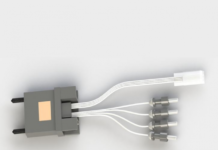
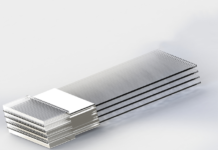
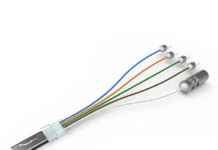
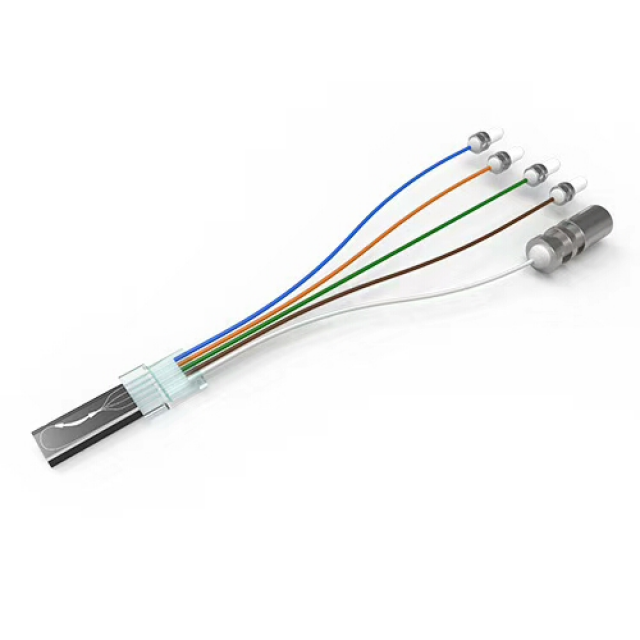
The technical journey of optical components is one of extreme precision. At Matrix PT, the development of high-speed modules is rooted in a deep understanding of optical physics. The company’s core advantage lies in its specialized R&D into core components like Arrayed Waveguide Gratings (AWG) and Fiber Arrays (FA). Unlike many assembly-only shops, the manufacturing process here involves rigorous vertical integration. By mastering the production of Mux/Demux components, the facility can optimize the optical path for 40g/800g/1.6t optical transceiver units, reducing signal loss and enhancing long-distance reliability.
History shows that the industry began with modest 1g and 10g speeds, but the leap to 40g marked the first real step into high-bandwidth data center environments. Matrix PT has built upon this legacy by offering specialized customized services. Recognizing that every data center architecture is unique, the company provides bespoke AWG assemblies tailored to specific wavelength requirements. This flexibility is a hallmark of their production philosophy, ensuring that whether a client is in the medical care sector or the military industry, the hardware meets the exact environmental and performance rigorousness required. The Shenzhen-based production lines utilize automated high-precision alignment and testing systems, ensuring that every 40g/800g/1.6t optical transceiver leaving the floor meets international standards for quality and durability.
Performance Analysis and the Positive Impact of Generational Iteration
When comparing the performance metrics of different generations, the evolution is striking and brings profound benefits to the entire digital ecosystem. The 40g modules, once the backbone of enterprise networks, now serve as stable, cost-effective solutions for edge computing and smaller-scale industrial applications. However, as we move into the era of the 800g optical transceiver, the architecture shifts toward SiPh (Silicon Photonics) and LPO (Linear-drive Pluggable Optics).
This iteration is not merely about speed; it is about efficiency. The transition from 40g to 800g represents a massive reduction in “cost per bit” and “power per bit.” This means that for every gigabyte of data transferred, the energy footprint is significantly smaller compared to older generations. This efficiency is a catalyst for the democratization of AI, allowing smaller enterprises to access high-compute power at a lower operational cost.
The iteration from 800g to the emerging 1.6t optical transceiver represents the current frontier of the industry. While 800g utilizes 100g-per-lane technology, the 1.6T modules aim to double that capacity, utilizing 200G-per-lane signaling. This leap has a transformative impact on latency. In high-frequency trading or real-time autonomous driving, a reduction in nanoseconds can be the difference between success and failure. By increasing the bandwidth density, the 1.6T iteration allows for flatter network topologies, reducing the number of switches and hops data must travel. This streamlining of the network architecture leads to higher system reliability and lower maintenance complexity for global data center operators.
Application Scenarios and Strategic Solutions
The application of these high-performance modules extends far beyond simple server connections. In the realm of 5G, they facilitate the high-speed links between base stations and core networks. In medical care, they enable the near-instantaneous transmission of high-resolution imaging for remote surgery, where the bandwidth provided by an 800g optical transceiver ensures zero-lag visual feedback for surgeons. Matrix PT’s role as a 40g/800g/1.6t optical transceiver factory is to ensure these diverse sectors have access to reliable, high-speed hardware that evolves alongside their needs.
As cloud service providers move toward flatter, more efficient network architectures, the demand for high-speed interconnects will only accelerate. The positive ripple effect of these technological iterations is seen in the enhanced user experiences of everyday digital services–from seamless 8K video streaming to more responsive cloud-based AI assistants. By focusing on the R&D of core optical components and maintaining a commitment to professional manufacturing standards in China, Matrix PT provides the essential building blocks for a more connected, efficient, and intelligent world.
To learn more about high-performance optical interconnection solutions and explore a full range of products, please visit the official website: www.matrixoptic.com.
Matrix PT Tech Co., Ltd.
[email protected]
2F, 1st BLDG, No.10 Maotian Rd, Shatian, Kengzi, Pingshan Dist, Shenzhen, Guangdong, China, 518118
https://www.matrixoptic.com/
This article was originally published by IssueWire. Read the original article here.