(Isstories Editorial):- Shenzhen, Guangdong Feb 27, 2026 (Issuewire.com) – In the quiet hum of a modern data center, thousands of miles of optical fiber weave a complex tapestry of global connectivity. A single video call in London, a high-frequency trade in New York, and a remote surgical procedure in Tokyo all depend on the seamless division and routing of light. At the heart of this intricate web lies a modest but critical component: the Planar Lightwave Circuit (PLC) splitter.
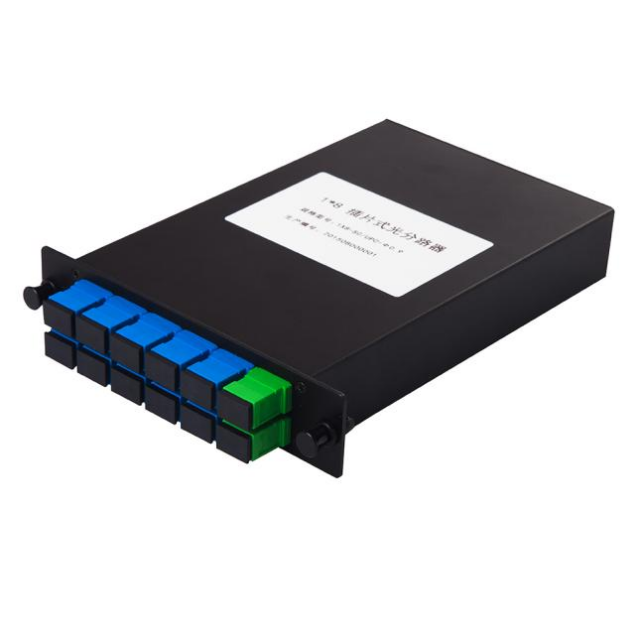
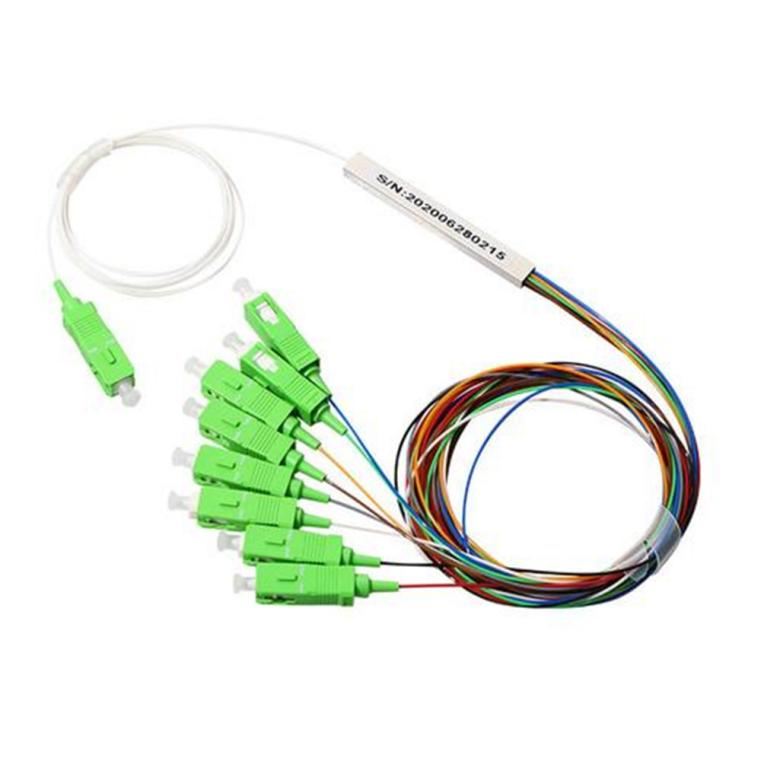
As the digital economy accelerates, the demand for precision in optical signal distribution has shifted from standardized mass production to highly specialized requirements. This evolution has brought Customized PLC Splitters Services From China to the forefront of the telecommunications infrastructure discussion. These services encompass a broad range of solutions, including various configurations like Bare Fiber, Blockless, Fan-out, and LGX Box splitters, which are essential for managing optical power distribution in both Central Office (CO) locations and Fiber to the Home (FTTH) networks.
Optical Distribution Industry Trends and Challenges
More on Isstories:
- Customized PLC Splitters Services From China: A Technical Analysis from Matrix PT
- Retinue Systems Launches Product Development and SaaS Courses for Founders and Technology Professionals
- 5 Criteria for Selecting the Best Used Dump Truck For Sale in the 2026 Global Market
- The Evolution of China Leading Multi-Channel Transceiver Manufacturer Matrix PT in the AI Era
- Analytical Report: Performance and Demand for Heavy Duty HOWO Dump Truck In China Across Africa and Southeast Asia
The global optical communication landscape is currently navigating a period of profound transformation. The transition from 4G to 5G, coupled with the exponential growth of Artificial Intelligence (AI) and cloud computing, has placed unprecedented strain on existing fiber architectures. Industry experts note that the primary challenge is no longer just “connectivity” but “density and reliability.” As network providers strive to cram more bandwidth into smaller physical spaces, the limitations of traditional optical components become apparent.
Historically, the industry struggled with high insertion loss and poor uniformity across different wavelengths, which led to signal degradation over long distances. To combat these bottlenecks, researchers and leading manufacturers have spent the last decade perfecting the lithography processes used in PLC chip fabrication. The goal has been to achieve a more stable refractive index and better thermal stability. Today, the progress is evident. Modern optical networks are moving toward “all-optical” switching, where the efficiency of a PLC splitter supplier determines the overall energy consumption and latency of the entire data center.
However, the “one-size-fits-all” approach is rapidly becoming obsolete. In FTTH deployments, for instance, a technician might face a cramped street cabinet requiring a miniature blockless splitter, while a data center architect might require a high-density rack-mounted solution with specific connector tolerances. This gap between standard supply and site-specific needs is where customized services have become an industry lifeline, addressing the pain points of spatial constraints and environmental endurance.
Technical Precision: The Matrix PT Approach to Optical Interconnection
Headquartered in the technology hub of Shenzhen, Matrix PT Tech Co., Ltd. (Matrix PT) has positioned itself as a high-tech enterprise dedicated to the research and development of core optical components. By focusing on the intersection of high-performance materials and precision engineering, the company provides solutions that cater to the rigorous demands of 5G, AI, and military-grade communications.
The technical superiority of these PLC splitters begins at the component level. A critical element in the assembly of high-quality splitters is the use of high-precision V-groove lids. These components ensure that the fiber arrays (FA) are aligned with sub-micron accuracy. By utilizing materials with matched thermal expansion coefficients, the integrity of the optical path is maintained even under extreme temperature fluctuations, ranging from -40°C to +85°C. This level of precision is vital for minimizing polarization dependent loss (PDL), a technical requirement that distinguishes high-tier PLC splitters services from generic market offerings.
Application Scenarios and Product Versatility
The application of these customized services spans across diverse networking environments, each with unique technical hurdles:
- Next-Generation Data Centers In the realm of cloud computing and AI, data centers require ultra-low loss components to maintain high throughput. Matrix PT’s customized solutions often involve 0.9mm or 2.0mm jacketed fibers that provide extra durability without sacrificing the flexibility needed for dense cable management. These splitters facilitate the “spine-leaf” architecture prevalent in modern data centers, allowing for efficient signal splitting from high-capacity optical engines to multiple server nodes.
- FTTH and Passive Optical Networks (PON) For Fiber to the Home applications, the focus shifts to environmental ruggedness and ease of installation. Customized services allow for the production of splitters with specific pigtail lengths and connector types (such as SC/APC or LC/UPC) that match local infrastructure standards perfectly. This reduces the need for additional splicing in the field, thereby lowering the total cost of ownership for internet service providers.
- Specialized Industrial and Military Fields Beyond commercial telecommunications, certain sectors require enhanced mechanical strength. Customization in this context might include specialized housing materials or reinforced tubing for the fiber leads, ensuring that the PLC splitters can operate in the vibrating environments of military hardware or the sensitive surroundings of medical imaging equipment.
Bridging the Gap: Quality Assurance and Service Integration
The success of a PLC splitter supplier in the current market is measured by its ability to integrate manufacturing prowess with consultative engineering. It is not enough to simply produce a part; the manufacturer must understand the optical budget of the client’s entire system. By offering a technical analysis that includes detailed testing reports on return loss and spectral uniformity, Matrix PT ensures that each customized unit performs predictably within its intended environment.
The industry has moved toward a model of “co-development,” where engineers from the supplier side work closely with network architects to prototype new form factors. This collaborative effort has led to the development of micro-splitters that occupy 30% less space than previous generations, a significant victory for urban fiber deployments where real estate is at a premium.
Conclusion: The Path Toward an All-Optical Future
As we look toward the future of global connectivity, the role of precision-engineered components will only grow in importance. The move toward 800G and 1.6T network speeds requires a level of optical purity that only specialized PLC splitters services can provide. By focusing on the core technologies of R&D and production, and maintaining a commitment to high-performance solutions, enterprises like Matrix PT are not just supplying parts; they are enabling the next generation of human communication.
For more information on high-performance optical interconnection solutions and technical specifications, please visit: www.matrixoptic.com.
Matrix PT Tech Co., Ltd.
[email protected]
2F, 1st BLDG, No.10 Maotian Rd, Shatian, Kengzi, Pingshan Dist, Shenzhen, Guangdong, China, 518118
https://www.matrixoptic.com/
This article was originally published by IssueWire. Read the original article here.