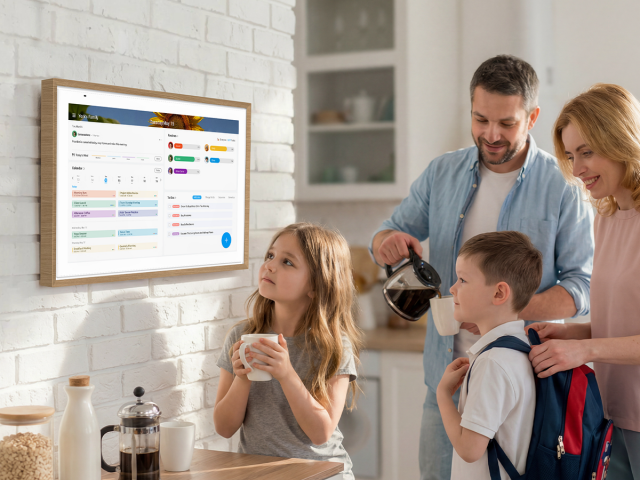
A subscription-free smart family calendar with shared scheduling, chore rewards, and parental controls designed to support time management and responsibility.
(Isstories Editorial):- Los Angeles, California Feb 20, 2026 (Issuewire.com) – In many American households, weekday mornings follow a familiar script: parents repeat reminders about homework, hygiene, packed lunches, and after-school activities while rushing to prepare for work. For dual-income families, coordinating children’s schedules can become a daily logistical burden. Child development specialists increasingly describe this pattern as “proxy parenting” — a dynamic in which adults continuously plan, track, and manage children’s responsibilities on their behalf.
More on Isstories:
- Víctor Pérez launches Bet Latino AI, an AI-powered sports strategy platform in the United States.
- Tamar Toledano Warns Technical Debt Is Now a Strategic Risk as AI and Cloud Complexity Accelerate
- Goedkoopnaarschiphol.nl Launches Advanced Schiphol Taxi Booking System and Dedicated App, Developed with SmartTaxiBooker
- Dodgeball Brings an inspiring story of friendship, creativity, and joyful play to life in rural Zimbabwe
- Top 10 Antibiotic Peptides for Global Buyers Revealed
Researchers and educators note that while the intention is supportive, excessive parental prompting can limit a child’s development of executive functioning skills, including time management, planning, and accountability. As children grow older, the reliance on reminders often turns routine tasks into daily conflicts rather than learning opportunities.
Apolosign, a U.S.-focused consumer electronics brand, introduced its digital wall calendar to address this gap by shifting routine management from verbal reminders to visual organization. The subscription-free smart calendar allows families to centralize schedules, assign responsibilities, and monitor progress while encouraging children to manage tasks independently.
“Many parents act as full-time coordinators for their children’s day,” said Sophia Lang, Product Lead at Apolosign. “Our goal was to create a system where daily responsibilities are visible and interactive. Children check off completed tasks and earn rewards, while parents guide instead of constantly reminding. The technology supports independence rather than replacing parenting.”
Turning Daily Tasks Into Life Skills
The Apolosign digital wall calendar functions as a shared family command center placed in a common household space such as a kitchen or hallway. Instead of individual reminders coming from multiple apps and devices, the system presents a single visual schedule that every family member can access.
Shared Calendar Synchronization
The calendar syncs with Google Calendar, Apple Calendar, and Outlook, allowing school events, work meetings, and extracurricular activities to appear on one screen. Family members can add or edit schedules in real time, reducing missed appointments and last-minute coordination.
Task and Reward System
Parents can assign chores or responsibilities — homework, cleaning, instrument practice, or pet care — and attach point values. Children accumulate points that can be exchanged for agreed rewards such as activity choices or additional leisure time. The structure encourages habit formation and consistency rather than one-time compliance.
Timed Parental Controls
Adults can adjust visibility of tasks, monitor completion, and set device-use boundaries. The system is designed to help children self-manage routines while maintaining healthy screen habits.
Large Touchscreen Family Display
Available in 15.6-inch, 21.5-inch, and 27-inch 1080p touchscreen models, the wall-mountable display is intended for shared spaces where schedules remain visible throughout the day.
No Subscription Fees
All features operate without recurring monthly payments, distinguishing the device from many app-based family organization platforms that require ongoing subscriptions.
Observed Family Outcomes
Families using visual scheduling systems often report behavioral changes within weeks. In one California household, parents previously managed every activity for their elementary-age children. After adopting the shared calendar, children began tracking homework deadlines and extracurricular schedules themselves and initiating chores without prompting.
Parents described a shift in household dynamics: reminders decreased, conflicts about routine tasks were reduced, and conversations focused more on planning than correction.
A similar pattern appeared in a New York household where a middle-school student who frequently missed club deadlines began independently organizing assignments and activities using the task checklist and reward structure.
Lang explains, “Children learn responsibility best when expectations are clear and consistent. By making routines visible, the calendar turns everyday habits into teachable moments. Parents remain involved, but they no longer need to micromanage.”
Addressing a Broader Parenting Challenge
Family organization tools have grown in popularity as households balance work schedules, school commitments, and digital distractions. Educators emphasize that teaching planning skills early can support academic performance and reduce stress for both parents and children.
Rather than replacing traditional parenting methods, Apolosign positions the digital wall calendar as a structured environment for practicing independence. By transferring reminders from parent to system, families can spend less time coordinating logistics and more time interacting.
The Apolosign Digital Wall Calendar is currently available in multiple sizes and supports major calendar platforms. More information is available at ApoloSign | Portable TV & Family Calendar & More.
This article was originally published by IssueWire. Read the original article here.