(Isstories Editorial):- Xiamen, Fujian Sheng Feb 11, 2026 (Issuewire.com) – Die casting remains one of the most productive ways to make metal parts at scale–especially for programs in the automotive, new energy, and industrial equipment sectors. However, in 2026, “die casting excellence” is no longer shorthand for simply being able to pour metal into a mold. Today’s buyers increasingly judge excellence by three practical outcomes: stable forming, machinable critical features, and fully verifiable deliveries.
This shift reflects the real-world risks sourcing teams face daily. In precision manufacturing, the true cost of a part isn’t just its unit price–it’s the hidden fallout from subsurface porosity that causes leaks, or warpage that renders CNC fixtures useless. Furthermore, in an era of strict compliance, a casting without a complete inspection and traceability package is no longer just a ‘minor oversight’; it is an incomplete delivery that stalls assembly lines.
In one recent aluminum housing program, early samples passed dimensional inspection but failed pressure testing after CNC machining. The root cause was uneven wall shrinkage near a sealing groove, which shifted the machining datum by 0.04 mm. The mold required gating redesign and localized cooling adjustment before stable production was achieved. Situations like this are why casting excellence cannot stop at metal filling–it must account for downstream machining behavior.
More on Isstories:
- Where To Buy Aluminium Casement Windows in Middle East? DERCHI Thermal Insulation Solutions for Hot Climate
- Customization at Its Core: What Makes GT a China Professional Custom Hydraulic Cylinders Factory?
- Growth Isn’t About More Ads: Josh Dichiaccio Explains Why Revenue Strategy Matters More Than Marketing Spend
- DB Brand Works Reinforces Market Leadership with AI-Powered Digital
- Why Christopher Mac Cassity’s Rhythm of Discipline Is Redefining Creative and Personal Performance
To close the gap between raw casting and production readiness, DAZAO (Xiamen DAZAO Machinery Co., Ltd.), a Leading China-based die casting supplier with 25 years of experience, runs die casting as a coordinated chain–from mold design and process selection to post-casting CNC machining. By addressing the root causes of porosity and deformation upfront, we deliver functional components with the evidence needed for approval and the stability needed to scale without surprises.
DFM Strategy to Reduce Casting Risk
The journey to a flawless die-cast part begins not at the foundry, but on the drawing board. Design for Manufacturability (DFM) represents the critical, collaborative phase where potential production issues are solved proactively, transforming a good design into a manufacturable, cost-effective, and high-quality component. DAZAO approaches DFM not as a simple checklist, but as a core engineering service that leverages 25 years of pattern recognition to de-risk projects.
DAZAO’s engineering team engages early to analyze 3D models, providing actionable feedback that targets the root causes of common casting defects and downstream machining challenges. Key focus areas include:
- Optimizing Wall Thickness: DAZAO advises on achieving uniform wall distribution to ensure smooth metal flow during filling, which reduces weight without sacrificing structural strength. This practice prevents issues like sink marks and porosity while minimizing material usage.
- Specifying Strategic Draft Angles: Recommending appropriate draft angles is essential for effortless part ejection from the mold. DAZAO’s suggestions balance design intent with practical necessity, significantly extending mold life, preventing drag marks, and ensuring consistent cycle times.
- Designing for Robustness: The team identifies and proposes modifications to problematic features–such as sharp corners that can create stress concentrations or complex geometries that may trap air–to enhance the overall durability and manufacturability of a design.
This upfront partnership prevents expensive mold rework, optimizes the production cycle, and sets the unshakable foundation for stable, high-yield manufacturing. It is the first concrete step in DAZAO’s promise of delivering certainty.
Die Casting in 2026: Why “Excellence” Is Still a Competitive Edge
In 2026, sustainability shows up in die casting projects less as a branding slogan and more as a qualification checklist–especially for programs tied to European and North American OEM supply chains. Buyers are increasingly expected to demonstrate compliance readiness and traceability, which makes “green manufacturing” inseparable from documentation, material control, and stable production routines. For die casting suppliers, this raises the bar in a practical way: it’s not enough to produce parts that meet print–projects also require the paperwork and process visibility allowing customers to pass internal reviews.
Three Critical Factors Buyers Actually Evaluate
Excellence in die casting is rarely decided by one capability–it’s determined by whether three execution points hold up under production pressure:
Mold Control and Process Stability: Most casting problems buyers want to avoid–shrinkage variation, porosity risk, warpage, surface inconsistency–are rooted in tooling decisions and process stability. DAZAO’s die casting workflow reduces “trial-and-error” loops by treating mold design, optimization, and production control as one linked system rather than separate handoffs. The company’s 10 experienced mold engineers use simulation software predicting metal flow patterns and optimizing gating strategies before tooling fabrication begins. During production, process parameters (injection speed, pressure profile, metal temperature) are documented during qualification then monitored continuously. When parameters drift toward control limits, production stops for investigation–preventing defect generation rather than sorting defects afterward.
Post-Casting Machining Capability: Die casting produces near-net-shape geometry, but real assemblies depend on what happens next. Sealing faces, threaded holes, locating features, and mating interfaces require CNC finishing to achieve functional precision. DAZAO integrates post-casting machining into the die casting chain, with casting and machining engineers collaborating during design review to establish where casting tolerances need tightening for adequate machining stock and how machining fixtures align with cast reference surfaces. This coordination ensures critical datums stay consistent–preventing castings from becoming scrap when machining allowance becomes uneven after deformation.
Acceptance Documentation and Material Traceability: For many buyers, a part isn’t “delivered” until it is verifiable within their quality system. DAZAO frames inspection and traceability as part of the product–inspection reports with every order, plus material certifications with heat numbers and Certificates of Conformance when required–enabling tight tolerance expectations to be reviewed, approved internally, and repeated with confidence batch after batch. For customers requiring First Article Inspection protocols or PPAP submissions, the quality team formats documentation matching customer system requirements, ensuring parts arrive with complete paperwork passing receiving inspection without additional verification cycles.
Integrated Die Casting and Machining PlatformIntegrated Manufacturing Chain: Reducing Handoff Points That Introduce Risk
DAZAO positions die casting as a one-stop solution managing the complete sequence from mold design through surface treatment. This integration matters because handoff points between separate suppliers create failures: specifications get misinterpreted, dimensional variation acceptable to the caster becomes problematic for the machining shop, or finishing operations discover geometry issues too late.
The chain begins with in-house mold engineering. Ten mold designers use 4-axis and 5-axis CNC equipment to fabricate molds, enabling rapid feedback when optimization is needed. After casting, parts move to post-casting CNC machining without leaving the facility–eliminating coordination overhead and potential disconnects. Surface treatment (chemical film, anodizing, plating, powder coating) completes within the same quality framework.
Beyond components, DAZAO provides full-BOM assembly support including welding subassemblies, installing hardware, and functional testing–positioning as an engineering supplier delivering finished assemblies rather than a single-process factory. This consolidates supply chain management and reduces suppliers requiring qualification.
Production Capacity and Delivery Performance
Monthly Production of 2 Million Pieces: This volume demonstrates sustained high-volume capability without bottlenecks when multiple orders overlap. Material procurement operates at scale with consistent availability. Downstream operations balance capacity across stages, preventing the common failure where casting output creates queues at machining or finishing.
T1 Sample Delivery in 10 Days: From mold completion to first samples covers tool tryout, parameter development, production, and verification. This matters for compressed development schedules that cannot afford 4-6 week prototype cycles. Samples include preliminary inspection data enabling design validation before full production tooling.
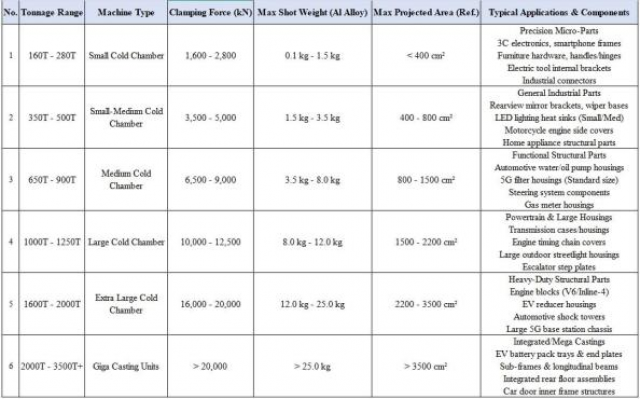
Equipment Capability Range: DAZAO operates 20+ machines spanning 160-ton to 2000+ ton capacity, determining part size and complexity the facility can produce.
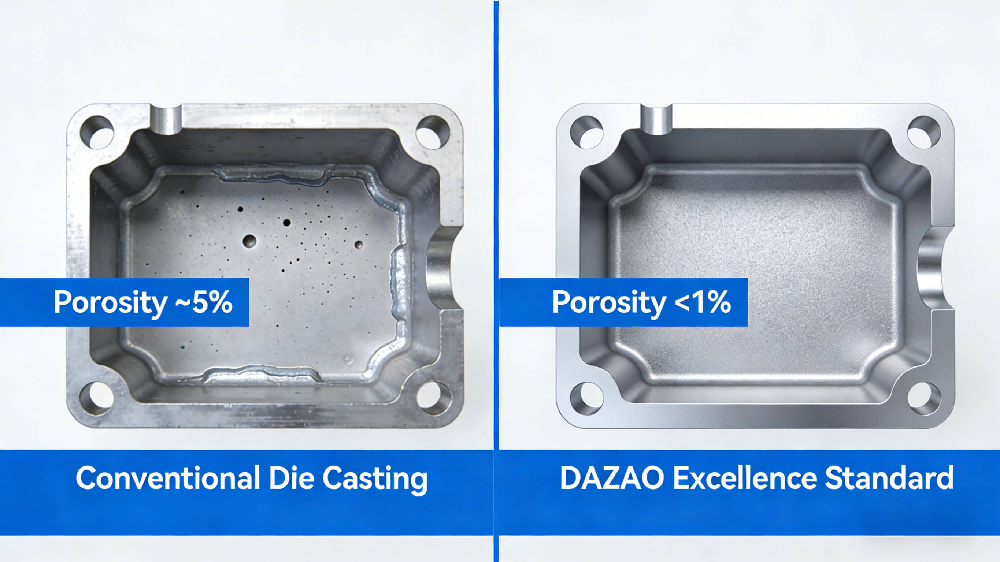
Conventional vs. DAZAO Excellence: Performance differences appear in measurable outcomes. In porosity control, conventional operations typically accept 3-5% porosity as normal variation, while DAZAO’s optimized mold design and process monitoring maintains below 1%–critical for pressure-tight housings and structural components requiring weld integrity. In dimensional consistency across 5,000-piece runs, conventional suppliers show ±0.08-0.15mm variation, while DAZAO’s real-time monitoring maintains within ±0.03-0.05mm. Surface quality: conventional operations experience 8-12% rejection for surface defects (cold shuts, flow marks, gas entrapment), while DAZAO’s optimized gating and venting reduce surface rejects to under 3%.
How Precision Capability Translates to Process Control
DAZAO’s tolerance capability reaches ±0.015mm on critical features through systematic controls. Casting tolerances begin with tooling accuracy–4-axis and 5-axis CNC equipment produces mold cavities within ±0.005mm. This mold precision creates the dimensional foundation for part precision. During production, automated systems monitor injection parameters (shot velocity, pressure, temperature) recording data for every cycle. When parameters trend toward control limits, operators receive alerts before nonconforming parts get produced.
Dimensional inspection reports accompany every shipment. CMM verification generates documented results. For customers with specific requirements, the quality team provides detailed protocols and expanded reports. This documentation framework makes quality measurable and manufacturing traceable–addressing audit-ready precision requirements European buyers increasingly demand.
Process Selection: Matching Technology to Part Requirements
Hot Chamber vs. Cold Chamber–How to Choose
The selection decision starts with one question: what metal does your part specification require?
If Your Part Requires Aluminum or Copper: You need cold chamber die casting. Aluminum’s melting point (660°C) would degrade hot chamber injection systems. Cold chamber separates the melting furnace from injection–operators ladle molten metal into a shot chamber. DAZAO’s cold chamber equipment (160-2000+ ton range) handles everything from compact automotive components through bulky structural housings. Common grades: A380 (balanced properties), A360 (pressure tightness), ADC-12 (fluidity and corrosion resistance).
If Your Part Can Use Zinc or Magnesium: You can choose hot chamber die casting. Zinc alloys (Zamak-3, Zamak-5, ZA-8) and magnesium alloys (AZ91D, AS41B) have lower melting points (zinc: 420°C, magnesium: 650°C) compatible with hot chamber’s integrated furnace. The injection mechanism stays immersed in molten metal, enabling rapid cycle times–often 2-3x faster than cold chamber.
Selection Factors Beyond Material:
Part Size: Cold chamber handles 160-2000+ tons (projected areas from under 300 cm² to exceeding 800 cm²). Hot chamber typically limits to under 300 cm² and 2-3 kg weight.
Production Volume: Hot chamber becomes economical above 500,000 annual pieces where faster cycles create cost savings. Cold chamber works from prototype through sustained high-volume production.
Mechanical Requirements: Aluminum offers higher tensile strength for structural load-bearing. Zinc provides dimensional stability and surface finish for housings and trim.
DAZAO’s Dual-Process Capability: Operating both processes means recommendations emerge from engineering evaluation rather than equipment limitations. During quotation, the team assesses requirements–recommending the optimal balance.
Certified Materials and Compliance Control
By 2026, material selection is no longer just about performance–it’s equally about verifiable sustainability and compliance.DAZAO provides fully certified aluminum, zinc, and magnesium alloys, each backed by complete Material Certifications and Certificates of Conformance (CoCs) for full traceability.
- Aluminum Alloys (e.g., A380, A360) are chosen for their optimal balance of lightweight strength, thermal conductivity, and corrosion resistance, making them dominant in automotive and electronics.
- Zinc Alloys (e.g., Zamak-3, Zamak-5) offer exceptional dimensional precision, surface quality, and plating capability, perfect for decorative hardware and complex, thin-walled components.
- Magnesium Alloys (e.g., AZ91D) provide the ultimate weight savings for portable devices and weight-sensitive applications.
This material expertise is fundamentally integrated with environmental responsibility, creating a verifiable green manufacturing framework for global buyers. DAZAO’s commitment is demonstrated through concrete, documented practices:
- Prioritizing Recycled Aluminum: DAZAO actively sources aluminum alloys with certified recycled content. Using recycled aluminum, which requires only about 5% of the energy of primary production, significantly reduces the embodied carbon of components and supports clients’ sustainability goals.
- Investing in Energy Efficiency: Equipment upgrades and process optimizations focus on thermal efficiency, reducing energy consumption per part through improved furnace insulation, optimized heating cycles, and minimized standby losses.
- Implementing Closed-Loop Recycling: DAZAO maintains documented scrap recycling protocols for aluminum and zinc, ensuring production waste is captured and fed back into the supply chain. This provides auditable evidence of resource responsibility for sustainability audits.
- Ensuring Regulatory Compliance: RoHS compliance documentation is provided as a standard part of the quality framework, with test reports certifying the absence of restricted substances.
For buyers managing automotive or energy programs, this level of traceability reduces qualification risk and shortens internal approval cycles.
Mold Capability: The Technical Foundation
Die casting quality begins with mold design determining shrinkage, gas entrapment, warpage, and surface finish. DAZAO’s patented approaches include gating strategies reducing turbulence, cooling designs eliminating hot spots, and ejection systems protecting delicate features. Ten mold engineers use simulation to predict metal flow, identify defects, and validate cooling. They review CAD models for castability issues–undercuts, wall thickness transitions, ejection complications–proposing modifications improving manufacturability. Four-axis and 5-axis CNC equipment produces cavities within ±0.005mm accuracy, creating the foundation for part precision and supporting mold refurbishment as cavities erode.
Post-Casting Machining & Finishing: Where Castings Become Functional Parts
On the shop floor, the casting itself is rarely the final challengethe real risk appears when machining fixtures reveal slight warpage that was invisible at first glance. A die-cast part is a near-net-shape achievement, but true functionality is unlocked in the steps that follow. Post-casting processes transform a raw casting into a component ready for reliable assembly, addressing the precision and durability demands that the casting process alone cannot meet.
Why Machining is Non-Negotiable for Functionality
Precision features like sealing faces and threads require CNC machining, but their success depends on the raw casting’s stability. If as-cast datums are inconsistent, the resulting uneven stock distribution can lead to scrapped parts and broken tools. DAZAO eliminates this risk by integrating casting and CNC engineering under one roof. From the initial design review, our teams co-define critical datums, “engineering-in” the machining pathway to the casting process. This synergy removes the typical “finger-pointing” between suppliers and ensures high-yield, predictable results.
This prevalent industry issue is precisely where DAZAO’s integrated model provides a decisive advantage. By housing both casting and CNC machining in-house, its casting engineers and machining engineers engage in a continuous dialogue, starting at the design review. They jointly define and control the critical casting surfaces that will become machining datums. This collaboration eliminates the “finger-pointing” that plagues projects split between separate foundries and machine shops, ensuring every casting is produced with its subsequent machining pathway already engineered-in for success.
Securing Geometric Integrity: Finalizing Features for Flawless Assembly
The goal of post-casting CNC machining is to guarantee assemblability. DAZAO’s machining expertise is focused on finalizing the features that determine how a part fits and functions:
Sealing Faces:Achieving the flatness and surface finish required for leak-proof integrity.
Threaded Holes:Providing precise, clean threads for secure fastening.
Locating Features & Mating Interfaces:Machining pins, slots, and surfaces to tight tolerances (±0.02mm or better) to ensure parts align correctly every time.
This disciplined approach ensures that the stability gained from precision molding is carried through to the final, functional component.
Engineered Resilience: Selecting Surface Finishes for Real-World Performance
Surface finishing isn’t just about appearance. In die casting programs, finishing is often what makes a part survive its real environment–corrosion, wear, conductivity requirements, or consistent look and feel across an assembled product line.
DAZAO supports common finishing routes used on die-cast parts, including:
- Chemical film (a thin protective conversion layer often chosen when dimensional change must be minimal)
- Anodizing (popular for aluminum parts where corrosion resistance and durability matter)
- Plating (used when conductivity, corrosion protection, or cosmetic uniformity is required)
- Powder coating (chosen for robust coverage and durable appearance on complex geometry)
The key point for buyers: finishing should be selected with function in mind–and it works best when it’s planned as part of the overall process chain, not bolted on at the end.
Real-World Applications: Where DAZAO’s Die Casting Excels
DAZAO’s integrated die casting platform is engineered to meet the stringent demands of advanced manufacturing sectors:
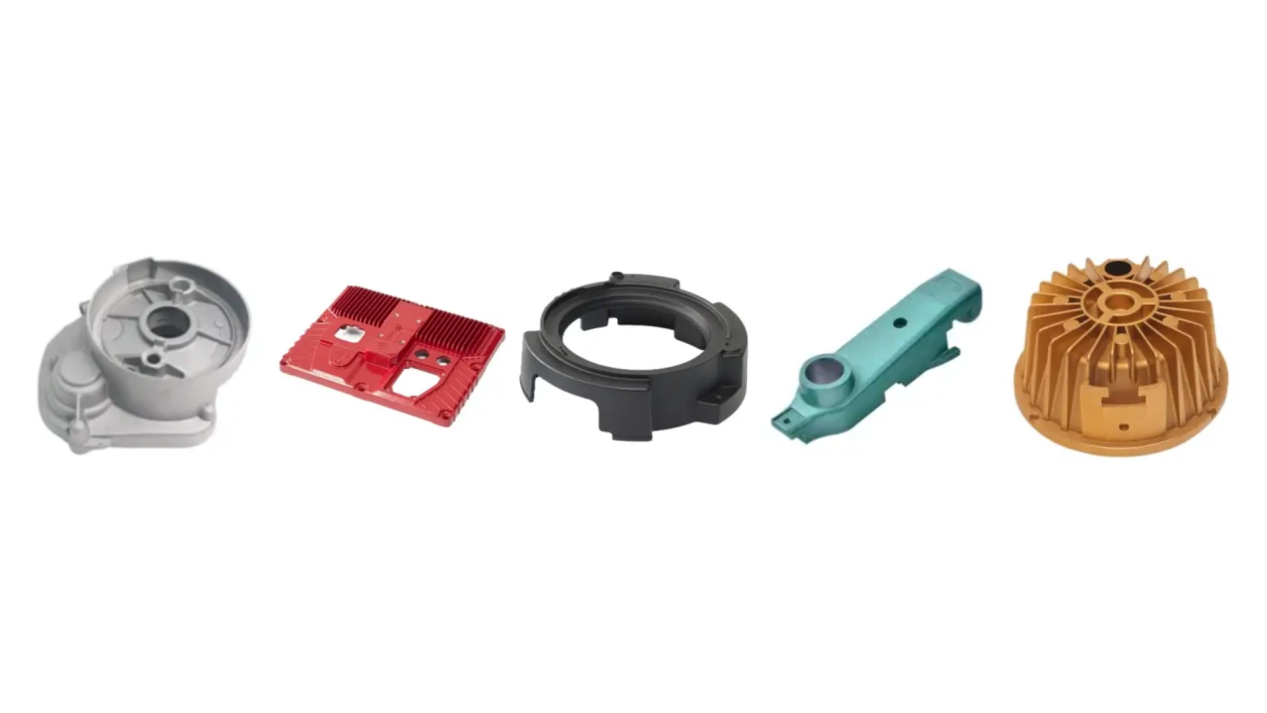
- Automotive & New Energy: Engine brackets, transmission components, structural parts, and housings for electric vehicle batteries and powertrains, where weight, strength, and thermal management are critical.
- Industrial Machinery: Durable gearbox housings, pump bodies, and valve bodies that must withstand high pressures, loads, and cyclic stress.
- Consumer Electronics & Medical Equipment: Precision, thin-walled housings for devices, frames for diagnostic imaging equipment, and components requiring biocompatibility or cleanroom-level integrity.
What DAZAO Shows Global Buyers to Verify Die Casting Excellence
- Proving Repeatability with an End-to-End Workflow
For buyers, excellence is defined by repeatable delivery. DAZAO’s end-to-end model–integrating Mold Design ‘ Die Casting ‘ CNC Machining ‘ Finishing–eliminates the handoff risks common between multiple suppliers. By closing the loop, we prevent tolerance gaps and misaligned fixtures before they occur. For procurement teams, this integrated workflow ensures fewer variables and the predictable qualification expected of a leading Chinese manufacturer.
- The “Quality Deliverables” Buyers Can File and Audit
Modern supply chains don’t just accept parts–they accept proof. DAZAO supports die casting programs with the kinds of deliverables that help engineering and quality teams approve faster and repeat with confidence:
- Inspection reports with every order (so conformance is reviewable, not implied)
- Material certifications & CoCs (so material identity is traceable, not assumed)
- Traceability details such as heat number when required
- RoHS reports available upon request (for compliance-driven programs)
This is the practical difference between “tight tolerance” as a drawing claim and “tight tolerance” as an audit-ready outcome: the part arrives with what internal systems need to accept it.
From Casting to Assembly-Ready Components
Since 2000, DAZAO has defined “die casting excellence” through high-volume stability, precision machinability, and comprehensive documentation. We treat die casting as an integrated workflow rather than a standalone step. By combining precision mold engineering with post-casting CNC machining, we ensure critical features like sealing faces and threaded holes meet exact specs every time. Finished with professional coatings (anodizing, plating, or powder coating), our parts are delivered ready for real-world performance and backed by full traceability for effortless repeat orders.
This end-to-end approach reflects DAZAO’s “Quality First, Customer First” principle and the brand promise of “Try once, trust forever.” To start a program, customers can submit a 3D model for DFM feedback on wall thickness and draft angles, then validate quickly with prototypes in 3-5 working days and T1 samples in as fast as 10 days. Learn more or request a quote at www.partengineer.com
This article was originally published by IssueWire. Read the original article here.