
Equipping students and educators with internationally benchmarked English skills from an Award winning UK Company, to unlock global careers in an AI-driven economy
(Isstories Editorial):- Bengaluru, Karnataka Feb 1, 2026 (Issuewire.com) – Forward-looking educational institutions across India are increasingly investing in English communication as a core employability skill, recognising that English today is not merely an academic subject, but a critical livelihood and mobility enabler for students and educators alike.
More on Isstories:
- Effective Steps for Managing Stress Seamlessly
- 20 Movies that Explained Mental Illness with Awareness
- Top 11 Street Foods to Try While Visiting India
- 20 Top Autumn Destinations to Visit in India
- 9 Terrifying Horror Books That are a Must-Read
One such initiative is an 80-hour UK-designed English communication programme, delivered in India and culminating in a City & Guilds of London certification. The programme offers tangible benefits for students aspiring to access international and globally networked employment opportunities.
Why English Communication Has Become Urgent
Each year, nearly 12 million students enter India’s workforce, yet fewer than 1% secure international-facing roles in Global Capability Centres (GCCs) or multinational organisations. The primary barrier is not academic ability, but insufficient English communication skills.
This challenge is amplified by structural shifts in the economy. India remains a service-driven economy, with services contributing over 55% of GDP. At the same time, AI and automation are rapidly replacing routine roles, making human skills–especially communication–decisive for career progression and employability.
Institutions Taking the Lead
Encouragingly, institutions across India are responding proactively. More than 50 institutions nationwide have engaged with a UK-based English course, offered in India by ZillionPathways, benefiting a substantial number of faculty members and students within just 10 months.
The programme delivers 80 hours of structured online learning using animation and gamification, covering grammar, reading, and listening skills. The UK organisation behind the course is a recipient of the ELTons Award from the British Council, widely regarded as the “Oscars of English language education.”
On successful completion, learners receive a City & Guilds of London certificate. Established over 150 years ago, City & Guilds operates in more than 100 countries and is headed by Princess Anne, sister of King Charles III. The certification significantly enhances learner confidence, credibility, and employment prospects.
Leadership-Driven Adoption in Bengaluru
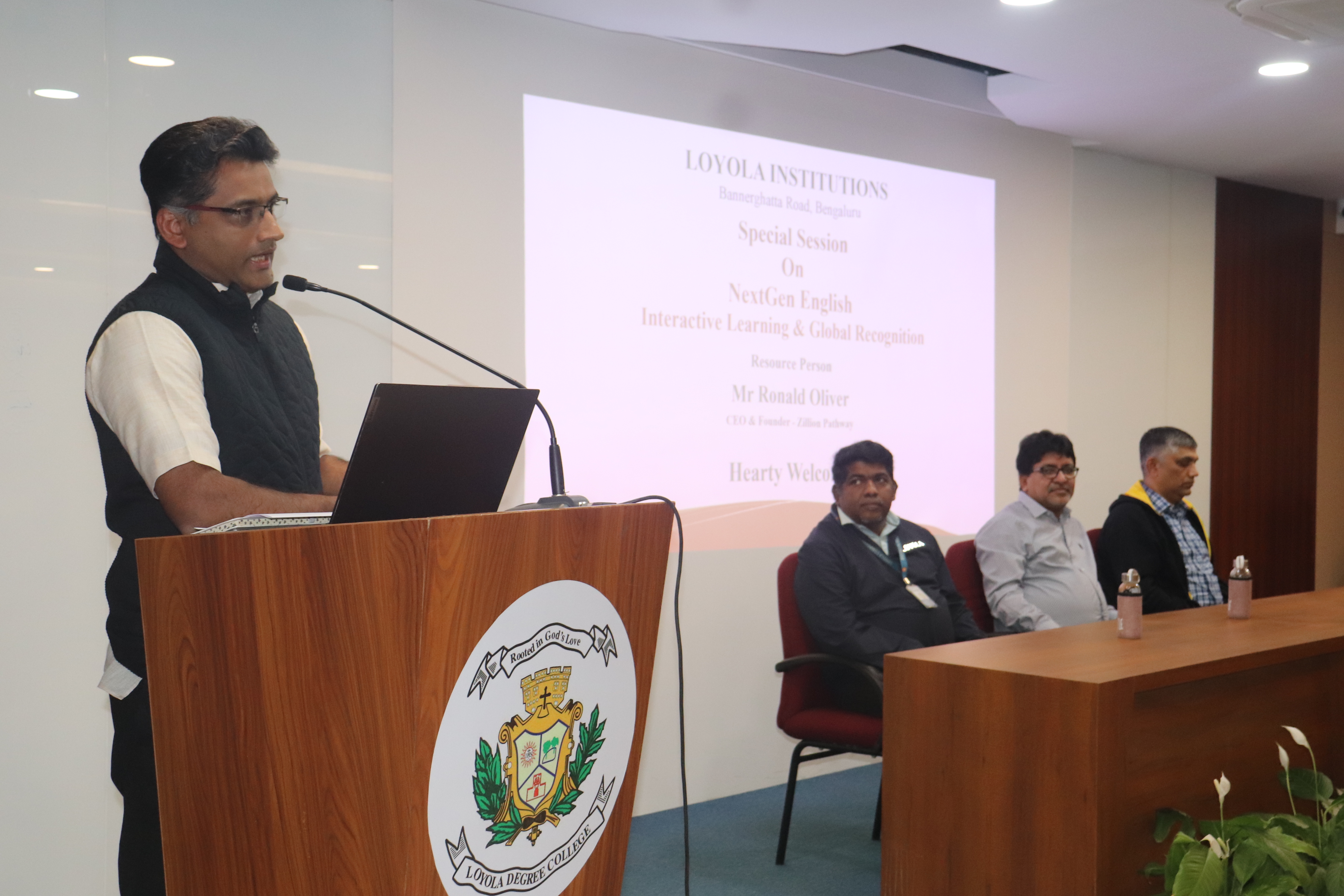
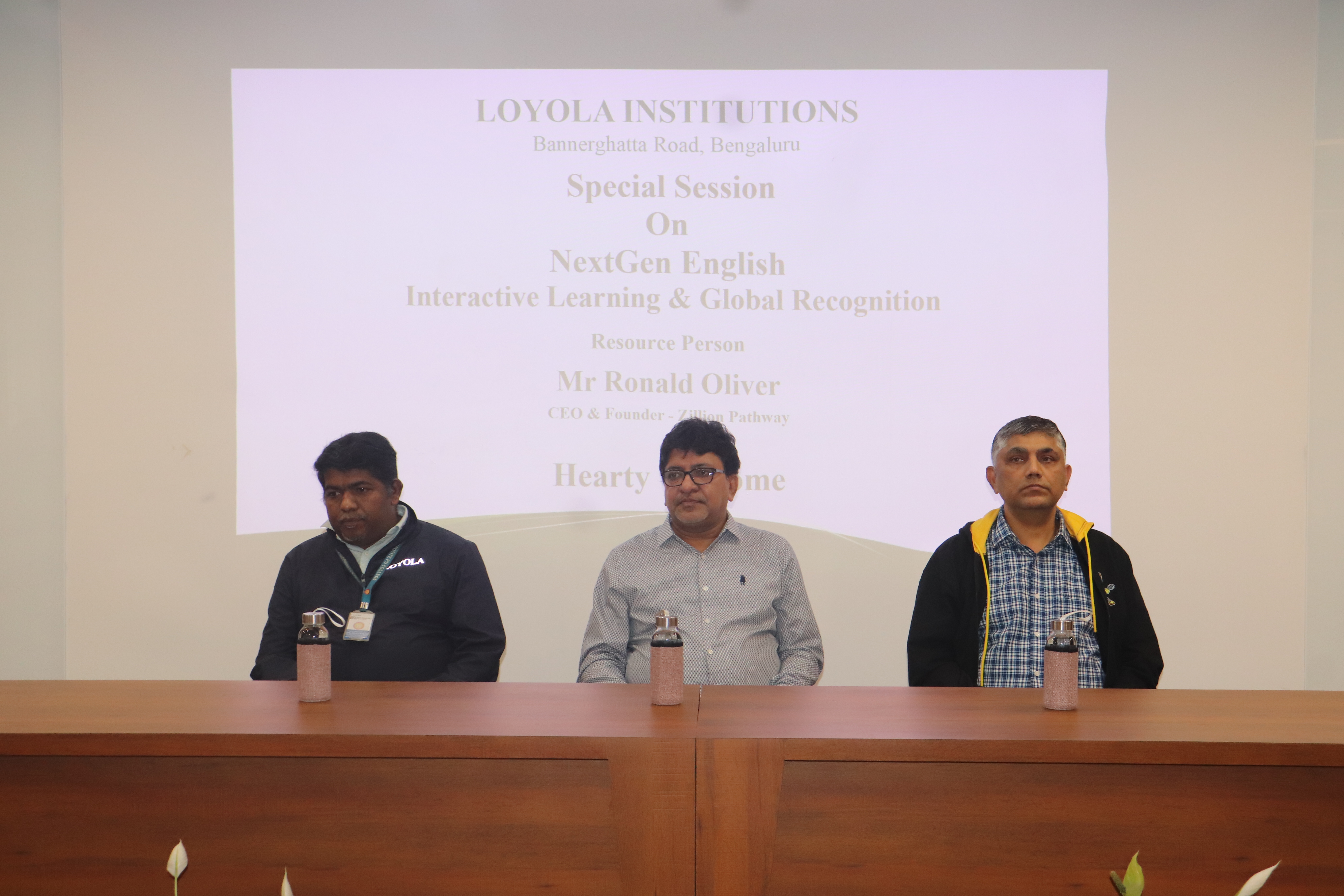
Recently, the Loyola Group of Institutions, Bengaluru, under the leadership of Rector Rev. Fr. Jossy D’Mello and Principal Rev. Fr. Alphonse, hosted Ronald Olivera, CEO of ZillionPathways, for an extensive engagement with educators.
Mr. Olivera delivered an interactive session for teachers across five institutions–the Degree College, Composite PU College, High School, Primary School, and ITI. Encouraging teachers to complete the course first is a strategic intervention, recognising the pivotal role educators play in amplifying student outcomes and institutional impact.
Support from the Archdiocese of Bengaluru
The initiative has also received strong support from the Archdiocese of Bengaluru, enabling broader outreach across schools and colleges under its jurisdiction. His Grace, Most Rev. Dr. Peter Machado, Archbishop of Bengaluru, has expressed keen interest in expanding these efforts further.
Actively supporting the rollout, Monsignor J. Jayanathan, Vicar General, has been coordinating teacher engagement with ZillionPathways across several institutions, including St. Germain’s, St. Antony’s, Roque’s School, St. Aloysius, Sacred Heart, St. Patrick’s, Balayesu Vidyalaya, among others.
The Employment Reality Behind the Numbers
According to RBI data, 47 million jobs were created during the same period in which 12 million students entered the workforce. However, as reported by the Government of India’s PIB, a large proportion of these jobs fall within the unorganised sector and do not align with the aspirations or skill profiles of graduates emerging from India’s 50,000 colleges.
Within the organised sector, Global Capability Centres (GCCs) represent one of the fastest-growing employment segments. These centres support global clients across technology, finance, healthcare, administration, HR, and customer support. Today, GCCs:
- Contribute nearly 2% of India’s GDP
- Employ over 2 million professionals
- Number around 1,800 centres, with 700-800 more expected in the coming years
These roles offer strong career progression and high remuneration but are highly dependent on English proficiency. Less than 1% of fresh graduates currently access these opportunities–and those who do consistently demonstrate strong English communication skills.
A Case for Making English Communication Mandatory
In a globalised economy, knowing English and possessing English of an international professional standard are fundamentally different. As AI adoption accelerates, the premium on uniquely human skills–particularly communication–will only intensify.
By prioritising English communication at scale, this initiative illustrates how purpose-driven CSR in education can deliver sustainable, long-term impact–empowering individuals, strengthening institutions, and preparing India’s youth for a globally connected future.


This article was originally published by IssueWire. Read the original article here.