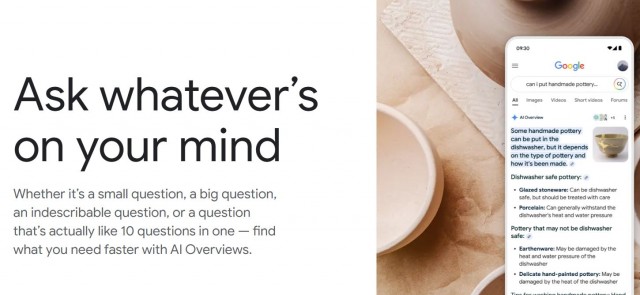
Recent studies reveal Google’s AI Overviews have triggered significant drops in organic clicks, with informational websites bearing the brunt of losses
More on Isstories:
- Safety Standards in Thailand Rehab Are Increasingly Compared to Western Models
- Claude Code Leak 2026: Why Teams Are Turning to AICC for Stable Multi-Model AI API Integration
- Molecular Precision in Surface Science: The Strategic Role of Titanium Dioxide in High-Performance Coatings
- Beyond Square Waves: How Keygree’s Multi-Waveform TIG Series Solves the Three Toughest Challenges in High-End Welding
- The Evolution of Natural Materials in Modern Architecture: Sustainability and Durability in Premium Wood Surfaces
(Isstories Editorial):- Beavercreek, Ohio Jan 26, 2026 (Issuewire.com) – Multiple independent studies published throughout 2025 have confirmed what many website owners feared since Google rolled out AI Overviews last May. Organic search traffic to publishers has dropped by one-third globally, and the situation appears to be getting worse.
According to Chartbeat data covering over 2,500 publisher websites, Google search referrals fell 33% worldwide between November 2024 and November 2025. The decline was even sharper in the United States, where publishers recorded a 38% year-over-year drop during the same period.
Zero-Click Searches Keep Climbing
According to a research published by THESEOSPOT core problem is simple enough. Google’s AI summaries answer user questions directly on the results page. People get what they need without clicking anything.
Similarweb tracked this shift in real time. Zero-click searches rose from 56% before AI Overviews launched to 69% by May 2025. That’s 13 percentage points in roughly a year.
Mohammad Ahsan, CEO of The SEO Spot, has been tracking these changes closely. “What we’re seeing is a fundamental shift in how search works,” Ahsan explains. “Google used to be a doorway to websites. Now it’s becoming the destination. Businesses that built their entire strategy around organic search traffic need to rethink their approach, and they need to do it quickly.”
Click-Through Rates Have Collapsed
The numbers paint a grim picture for anyone relying on Google search traffic. Seer Interactive’s September 2025 study, which analyzed over 25 million organic impressions across 42 organizations, found that organic click-through rates dropped 61% on queries where AI Overviews appeared. The rate went from 1.76% in June 2024 down to just 0.61% by September 2025.
Paid advertising took an even bigger hit. Click-through rates on paid results fell 68% when AI Overviews showed up at the top of the page.
Ahrefs ran their own analysis comparing March 2024 to March 2025 data. They found position-one results saw a 34.5% CTR reduction on queries triggering AI summaries. What used to get roughly 7.3% clicks was now pulling just 2.6%.
Some Industries Hit Harder Than Others
Not every website category suffered equally. Informational content took the worst beating. Health websites, recipe blogs, how-to guides, and news publishers all reported steep declines.
HubSpot lost between 70% and 80% of their traffic. Forbes saw a 50% drop. CNN declined by 27% to 38% depending on the measurement period. Smaller operations fared even worse. Travel blog The Planet D lost 90% of traffic and eventually shut down. Home improvement site Charleston Crafted saw 70% of visitors disappear within two months, taking 65% of their ad revenue with it.
Transactional and e-commerce queries held up better. When someone wants to buy something, they still click through to make the purchase. But anyone producing educational or informational content found themselves competing against Google’s own AI-generated answers.
What Comes Next
The Reuters Institute surveyed media leaders about their expectations going forward. On average, publishers anticipate search traffic to fall another 43% over the next three years. Around one-fifth of respondents expect losses exceeding 75%.
“The old playbook doesn’t work anymore,” says Ahsan founder of THESEOSPOT.COM. “Ranking first on Google used to mean something. Now you can hold that top spot and still watch your traffic evaporate because an AI summary answered the question before anyone scrolled down. Businesses have to focus on getting cited within these AI responses, building direct audiences, and creating content that AI simply cannot replicate.”
Source :theseospot.com
This article was originally published by IssueWire. Read the original article here.