(Isstories Editorial):- Ningbo, Zhejiang Jan 22, 2026 (Issuewire.com) – How to Choose the Right Milling Cutter (A Practical Guide for Better Tool Life, Finish, and Throughput)
Choosing a milling cutter isn’t about finding a single “best” tool. It’s about matching the cutter to your material, operation, geometry needs, machine capability, and cutting parameters. When these factors align, you get stable cutting, predictable tool life, and consistent part quality.
Start With the Material: Properties Dictate the Cutter StrategyAluminum and Non-Ferrous Alloys: Prioritize Chip Evacuation
More on Isstories:
- Dr. Mark Linzer to Receive the 2026 AMWA Camille Mermod Award for Exceptional Service
- Eleanor Reid, MD, PhD, to Receive the 2026 Esther Pohl Lovejoy Award
- New Self-Improvement Book Teaches Practical Discipline for Mind, Body and Digital Life
- Dr. Elena Fuentes-Afflick to Receive the AMWA Elizabeth Blackwell Award
- Terence Flotte, MD, to be Recognized as the 2026 Larry Zaroff Man of Good Conscience
Aluminum can cut easily but also tends to clog flutes if chips aren’t cleared efficiently. Spiral-flute end mills are often preferred because they evacuate chips well and reduce chip re-cutting.
Flute count should follow chip behavior:
-
Softer, gummy aluminum generally benefits from fewer flutes because the flute valleys provide more space for chips.
-
Harder aluminum alloys can tolerate more flutes, which helps distribute wear and can improve stability.
If your aluminum parts also need edge prep–like deburring or beveling–adding a dedicated chamfering step can simplify downstream finishing. In sourcing language, you may see categories like China Leading Chamfer Tool 45 Degree manufacturer. The practical focus should be on the 45° angle accuracy, edge strength, and chip flow–not the label.
Stainless Steel and Heat-Resistant Alloys: Use Sharp, Positive Geometry
Stainless steels can work-harden and often punish dull edges. A sharp, positive cutting geometry helps reduce cutting forces and improves cutting stability. For many stainless applications, end mills with suitable geometry are commonly selected because they cut more efficiently and reduce the likelihood of built-up edge.
For face milling and tool-life-focused strategies, 45-degree lead angle (often called 45° face milling) can be effective in stainless and nickel/chrome-based alloys. This approach can reduce impact loading and support stable cutting, especially when surface finish requirements are strict. When evaluating catalogs described as china best Cnc Milling Cutters supplier, prioritize verified geometry and grade suitability for your stainless family rather than general claims.
Match Tool Material to Hardness and Heat
Tool material should be chosen based on hardness, abrasiveness, and temperature:
-
HSS can be suitable for general work and retains useful hardness at elevated temperatures.
-
Carbide supports higher speeds and longer tool life, especially in harder materials.
-
Ceramics can work well for high-temperature cutting but require stable setups and proper conditions.
Choose by Operation: Roughing, Finishing, Slotting, and ProfilingRoughing: Maximize Removal Rate Without Losing Control
Roughing aims to remove material quickly and safely. Roughing end mills are designed to handle heavy loads and support strong chip formation. Square end mills can also perform roughing tasks while remaining versatile for general milling.
If you use insert-style tools, the consumable inserts are sometimes described in procurement as “bits.” In keyword terms, you may see Reliable professional Milling Cutter Bits supplier. Practically, the selection should be driven by insert seating stability, edge strength, chipbreaker design, and cutter body rigidity–not just insert price.
Finishing: Reduce Cutting Forces and Prevent Chatter
Finishing requires stability, controlled forces, and good surface integrity. Positive rake geometry reduces cutting forces and deflection. Sharper edges can improve surface finish, and certain geometries can help avoid chatter.
A 45-degree lead angle face mill often produces better finishes than a 90° approach and may allow higher feed rates because it generates thinner chips. If a supplier describes products as global leading Cnc Milling Cutters manufacturer, the real decision point is whether the lead angle, edge prep, and any wiper-style geometry match your tolerance and surface requirements.
Slotting vs Profiling: Control Engagement to Manage Deflection
Slotting tends to trap chips and increases engagement, making tool deflection and heat more likely. Profiling is often more forgiving because engagement can be controlled.
A practical starting point is to limit full-slot depth conservatively and adjust based on rigidity, chip evacuation, and tool diameter. If deflection becomes visible, reduce stick-out, reduce engagement, or step up tool diameter when possible.
Geometry That Drives Results: Flutes, Helix, and End StylesFlute Count: Balance Finish vs Chip Space
Flute count is a trade-off:
-
More flutes can improve surface finish and strengthen the tool body, but reduce chip space.
-
Fewer flutes increase chip capacity, helping materials that form large chips (like many aluminum alloys).
As a working guideline:
-
2-3 flutes: often used for aluminum and other soft materials
-
4 flutes: common for general steels
-
5+ flutes: can improve rigidity and load distribution in hard materials, but require careful chip control
Helix Angle: Influences Cutting Forces and Finish
Helix angle affects cutting forces, stability, and chip evacuation. Higher helix angles can reduce cutting forces and improve surface quality in certain alloys, but the “best” helix depends on material behavior, rigidity, and vibration risk. If chatter occurs, a geometry change (such as variable helix or variable pitch) can be as effective as changing speeds and feeds.
End Styles: Match the Tool to the Feature
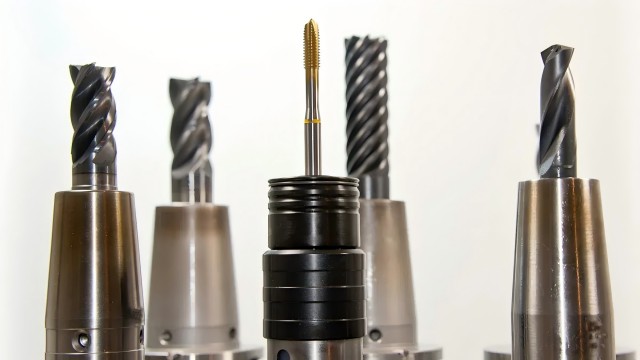
Different end styles are suited to different features:
-
Square end mills: flats, slots, pockets, and general profiling
-
Ball nose end mills: 3D surfaces, contours, and mold work
-
Corner radius end mills: improved edge strength and longer tool life, especially in tougher materials
For edge breaking and chamfering, a dedicated 45° tool can be more controllable than improvising with a general end mill. You may see descriptors such as china top Chamfer Tool 45 Degree supplier; validate angle accuracy, edge durability, and stability at your programmed feed.
Size and Reach: Rigidity Wins More Often Than People Expect
A reliable rule is to use the shortest and largest-diameter cutter that can access the feature:
-
Larger diameter increases rigidity and reduces deflection.
-
Long overhang amplifies bending, vibration, and dimensional error.
-
On long-reach tools, the core diameter is critical because cutting edges don’t add structural support.
If you struggle with taper, chatter, or inconsistent wear, reducing stick-out or increasing diameter often improves results more than simply slowing down.
Machine and Setup: Don’t Overlook the Real Limiter
Machine rigidity and spindle power set the ceiling for depth of cut and stable feed. A more rigid machine can tolerate higher cutting forces and vibration. Less rigid setups require conservative parameters to avoid chatter, poor finish, and premature tool wear.
Chatter is especially costly:
-
It degrades surface finish and accuracy.
-
It reduces tool life and increases machine stress.
-
Spindle speed changes are often the fastest way to reduce vibration, followed by engagement and toolholding improvements.
Practical setup checklist:
-
Minimize tool stick-out.
-
Use secure toolholding and proper clamping.
-
Consider variable helix/variable pitch tools for chatter-prone cuts.
-
Adjust speed first when chatter appears, then refine feed and engagement.
Cutting Speed and Feed: Use a Formula, Then Validate
Cutting speed is the surface speed at the cutting interface. A commonly used formula to estimate spindle speed is:
RPM = (Cutting Speed — 3.82) / Tool Diameter
Then set feed based on flute count, target chip load, rigidity, and operation type. The most dependable workflow is:
-
Start with toolmaker guidance for your material group.
-
Make a conservative test cut.
-
Check chips, sound, heat, and surface finish.
-
Adjust one variable at a time.
Coatings and Inserts: Extend Life, Reduce Friction, Manage Heat
Coatings can improve performance when matched to your material and cutting conditions:
-
Some coatings improve hardness and reduce friction (useful in adhesive materials).
-
Others are designed for high-temperature, high-speed cutting.
-
Certain coatings also help with oxidation resistance and wear life.
If your purchasing system groups inserts under terms like “bits,” you may see long-tail labels such as leading Milling Cutter Bits manufacturer. For engineering decisions, confirm insert grade compatibility, coating purpose, and chipbreaker behavior under your real cutting conditions.
High Efficiency Milling: Use Flute Length Intentionally
In high-efficiency milling (HEM), using more of the flute length can distribute wear across a larger cutting area, potentially improving tool life and reducing the number of passes. This should be balanced against rigidity, wall thickness, and the risk of vibration in long-reach situations.
A Repeatable Decision Framework
Use this checklist whenever you choose milling cutters:
-
Define the workpiece material (hardness, abrasiveness, chip behavior).
-
Define the operation (roughing, finishing, slotting, profiling, chamfering).
-
Choose geometry (flute count, helix, rake, end style).
-
Select size and reach (largest diameter and shortest stick-out possible).
-
Validate against machine limits (rigidity, power, toolholding).
-
Set starting speed/feed from guidance, then test and refine.
FAQs
What matters most when selecting a milling cutter?
Material matching is usually the top priority. Geometry and tool material must suit the workpiece to achieve stable cutting and good tool life.
Do more flutes always mean a better finish?
Not always. More flutes can improve finish, but reduce chip space and can cause chip packing in materials that produce large chips.
When should I use a 45° chamfer tool?
Use it when you need repeatable edge breaks, consistent chamfer width, or a cleaner deburring step–especially when appearance, safety, or assembly fit depends on uniform edge preparation.
About Derek / DerekMall: manufacturing capacity and service approach
Derek (Ningbo Derek Tools Co., Ltd.) is presented as a professional cutting tool manufacturer founded in 1993, with a full production line, ISO certification, and a portfolio of patents. The company states its tools are used in more than 70 countries and regions. It also lists a large manufacturing footprint and in-house equipment coverage (CNC machines, grinders, inspection instruments), indicating vertical capability from production to quality control.
From a service perspective, Derek emphasizes technical services and describes supporting customers from single tools toward full tooling programs–up to “turnkey” style project support in which customers provide workpieces and requirements, and the supplier delivers a validated processing solution. This approach can be particularly valuable when selecting cutters for difficult materials, high consistency production, or automation-sensitive processes where chip control and stability matter. Learning more at: https://www.hsfelt.com/
This article was originally published by IssueWire. Read the original article here.