Here is a deep dive into timeless novels that shaped culture, challenged norms, and still hit hard today, proving great stories never stop speaking to new generations.
Ask ten people to name the greatest novel of all time, and you will get ten different answers, and honestly, that feels right. Some readers chase beautiful language that lingers long after the last page. Others want raw realism that feels almost uncomfortable in its honesty. Some care about social impact and cultural change, while others love the quiet books that reshape how we think without making noise about it. There is no single way to measure greatness in literature, and that is part of the magic. What moves one reader might leave another cold. Still, certain novels keep rising to the surface across generations, conversations, classrooms, and nightstand stacks.
This list brings together 10 of those books and explores why they continue to matter. So, let’s get ahead and see the complete list.
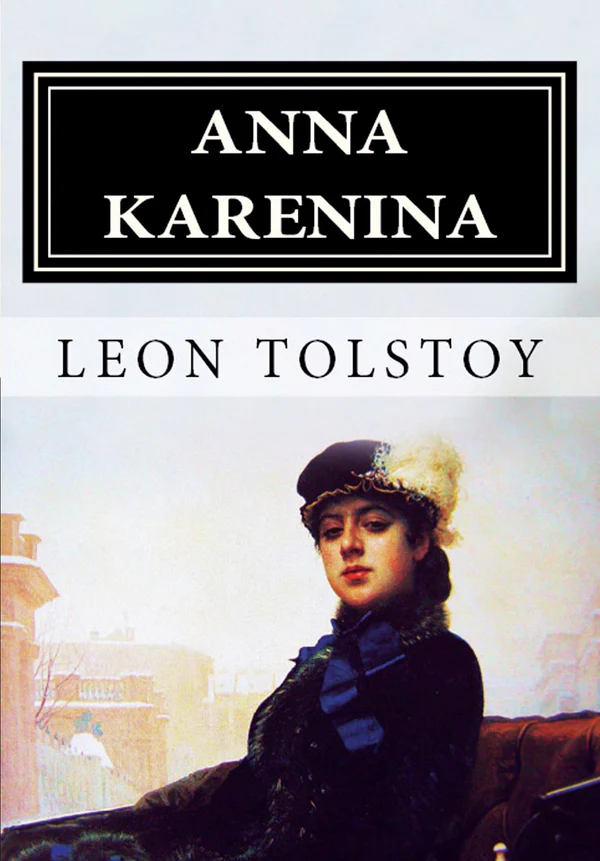
1. Anna Karenina
If you love stories full of messy relationships, moral tension, and big emotional stakes, Anna Karenina usually lands near the top of the list. It has everything. From adultery and marriage drama to gambling and social pressure. Even long stretches of Russian rural life somehow feel just as gripping as the love affairs. Since its full publication in 1878, critics and readers alike have kept returning to it. Outlets like Time consistently ranked it among the greatest novels ever written.
Tolstoy structures the novel around two central figures. There is Anna, who is trapped in a hollow marriage and risks everything for a passionate but doomed love. Then there is Konstantin Levin, a landowner searching for meaning through faith and human connection. What makes the book endure is how naturally these lives unfold. No one feels like a symbol in the story. Everyone feels real; they have flaws, making them painfully human. Tolstoy weaves reflections on love, family, desire, and morality into everyday moments. This lets the philosophy rise quietly from the story instead of sitting on top of it. The novel was also radical for its time in how it portrayed women, exposing the emotional weight of social judgment with clarity and compassion that still feels modern today.
2. To Kill a Mockingbird
Harper Lee built one of the most lasting novels in American literature from a single book, at least during her lifetime, and that alone feels kind of unreal. To Kill a Mockingbird arrived in 1960 and quickly became a cultural landmark. Not just its storytelling, but how clearly it confronted racism in the American South made the book the classic it is. The story unfolds through the voice of Jean Louise Scout Finch, whose curious and honest perspective allows the book to tackle heavy themes without losing warmth or humor. At the center stands Atticus Finch, the calm and principled lawyer whose quiet integrity turned him into one of literature’s most enduring moral figures. At a time when racial tensions were high, the novel challenged readers to rethink justice, empathy, and courage in everyday life. Its impact only grew after it won the Pulitzer Prize in 1961 and was adapted into an Academy Award-winning film the following year. Decades later, it still feels relevant. Its pertinency is still here as a story that keeps asking the same hard questions.
3. The Great Gatsby
The Great Gatsby has become one of those books almost everyone meets in school, and for all the good reasons. It works as a perfect entry point into reading literature closely, while still being genuinely entertaining and emotionally sharp. The story is told through Nick Carraway, a young man who moves to New York. He gets pulled into the glittering but strange orbit of his neighbor Jay Gatsby, a wealthy figure with a mysterious past and a singular obsession. What starts as curiosity soon turns into something heavier. Nick watches desire, ambition, and illusion collide in ways that feel both glamorous and devastating. Set during the Jazz Age of the 1920s, the novel offers a front row seat to excess, wealth, and social performance, while quietly tearing apart the idea of the American Dream from the inside. Nothing in this book feels accidental, from the green light across the water to the famous cover art itself, with its haunting eyes floating over a glowing city. That image mirrors the story’s mood perfectly: seductive yet lonely, and always just out of reach.
4. One Hundred Years of Solitude
Gabriel García Márquez changed the shape of modern fiction when he released One Hundred Years of Solitude in 1967, and its influence still feels massive decades later. The novel follows seven generations of the Buendía family, tracing their lives from the founding of the town of Macondo to its eventual collapse, along with the family line itself. What makes the story unforgettable is how effortlessly it blends the ordinary with the extraordinary. The novel makes you believe that miracles happen casually, and ghosts appear without ceremony. The impossible sits beside the everyday and feels completely natural.
This style is now closely tied to magic realism, allowing Márquez to tell history through emotion, memory, myth, and folklore rather than facts alone. The novel becomes less about plot and more about cycles of love, loneliness, power, and repetition. All of them unfolded across time in a way that feels both intimate and epic. It also captures the rhythms of Latin American culture with warmth, humor, and melancholy. The book earned Márquez international acclaim and paved the way to his Nobel Prize for Literature in 1982, with this novel often seen as the crown jewel of his career. Even now, it feels timeless, strange, beautiful, and enormously human.
5. A Passage to India
E.M. Forster wrote A Passage to India after spending years traveling through the country, and that lived experience shows up on every page. Published in 1924, the novel centers on Dr. Aziz. The story focuses on this warm and impulsive Indian Muslim physician and his growing friendships with two English visitors, Cyril Fielding and Adela Quested. What begins as a cautious connection shifts into something far more fragile when Adela accuses Aziz of assault during a visit to the Marabar Caves, an event that sends shockwaves through both the Indian and British communities. The novel becomes less about the accusation itself and more about what it exposes: power, prejudice, fear, and the limits of understanding under colonial rule.
Forster never reduces the story to simple villains or heroes. Instead, he lingers in uncertainty, showing how easily good intentions collapse under social pressure. The landscape of India plays a powerful role, too. The heat and vastness shape the emotional atmosphere as much as the characters do. Through its mix of political tension, human vulnerability, and haunting imagery, the novel asks one lingering question: can a real connection survive inside an unequal world?
6. Invisible Man
Ralph Ellison’s Invisible Man often gets mixed up with H.G. Wells’s sci-fi novella, but beyond the title, the two books could not be more different. Ellison’s novel is a landmark work about identity and what it means to exist in a society that refuses to truly see you. The narrator never gives his name, only his belief that he is socially invisible. Through his voice, the novel traces his journey from the American South to college and then to New York City.
At every stop, he runs into systems that promise opportunity but deliver control, confusion, and disappointment instead. He moves through jobs, friendships, political groups, and ideologies, always searching for meaning, always slipping through cracks that seem designed for him. The writing itself feels restless and dreamlike, blending realism with surreal moments that reflect his fractured sense of self. Ellison uses symbolism, satire, and sharp observation to explore Black identity, power, and survival in America without offering easy answers. The novel won the National Book Award for Fiction in 1953, but its real legacy is how boldly it expanded what American literature could sound like and confront.
7. Beloved
Toni Morrison’s Beloved was published in 1987 and is one of those novels that stays with you long after you finish the last page. Set in 1873, the story follows Sethe, who is an escaped slave living in Cincinnati, Ohio. She carries the unbearable weight of her past into what is supposed to be freedom. Her trauma centers on an unthinkable choice she made years earlier, killing her own child to spare her from a life in slavery. It was a decision that continues to haunt every part of her existence. That haunting becomes literal when a mysterious figure named Beloved appears, embodying grief and memory, and the pain the family has tried and failed to bury. Morrison blends history with spirituality and emotional realism into a story that is both intimate and epic. She refused to look away from the psychological scars slavery leaves behind. At the same time, the novel holds space for love for community and the possibility of healing, even when forgiveness feels out of reach. Beloved won the Pulitzer Prize in 1988 for fiction and remains one of the most powerful explorations of memory and motherhood, as well as survival in American literature.
8. Mrs. Dalloway
Mrs. Dalloway might be the most quietly strange novel on this list, and that is exactly what makes it unforgettable. Virginia Woolf compresses the entire story into a single day in the life of Clarissa Dalloway, a British socialite preparing for a party. However, somehow she turns that simple premise into something expansive and emotionally dense. The novel flows through the thoughts of multiple characters using stream of consciousness narration, drifting between memories, sensations, regrets, and fleeting observations without warning. Plot barely matters here. What matters is how people feel inside their own heads.
As Clarissa moves through London, the story opens into reflections on love, aging, missed chances, social expectations, and the quiet loneliness that can sit beneath polite conversation. Running alongside her story is the experience of Septimus, a war veteran struggling with trauma and mental illness after World War I, giving the novel emotional depth and urgency beneath its calm surface. Woolf treats memory as something alive and intrusive, shaping the present in ways people barely control. The result is a novel that feels intimate and deeply vulnerable, as well as strangely modern. Its voice and emotional honesty continue to influence how writers think about time, consciousness, and what fiction can do.
9. Jane Eyre
Jane Eyre is one of those books that many people first meet in school, but it hits differently when you return to it as an adult. Charlotte Brontë published the novel in 1847 under the name Currer Bell, hiding her identity in a literary world that rarely took women seriously. That context makes the story feel even more radical. Jane begins as an orphan with nothing; no status, no safety net, and slowly builds a life defined by self-respect and independence, along with emotional honesty. What makes the novel endure is how deeply it centers Jane’s inner world. Her thoughts, fears, desires, and moral struggles drive the story more than any external action. Brontë blends Gothic tension with Victorian realism, giving readers mystery, romance, and psychological depth in equal measure. Jane’s relationship with Rochester adds intensity, but the novel never lets romance override her sense of self. At a time when women were expected to be quiet and compliant, Jane Eyre offered something bold: a heroine who demanded dignity, agency, and love on her own terms and changed the shape of the novel in the process.
10. The Color Purple
Alice Walker revived the epistolary novel with The Color Purple in 1982, turning letters into something intimate and unforgettable. Set in the post-Civil War American South, the story follows Celie from girlhood into adulthood through letters she writes to God and later to her sister Nettie. Her voice captures years of abuse, silence, survival, and slow self-discovery, along with the lives of the women who surround her. What makes the novel so powerful is how it holds space for pain while still insisting on love and growth. It explores sexism, racism, gender, sexuality, and resilience without losing warmth or humanity. The book won both the Pulitzer Prize and the National Book Award and later became an acclaimed film, sealing its place in American literary history.