(Isstories Editorial):- Shenzhen, Guangdong Jan 15, 2026 (Issuewire.com) – The global manufacturing landscape is currently undergoing a profound transformation, driven by the increasing demand for miniaturization and high-performance structural integration. As aerospace, medical, and robotic technologies push the boundaries of physics, the components required to power these innovations have become significantly more intricate. Navigating these design challenges requires more than just standard machinery; it demands a deep synergy between advanced software and mechanical mastery. Custom Cnc Machinging Parts Manufacturers are the essential facilitators of this progress, transforming highly complex digital blueprints into high-precision physical components that meet the rigorous standards of modern industry. At Jing Si Dun (Shenzhen Jing Si Dun Mechanical Equipment Co., Ltd.), a dedicated team of creative, strategic, and engineering experts is focused on addressing these mission-critical projects through optimized processes. By spearheading a prototyping revolution, the company provides a vital link between conceptual design and full-scale production, ensuring that complexity never becomes a barrier to innovation.
The Challenge of Modern Geometric Complexity
In traditional manufacturing, “complex geometry” often referred to parts with multiple angled holes or basic curved surfaces. Today, the definition has expanded to include organic shapes, deep internal cavities, and lattice structures designed for weight reduction. These features are frequently found in the next generation of AI-driven robotics and high-efficiency heat exchangers.
More on Isstories:
- Immigrant Entrepreneurship in America by Gorm Tuxen Achieves #1 Amazon Bestseller Status
- Colle AI Formalizes Strategy Around Cross-Chain Asset Versioning Infrastructure.
- Imagen Network Sets Forth Multi-Perspective Rendering Initiative for Immersive Asset Creation
- Apolosign Digital Wall Calendar Tackles “Proxy Parenting” in U.S. Homes
- 25 Countries for Solo Travelers to Discover Themselves
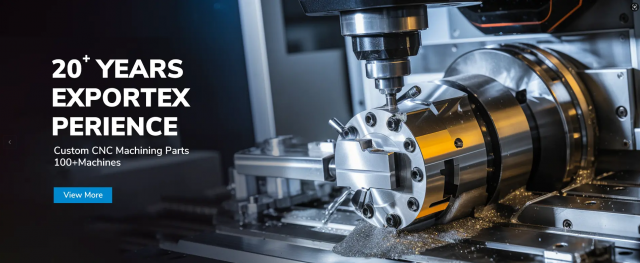
The difficulty in machining these parts lies in tool access and structural stability. When a part features deep pockets or undercuts, the risk of tool vibration (chatter) increases, which can compromise surface finish and dimensional accuracy. To overcome this, advanced manufacturers utilize 5-axis CNC machining centers. Unlike traditional 3-axis machines, 5-axis technology allows the cutting tool to approach the workpiece from any direction, enabling the creation of seamless contours and complex internal features in a single setup. This not only improves precision but also significantly reduces the cumulative errors that occur when a part is moved between multiple fixtures.
Material Science and Machinability
Engineering excellence is as much about understanding materials as it is about operating machinery. The automotive and aerospace sectors are increasingly moving toward difficult-to-machine materials like titanium, Inconel, and high-grade stainless steel to achieve better strength-to-weight ratios.
Each material reacts differently to the heat and pressure of the cutting process. For instance, titanium’s low thermal conductivity can cause heat to build up at the cutting edge, potentially damaging both the tool and the part. Expert manufacturers like those at Jing Si Dun apply strategic cooling techniques and specialized tool coatings to manage these thermal dynamics. By selecting the right feed rates and spindle speeds, they ensure that even the most stubborn materials are shaped into precise components without compromising their inherent metallurgical properties.
From Prototyping Revolution to Production
One of the most significant shifts in the industry is the blurring of lines between prototyping and production. In the past, prototypes were often “rough” approximations of the final product. However, in the current engineering climate, a prototype must be a functional twin of the end-use part.
By focusing on the “prototyping revolution,” Jing Si Dun allows engineering teams to validate complex geometries early in the development cycle. This is particularly crucial for custom AI robot accessories and articulated robotic arms, where the interaction between multiple moving parts must be flawless. Rapid CNC prototyping enables engineers to test the mechanical integrity of a complex joint or the airflow through a machined housing before committing to high-volume manufacturing. This agile approach minimizes the risk of costly design changes later in the process and accelerates the time-to-market for mission-critical technologies.
Applications in High-Stakes Industries
The impact of precision-machined complex geometries is felt across a wide spectrum of high-stakes applications. Each industry brings its own set of unique requirements and challenges:
Robotics and Automation: Creating lightweight but rigid linkages and sensor housings that allow for high-speed precision movement.
Aerospace: Machining turbine blades and structural components that must withstand extreme G-forces and temperature fluctuations.
Medical Devices: Producing intricate surgical instruments and orthopedic implants with biocompatible finishes and micron-level tolerances.
Electronics: Developing sophisticated heat sinks with complex fin structures to manage the thermal output of high-speed processors.
In each of these scenarios, the ability to execute complex geometries is the difference between a functional product and a failed design. Manufacturers who invest in both high-end equipment and human expertise become strategic partners in the engineering process, helping to refine designs for better manufacturability.
The Role of Strategic Engineering Expertise
Technical capability alone is insufficient for tackling the most difficult projects; strategic oversight is the true catalyst for success. This involves a comprehensive review of the “Design for Manufacturing” (DFM) principles. Often, a small adjustment in a corner radius or a slight change in the orientation of a feature can significantly reduce machining time and cost without affecting the part’s performance.
The team at Jing Si Dun prides itself on this collaborative approach. By working closely with clients during the initial design phases, they identify potential bottlenecks in the machining process. This strategic intervention ensures that resources are used efficiently and that the final product meets all functional requirements. This level of dedication is what allows them to take on projects that other manufacturers might deem too risky or technically demanding.
Digital Integration and Quality Assurance
As we look toward the future, the integration of digital twins and real-time monitoring is set to further enhance the capabilities of Custom CNC Machining Parts Manufacturers. By simulating the machining process in a virtual environment, engineers can identify potential tool collisions or areas of excessive stress before the first chip is cut.
Once the physical machining begins, high-precision inspection tools, such as Coordinate Measuring Machines (CMM) and optical scanners, verify that the complex geometries match the digital model exactly. This closed-loop system of simulation, execution, and verification is essential for maintaining consistency across both small-batch prototypes and large-scale production runs. It ensures that every part, no matter how geometrically challenging, performs reliably in its intended environment.
Bridging the Gap in Global Supply Chains
In today’s volatile global market, the ability to source high-precision components from a reliable, efficient partner is a significant competitive advantage. For companies worldwide, having a manufacturing partner that can handle everything from material procurement and complex machining to surface treatment and final assembly simplifies the supply chain.
By consolidating these services, Jing Si Dun helps clients reduce lead times and logistical overhead. This comprehensive service model is particularly beneficial for startups and innovation labs that need to remain lean while developing sophisticated hardware. The focus on efficiency and mission-critical reliability makes it possible for these organizations to compete on a global scale.
The mastery of complex geometries is the hallmark of modern engineering excellence. As products continue to evolve in complexity, the role of the specialized manufacturer becomes increasingly vital. Through a combination of 5-axis technology, deep material knowledge, and a strategic approach to prototyping, the challenges of tomorrow’s designs are being solved today.
To find out how expert engineering and precision machining can support your specific project needs, please visit the official website of Jing Si Dun at https://www.jsdcncmachining.com/.
Shenzhen Jing Si Dun Mechanical Equipment Co., Ltd.
[email protected]
https://www.jsdcncmachining.com/
This article was originally published by IssueWire. Read the original article here.