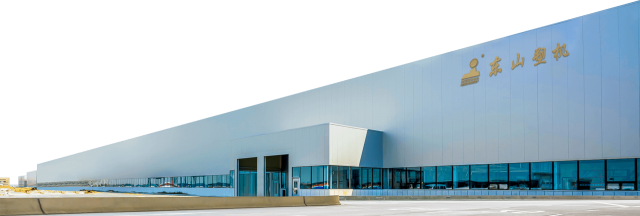
(Isstories Editorial):- Hangzhou, Zhejiang Jan 12, 2026 (Issuewire.com) – In today’s manufacturing climate, efficiency, sustainability and product consistency are rising in strategic importance–so when a Global Leading eps polystyrene machine provider like Hangzhou Fuyang Dongshan Plastic Machinery Co., Ltd. (Dongshan) showcases its recycled-material processing capabilities at K 2025, it signals a meaningful shift. With nearly two decades of experience in EPS and EPP foam-machinery manufacturing, Dongshan integrates independent R&D, production, sales and service, leveraging its base in Hangzhou (with convenient access to major ports such as Shanghai and Ningbo) to support international exports and global customers. As manufacturers of foam plastics are under increasing pressure to process waste, reduce raw-material consumption, and meet environmental expectations, Dongshan’s machine portfolio–including advanced recycling systems–offers a pathway to align production performance with sustainability objectives.
Shifting industry dynamics: foam, recycling and sustainability
The foam-plastics industry is undergoing a transformation driven by multiple forces. On one hand, EPS (expanded polystyrene) remains widely used in packaging, insulation, construction and cold-chain applications due to its light weight and thermal properties. On the other hand, global targets for waste reduction, circular economy principles and resource efficiency are placing renewed attention on how foam waste is handled after use or production. Recycling systems, material-recovery workflows, and machines that can convert scrap or used EPS back into usable feedstock are increasingly seen as part of the production line–not merely as end-of-life accessories.
More on Isstories:
- Global Leading eps polystyrene machine Drives Sustainability Focus at K 2025 with Recycled Material Processing
- CAREBOO Health Electrotherapy Equipment Manufacturer China Meets Rising Home Therapy Needs
- Wholesale CAREBOO TENS EMS Devices Factory Benefits from Expanding Retail Wellness Markets
- Automation Breakthrough at China Leading Polystyrene Block Machine Factory Boosts Output Efficiency
- Future Leading EPS Shape Molding Machine Company Unveils Next-Gen Automated Solutions
In this context, a company offering a fully integrated machine portfolio–from pre-expansion and moulding to recycling–can support manufacturers across the entire value chain. That is precisely where Dongshan positions itself: by supplying machines for EPS pre-expansion, shape/moulding, blocks, cutting and recycling, the company addresses manufacturing challenges while enabling more resource-efficient operations.
Moreover, the consolidation of global supply-chains and regulatory pressures (including waste-handling mandates and import-export sustainability credentials) means foam-product manufacturers are under greater scrutiny. Utilising recycled material processing systems not only reduces raw-material dependency but also improves the sustainability profile of production lines–making machine selection a strategic rather than purely technical decision.
Company profile: manufacturing depth, export readiness and technical innovation
Dongshan’s profile underscores several relevant strengths for manufacturers evaluating eco-efficient foam-machinery:
Specialising in EPS/EPP foam-plastics machines for nearly 20 years, Dongshan integrates independent R&D, manufacture, sales and service.
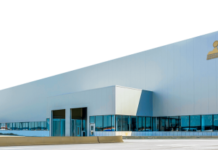
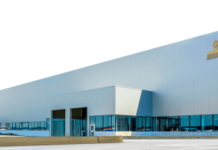
Located in Hangzhou’s Fuyang District, the company benefits from proximity to major export ports such as Shanghai and Ningbo, facilitating international logistics and export readiness.
Since 2007, its machines have achieved CE certification and ISO 9001-2008 quality-management certification. The company also holds recognition as a high-tech enterprise and the “Level A of honesty and trustworthiness” honour.
To date, the firm holds over 48 utility-model patents and 6 invention patents, signalling sustained investment in technical innovation.
Its product range spans auto block-moulding machines, auto pre-expander machine series, auto shape-moulding machines, cutting machines, recycle machines and other auxiliary equipment.
The exporter footprint includes more than fifty countries, indicating global service and support capability.
These attributes indicate that Dongshan is equipped not just for local supply, but for global markets–including the sustainability-driven needs of modern foam-product operations.
Recycling and sustainability: machine capabilities that matter
At the heart of Dongshan’s sustainability push is its EPS recycle machine and foam-recycling system. Key aspects include:
The recycle machine is described as efficiently processing expanded polystyrene waste, offering eco-friendly solutions and cost effectiveness. It reduces landfill waste and supports sustainable manufacturing practices.
Specifically, one system is a large-scale EPS recycling plant with multiple processing stations and quality-control measures. According to product details, it can handle packaging, construction and cold-chain transportation foam waste; compress foam volume by up to 90:1; and achieve material recovery rates of up to 98%.
Applications cover packaging industry solutions (recycling protective foam, food-container insulation, etc.), construction materials (insulation boards, blocks mixed with recycled EPS), logistics and shipping waste management, and industrial foam reuse (scraps from automotive parts, electronics packaging, appliance insulation).
Dongshan highlights that its recycling machines help enterprises reduce environmental impact, support circular economy initiatives, and conserve raw materials by converting waste EPS into reusable pellets or feedstock.
Additional features include energy-efficient motors, intelligent temperature control, self-diagnostic tools, user-friendly interfaces, and a modular design for low maintenance.
Given these capabilities, the machine offering is positioned not solely as manufacturing equipment, but as a component of sustainable-production infrastructure for foam manufacturers.
How K 2025 becomes a showcase for recycled-material processing in foam manufacturing
As the global plastic-machinery sector gathers at K 2025, Dongshan’s participation around recycled-material processing can serve several strategic functions:
Highlighting live or virtual demonstrations of the recycle-machine line: showing how foam scrap is shredded, melted and extruded into usable pellets, and how this aligns with circular-economy goals.
Drawing attention to the integration between moulding machines and recycling systems: demonstrating how producers can close the loop from production scrap back into feedstock, thereby reducing material cost and waste.
Emphasising energy-saving and process-efficiency credentials: in markets where energy cost and sustainability reporting matter, the ability to reclaim EPS waste and convert it efficiently has industrial relevance.
Reinforcing export-ready credentials: for global customers mindful of logistics, service and regulatory compliance, the fact that Dongshan has exported to more than fifty countries suggests a mature supply-chain and support network.
Positioning the recycle-machine offering as a differentiator in foam-machinery procurement: instead of selecting only a moulding machine, customers are considering the full lifecycle of foam production, including waste-handling and material reuse.
In this way, K 2025 provides a timely platform for Dongshan to present not only its moulding and block-machinery solutions but also its recycled-material processing systems as part of a more sustainable foam-production future.
Application scenarios: recycled material processing in practice
From a practical perspective, foam-product manufacturers stand to gain from incorporating recycling machines in several ways:
Packaging producers: Each production run often generates off-cuts, rejected inserts or protective inserts that may be hard to clear. A recycling machine enables companies to convert these scraps back into feedstock, reducing raw-material purchase and storage of waste.
Insulation and construction-foam manufacturers: EPS blocks used in boards or panels often produce trimmings and end-of-run scrap. Reclaiming that material supports cost control and sustainability documentation, and the reuse of recycled EPS in insulation blocks supports energy-efficient building standards.
Cold-chain and logistics foam producers: Insulated containers, coolers and foam liners generate over-run waste and replaced units. Recycling systems allow conversion of used units or production waste back into usable product streams, aiding cost and waste-reduction goals.
Global or export-focused manufacturers: For companies exporting foam products, local waste-handling and sustainability compliance may affect access to markets or customer aluminium supply. Having a recycling-capable production line may improve customer perception and regulatory alignment.
When combined with moulding machines from the same supplier, the recycling system becomes part of a holistic manufacturing ecosystem rather than an afterthought.
Strategic considerations: selecting machine partners in a sustainability-driven era
Manufacturers reviewing foam-machinery investments in this era should reflect on several strategic questions:
Does the supplier support material-recovery processing? Beyond moulding and block machines, can the supplier provide recycling systems that convert scrap into reusable pellets or feedstock?
What are the energy and waste-savings credentials? Systems that compress foam waste, reduce volume, and recover material yield both economic and environmental benefits.
Is supply-chain and export support mature? Machines for global markets require exportcertified production, service networks, spare part availability and logistic support–especially for recycling systems which may require local maintenance.
How flexible is the machine portfolio? A supplier covering pre-expansion, moulding and recycling allows for an integrated machine line rather than discrete purchases–this can simplify operations and reduce integration risk.
Does the offering align with circular-economy and sustainability narratives? For manufacturers marketing foam products into markets with regulatory or customer demands for recycled content or reduced waste, the equipment supplier’s capability in recycling becomes a competitive feature.
Choosing equipment now involves not just machine throughput or size, but the ability to manage scrap, re-use material and support sustainability metrics.
As the foam-production sector continues to evolve toward sustainability, efficiency and circular-economy alignment, the role of machines that handle both production and recycling becomes increasingly important. Dongshan’s machinery–spanning EPS pre-expansion, shape-moulding, block-forming and recycling systems–responds to this evolution by offering an ecosystem approach rather than isolated machines. Their participation at K 2025, with an emphasis on recycled-material processing, reflects a recognition that foam-machinery manufacturers must adapt to global demands for waste-reduction, resource conservation and operational flexibility.
For companies evaluating foam-machinery suppliers, the choice now includes not only output capacity and precision, but the ability to incorporate waste handling and material re-use into the production flow. Dongshan’s combination of recycling-capable machines, export readiness and technical credentials make it a notable contender in this space.
For more information about their machine portfolio, technical specifications and global support network, please visit https://www.dongshaneps.com/
Hangzhou Fuyang Dongshan Plastic Machinery Co., Ltd.
[email protected]
https://www.dongshaneps.com/
This article was originally published by IssueWire. Read the original article here.