
(Isstories Editorial):- Fuzhou, Fujian Jan 7, 2026 (Issuewire.com) – For e-commerce sellers looking to launch or expand their custom mug business, timing matters. Products aligned with current design trends generate 40% higher engagement on online marketplaces, but testing multiple designs before committing to inventory has traditionally required upfront investment. A print-on-demand platform is addressing this challenge by offering production starting at $1.89 per unit (product cost only, excluding taxes and shipping) with zero minimum orders, making it more accessible for sellers to experiment with trending designs before scaling.
The custom mug market continues growing, with sellers finding success by identifying which specific design directions resonate with target audiences. Here are the four trends shaping what’s selling in 2026–and how sellers can test them efficiently.
Four Design Trends Driving 2026 Sales
More on Isstories:
- Why OOGPLUS is the Preferred China Oversized Project Cargo Shipping Specialist for Energy Sectors
- JAGUAR-China Leading Environmental Protection Air Compressor Manufacturer: Contributions to Carbon Neutrality Goals
- A Comprehensive Guide to Selecting a China Out Of Gauge Cargo Shipping Provider
- What Defines a Best Two-Stage Screw Air Compressor Solution Provider in the Modern Industrial Era?
- Analysis: Key Trends for China International Logistics Companies at Breakbulk Europe
Logo mugs – Brand visibility that lasts beyond the first impression. B2B buyers from cafes, corporate HR, and event planners consistently purchase these for long-term marketing impact.
Photo mugs – Memories transformed into daily-use keepsakes. Strong year-round sellers for birthdays, anniversaries, and holidays when emotional connection drives purchase decisions.
Meme mugs – Humor meets impulse buying behavior. Workplace jokes and relatable one-liners generate high engagement on social platforms and quick purchase decisions.
Art mugs – Original creativity in functional form. Design-conscious customers seeking distinctive products choose these over generic mass-market options.
The Testing Problem: How to Know What Works
Recognizing trends doesn’t automatically translate to sales. The challenge lies in identifying which specific executions within these categories resonate with your particular audience. Does your customer base prefer minimalist logo designs or bold colorful branding? Will funny mugs with edgy humor outperform gentler, family-friendly jokes? Do abstract art patterns or realistic illustrations drive more conversions?
Traditional approaches to answering these questions involve expensive guesswork. Order samples of multiple designs, photograph them, run test marketing campaigns, and see what performs. The problem is that comprehensive testing across four or five design variations requires significant upfront investment before generating any revenue.
How PeaPrint Enables More Accessible Design Testing
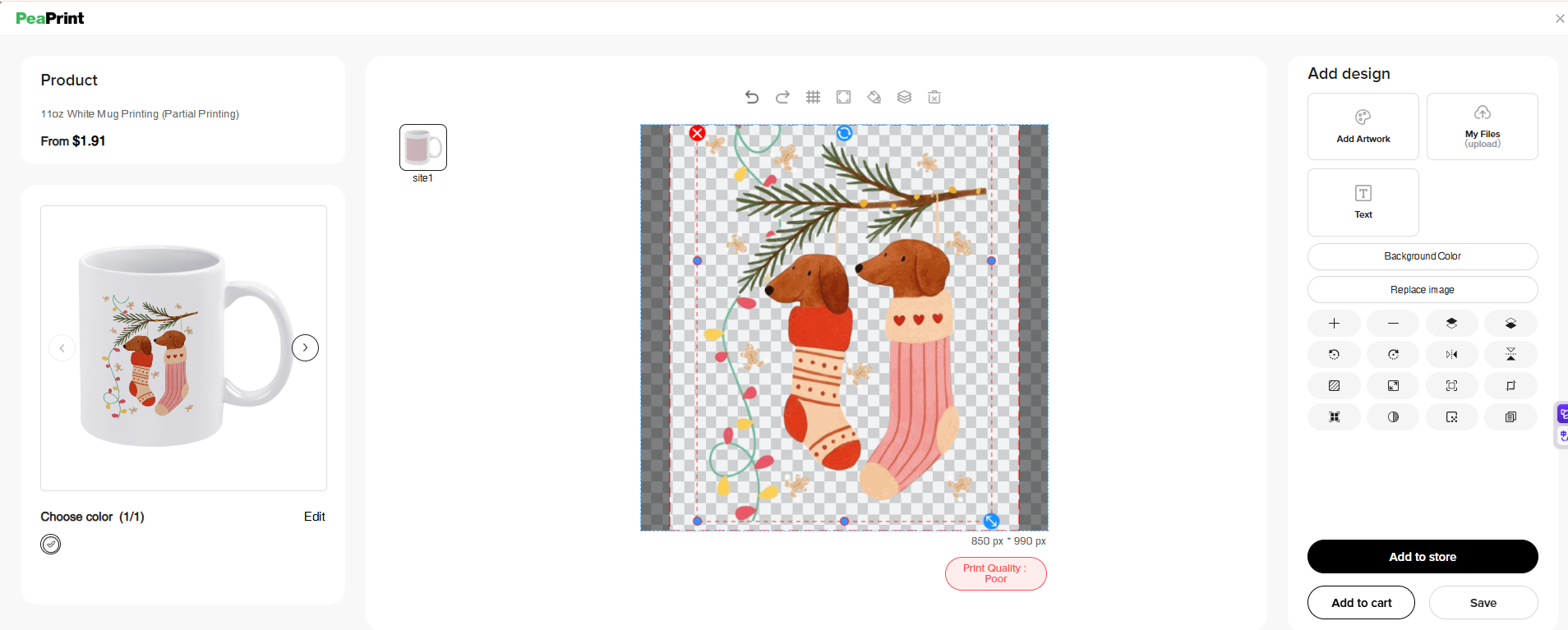
PeaPrint built its platform to lower the barrier for design experimentation. The service offers custom mug production starting at $1.89 per unit (product cost, before taxes and shipping) with no minimum order requirements. Sellers choose from available mug styles, upload their design files, and place orders directly through the web interface. For sellers operating Etsy, Shopify, or WooCommerce stores, the platform offers one-click integration for streamlined order management.
Production fulfills through two regional options. Orders shipping to US addresses complete within approximately one week. International sellers can utilize China-based production facilities that manufacture and ship within three days domestically, or handle logistics for products destined for American customers with delivery times extending to roughly two weeks.
The pricing structure remains consistent whether ordering individual samples or larger inventory quantities. A seller exploring the art mug trend can order single units of five completely different design approaches, receive physical samples, photograph them in realistic settings, and gauge customer response through social media or test listings–all before committing significant capital to inventory.
“Our focus is making it more accessible for sellers to test ideas quickly,” explains the PeaPrint team. “When you can afford to experiment with multiple design directions simultaneously, you increase the odds of identifying products that genuinely resonate with your audience.”
Monthly Sample Program Supports Ongoing Testing
Understanding that trend testing should be continuous rather than occasional, PeaPrint provides monthly 20% discount codes specifically for sample orders. Sellers can select up to three products per month at reduced rates, creating a more systematic approach to testing new concepts.
This structure aligns with how successful e-commerce businesses operate. Rather than launching products based on intuition alone, sellers can validate concepts with lower financial risk. Test three variations of logo placement in January. Experiment with different humor styles for meme mugs in February. Try bold versus subtle color palettes for art designs in March. The monthly cadence enables continuous product development as an ongoing business practice.
Practical Application: From Concept to Validated Product
Consider a seller wanting to enter the corporate gifting market with logo mugs. They create three design templates showcasing different aesthetic approaches–minimalist modern, classic professional, and bold colorful. Three sample mugs at standard product pricing would cost around $5.70 before taxes and shipping. With the monthly 20% discount, the product cost would be approximately $4.56.
Samples arrive within the appropriate timeframe based on shipping destination. The seller photographs all three in realistic office settings and shares them with potential corporate clients or tests them through targeted social ads. Based on actual feedback and engagement data, one design clearly outperforms the others. That becomes the primary product for scaled marketing efforts.
Instead of ordering large inventory quantities hoping they sell, the seller starts with modest quantities for immediate fulfillment. As orders materialize, they reorder based on actual demand–10 units, then 20, then 50–scaling in response to proven customer interest. This approach reduces inventory risk while maintaining margins as volume increases.
Why This Matters for Sellers Entering 2026
The custom mug market offers opportunities, but success depends on execution rather than simply following broad trends. Logo mugs, photo mugs, meme designs, and art-based products all sell–but which specific versions within these categories work for your brand and audience requires testing to determine.
Lower-cost sampling infrastructure transforms product development from guesswork into more systematic learning. Sellers can maintain testing pipelines–three new design experiments monthly means 36 new products tested annually–improving the probability of discovering bestsellers while keeping financial risk manageable.
As more sellers enter the custom mug space, differentiation through design becomes increasingly important. Generic products can disappear into crowded search results and social feeds. Standing out requires identifying the specific aesthetic and messaging combinations that your target customers respond to. Print-on-demand platforms providing more accessible testing capabilities allow sellers with limited capital to compete through creativity and responsiveness.
PeaPrint
[email protected]
5103777421
Room 416, Building 4, Honglixing Intelligent Industrial Park, Jianxin Town, Cangshan District, Fuzhou City, Fujian Province
https://peaprint.com/
This article was originally published by IssueWire. Read the original article here.