(Isstories Editorial):- Shanghai, China Jan 6, 2026 (Issuewire.com) – Shanghai Mida Cable Group Limited, along with its wholly-owned subsidiaries Shanghai Mida EV Power Co., Ltd., Shenzhen Mida EV Power Co., Ltd., Shanghai Mida New Energy Co., Ltd., a leading professional Electric Vehicle Supply Equipment manufacturer , announced today the release of a guide to help businesses select and deploy Customized Electric Car Charging Stations for China to rapidly expanding commercial EV Fleets.
This initiative is a continuation of MIDA’s commitment to deliver more reliable, stable and environmentally friendly charging systems on the global market. complete and systematic product portfolios are also essential to large-scale commercial adoption of EVs.
Global Industry Perspective: The Rapid Evolution in Commercial EV Charging Infrastructure
More on Isstories:
- Tamar Toledano Warns Technical Debt Is Now a Strategic Risk as AI and Cloud Complexity Accelerate
- Goedkoopnaarschiphol.nl Launches Advanced Schiphol Taxi Booking System and Dedicated App, Developed with SmartTaxiBooker
- Dodgeball Brings an inspiring story of friendship, creativity, and joyful play to life in rural Zimbabwe
- Top 10 Antibiotic Peptides for Global Buyers Revealed
- Jalpi Launches Inbox A Smart Email Alias Platform to Help Businesses Cut Email Infrastructure Costs by Up to 87%
Globally, the transition to electric mobility is moving at an unprecedented rate. Commercial sectors, including logistics, public transport, industrial fleets and corporate mobility, are emerging as the primary drivers of EV adoption, fueled primarily by increasing climate policies and the compelling Total Cost of Ownership (TCO) benefits of electric fleets.
EV charging infrastructure, the foundation of this revolution, is experiencing rapid growth and technological progress. China is the largest EVSE manufacturing hub in the world, and plays a key role in setting global standards for charging and innovation.
Key Technology Trends and Market GrowthHigh Power DC Charging and Advanced Thermostatic Management
To maximize vehicle uptime, commercial EV fleets – especially medium- and heavy duty vehicles – require ultra-fast chargers. This is driving the shift to high power DC charging solutions, with outputs up to 150kW, 240kW, 360kW and beyond.
MIDA New Energy developed specialized liquid-cooled power modules and Liquid cooling system accessories to address the thermal challenges. These products ensure charging safety, efficiency and long-term service under continuous-duty, high-current conditions.
Smart charging, Modularity and Grid Interaction (V2X).
Intelligent charging systems are increasingly used by fleet operators to balance grid loads and manage energy costs. They also enable future energy interactions.
MIDA offers solutions support for:
Commercial EV Chargers Compliant with OCPP for intelligent charging and energy management
Bidirectional power modules enable Vehicle-to Grid (V2G), allowing fleets to feed back energy into the grid at peak demand times.
This capability transforms EV fleets into distributed assets and enhances grid resilience as well as operational profitability.
Flexible Deployment Across Diverse Commercial Scenarios
Charging sites for commercial vehicles are diverse, ranging from urban depots to remote logistics hubs and industrial parks. MIDA’s comprehensive product line includes:
AC Solutions: Home EV wallbox, floor mounted EV charger
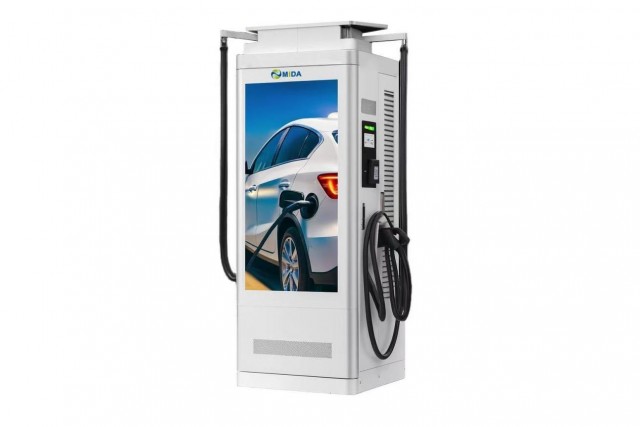
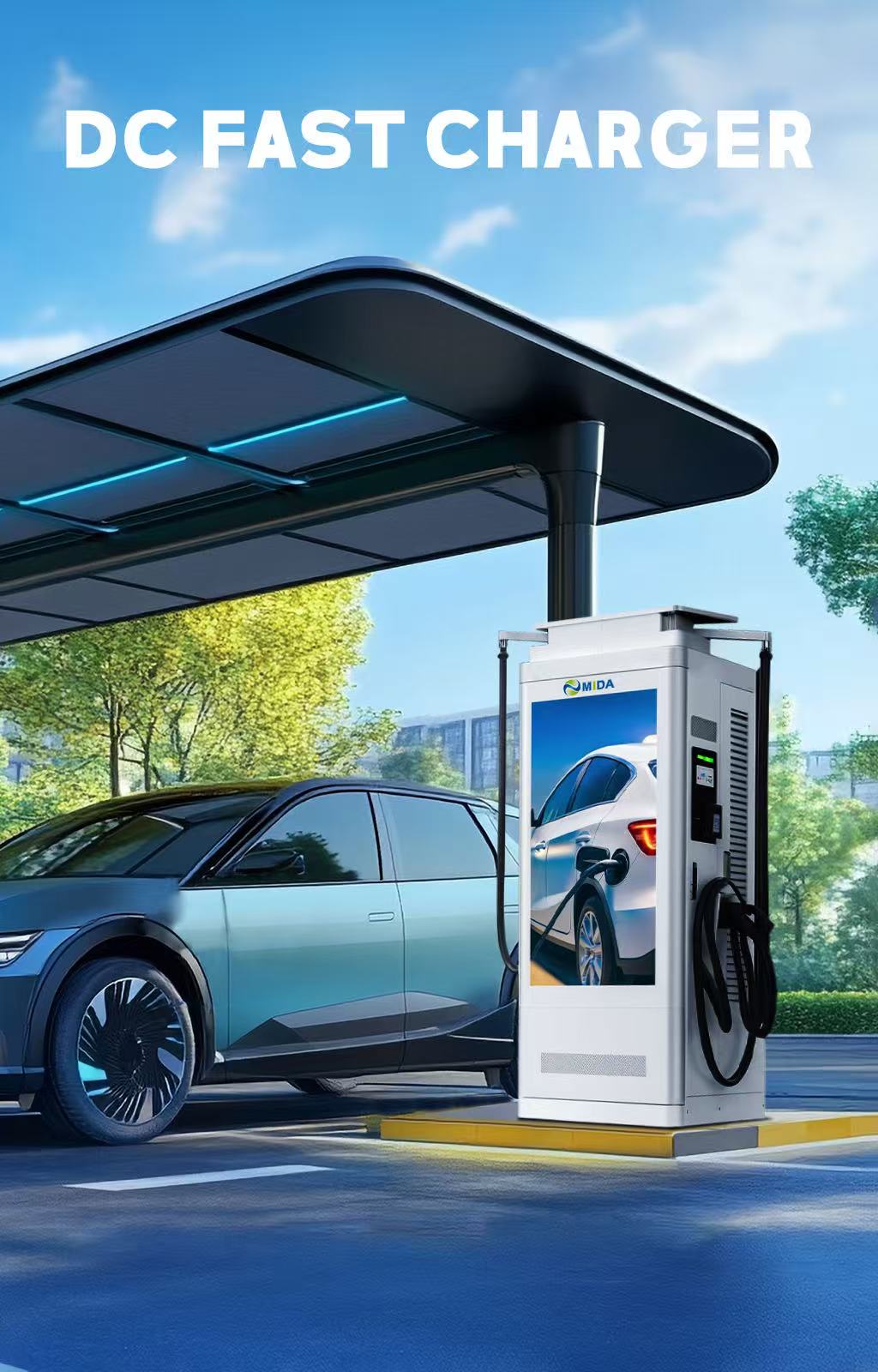
DC Solutions: Split Type DC Charging Station, Wall Mounted DC Charging Station
Special Applications: Mobile DC Charging Station, Portable EV charger
These solutions, when combined with AC/DC Charging Modules, offer high flexibility, scalability and simplified maintenance.
Three core pillars of strategic selection for custom-designed EV charging stations
MIDA has identified three key pillars to consider when selecting Customized Charging Stations for Electric Cars in China as part of a commercial EV deployment.
1. Customized power configuration and charging architecture
The charging requirements for fleets vary greatly depending on the vehicle type, duty cycle, and operating schedules.
Distributed AC charging may be preferred by urban delivery fleets
Fast DC charging is required for high-throughput logistic hubs
MIDA’s Competitive Advantage:
By using modular AC/DC and DC/DC Charging Modules MIDA allows for precise power customization on its Wall Mounted DC charger Station, Floor Standing DC charger Station, and Split Type DC charger Station. This optimizes investment efficiency and future scaleability. Complete accessory solutions, including DC Charging Connectors (and EV Cable Retractors), ensure reliable system integration.
2. Global Quality Standards and Product durability
Commercial EV chargers are subjected to high usage rates and harsh conditions. It is important to comply with international standards for safety and quality.
MIDA’s Competitive Advantage:
MIDA’s entire product portfolio has international certifications including FCC, ETL and TUV. This ensures global compliance and interoperability.
3. System Integration and Long Term Solution Partnership
Commercial charging is not just about hardware. It also requires integration with future grid-interactive technologies, fleet management systems and energy platforms.
MIDA’s Competitive Advantage
MIDA positions themselves as a system solution provider delivering end to end charging ecosystems – from site planning and deployment of hardware, to intelligent software integration. The AC and DC Charging Solutions combined with Bidirectional Power Modules and OCPP enabled systems provide a technical foundation that is future-ready for large-scale commercial EV operation.
Conclusion – Powering the future of commercial EV infrastructure
The right Customized Charging Stations for Electric Vehicles in China can have a direct impact on fleet efficiency, operational reliability and long-term scaleability.
MIDA Electric Vehicle Power has a unique position in the commercial EV infrastructure market. Combining flexible architecture, global certified product quality and complete system integration can be a trusted partner worldwide.
For more information on MIDA’s comprehensive EV charging solutions, please visit:
https://www.midaevpower.com/
This article was originally published by IssueWire. Read the original article here.