The research aims to bring artificial intelligence (AI) to the limits of miniaturization: robots, sensors, and embedded systems. Tiny devices capable of learning from their environment and making decisions on their own.
(Isstories Editorial):- Nuevo Leon, Mexico Dec 30, 2025 (Issuewire.com) – Since childhood, Luis Eduardo Garza Elizondo has been fascinated by machines. “I loved seeing how every device worked. I always wanted to understand what was inside,” he recalls. That curiosity led him to study Digital Systems and Robotics Engineering at Tecnológico de Monterrey, where he later completed a Master of Science in Engineering.
More on Isstories:
- Sellvia Market Identifies Key Risks New Online Business Owners Face in 2026
- Fibromyalgia Expert And Award Winning Author- Shari Emami, Hits Market
- Algorithms Are Quietly Controlling Human Choice, New “Algorithmic Cage” Research Warns
- Realcries Unveils Luxe Single ‘Gucci Gucci’
- Sacramento Aesthetic Surgery Introduces Motiva Breast Implants for Natural, Movement-Based Aesthetics
Today, while pursuing his PhD in Engineering Sciences, he combines his work as a researcher with teaching at the Monterrey Campus, where he teaches the course Data Structures and Fundamental Algorithms Programming.
“What has always driven me is the desire to create high-impact technology that improves people’s lives. I’m interested in ensuring that what we develop through science can translate into well-being–into real solutions for society,” he says.
With the goal of creating algorithms capable of learning and adapting within devices as small as a microcontroller, Luis Eduardo Garza Elizondo, a researcher at the School of Engineering and Sciences (EIC) at Tecnológico de Monterrey, has been selected as a Google PhD Fellow 2025, an international recognition awarded to young scientists whose research is transforming the future of computing.
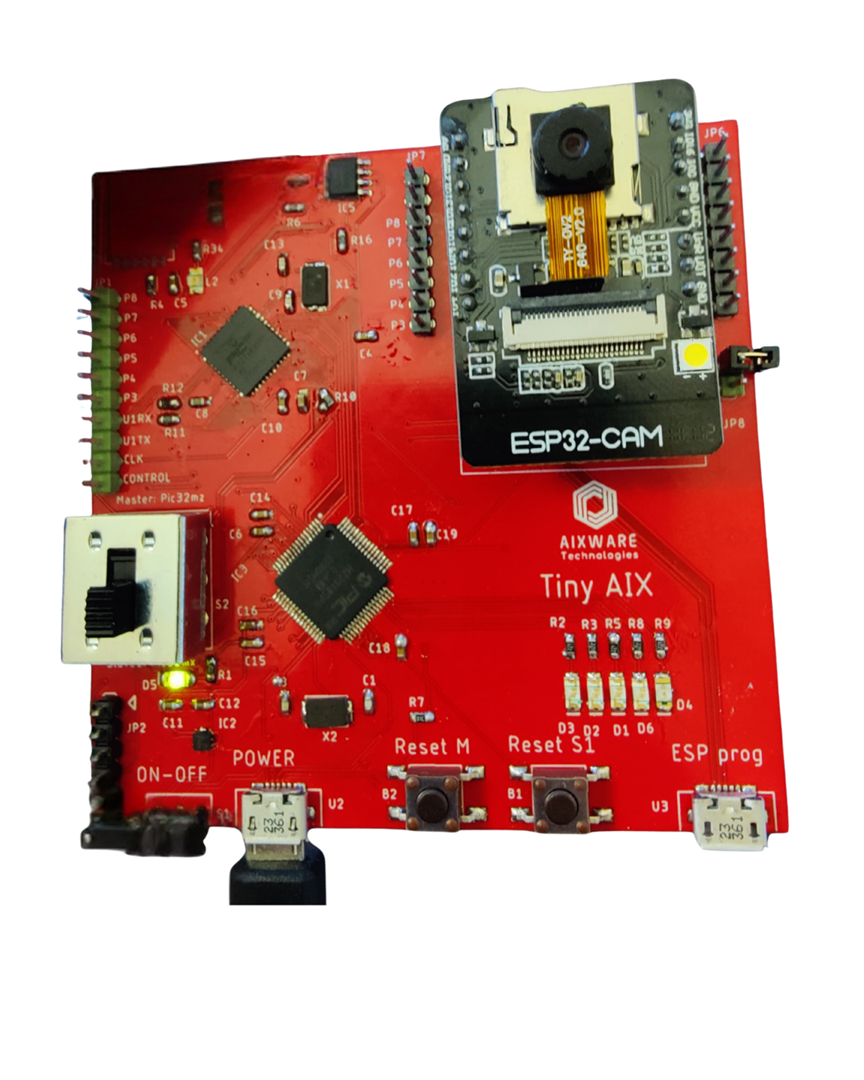
Garza Elizondo is currently working on the project “Tiny Reinforcement Learning for Microcontroller-based Embedded Systems,” a research initiative that aims to push artificial intelligence (AI) to the limits of technological miniaturization: robots, sensors, and embedded systems capable of learning from their environment and making autonomous decisions without relying on cloud computing or high-energy-consuming data centers.
“I feel tremendous excitement–and also the challenge–of being part of a global scientific community pushing the frontier of knowledge,” Garza Elizondo shares. “This recognition confirms that I am on the right path: developing high-impact technology that truly helps people.”
A More Efficient and Sustainable Artificial Intelligence
In a world where the most advanced AI models require server farms, vast amounts of energy, and multimillion-dollar training runs, Garza Elizondo’s project proposes a radical alternative: Tiny Reinforcement Learning (TinyRL), a paradigm that enables intelligent algorithms to run in environments with extremely limited resources.
“Today, large AI models are generating a significant environmental impact due to their immense consumption of energy and resources. We want to demonstrate that it is possible to create models that are just as efficient but much more sustainable and accessible,” he explains.
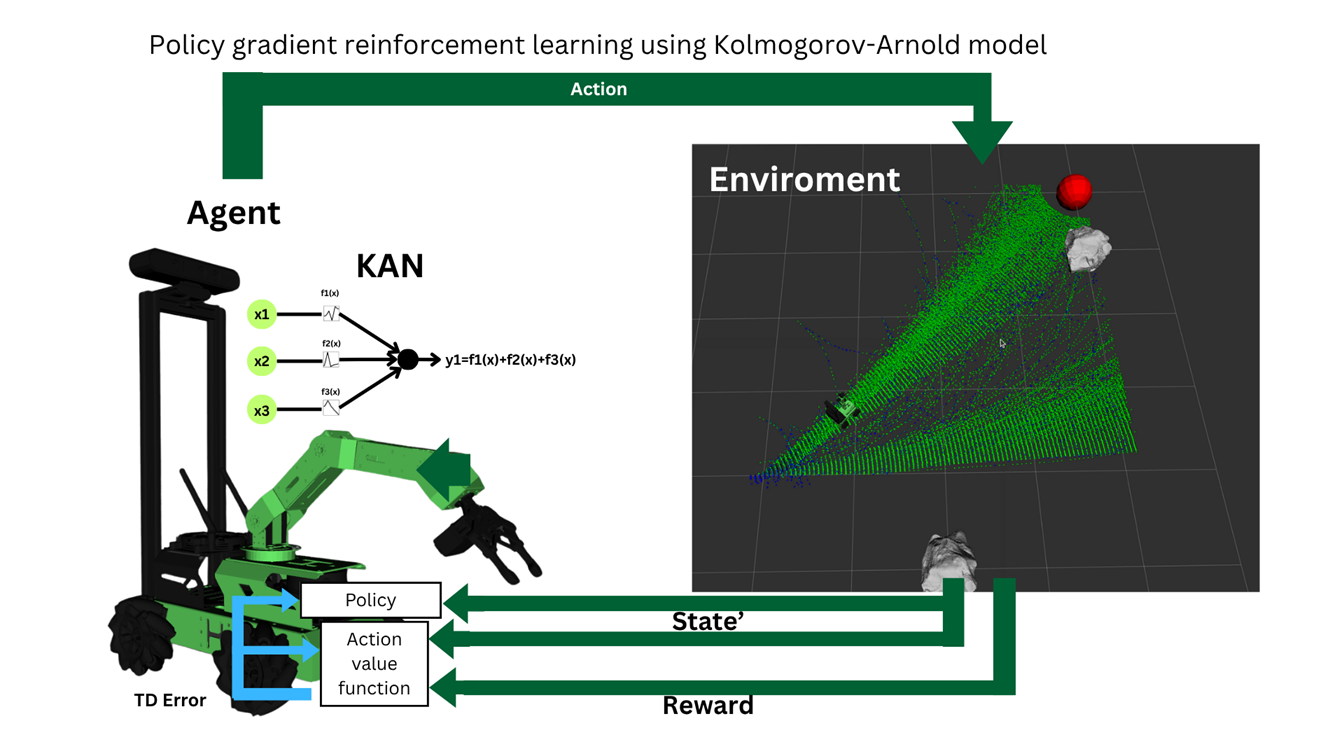
The TinyRL approach combines reinforcement learning–a branch of artificial intelligence that allows systems to learn through experience–with advanced mathematical methods derived from the Kolmogorov-Arnold theorem. This approach enables algorithms to learn directly on embedded devices, optimizing their memory, processing, and energy consumption.
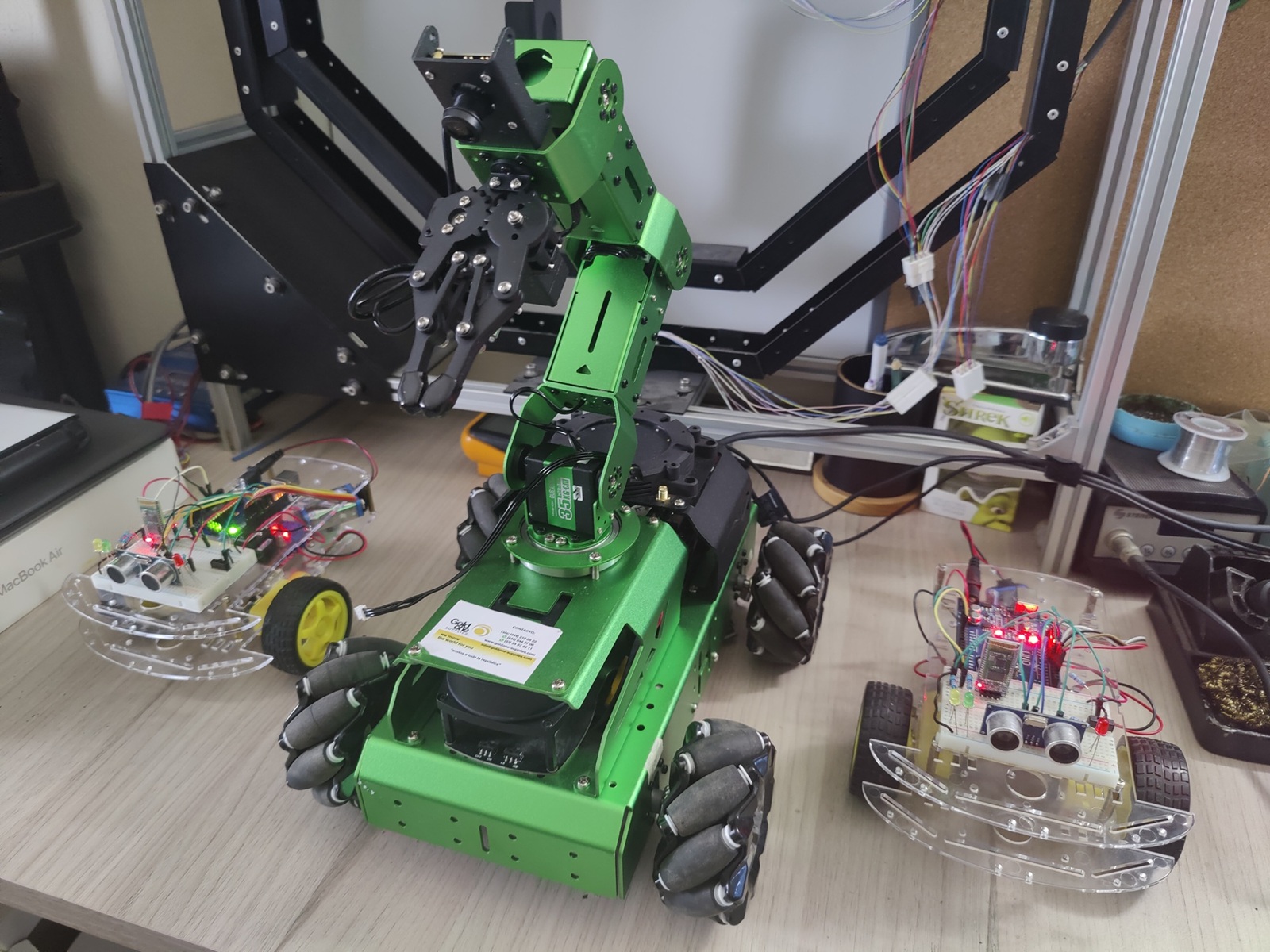
Garza Elizondo is part of a team of Tec de Monterrey researchers currently working on a ground robot that learns to move and adapt to obstacles without prior knowledge of its environment. “We start with a robot that knows nothing: it doesn’t understand its sensors or its actuators. What we do is allow it to discover–through trial and error–how to move, how to avoid obstacles, how to reach a goal. Over time, the robot learns on its own and achieves optimal performance,” he explains.
Initial simulations with reinforcement learning agents show how the robot progressively improves its performance, moving from erratic behaviors to efficient movements after just a few hours of training. In later stages, the team will implement these algorithms in real hardware, with multi-microcontroller architectures that will enable collaboration among multiple agents on shared tasks.
The project is part of the strategic Research Group for Industry 5.0 at Tecnológico de Monterrey, which promotes the creation of technologies centered on human well-being and sustainability. Through the convergence of artificial intelligence, robotics, and hardware design, this research aims to develop technologies that are more intuitive, safer, and environmentally aware.
“One of the innovations we are developing is a population-based approach: several robots working together to learn faster and share knowledge. This could be key for optimizing industrial processes, autonomous systems, or even intelligent medical devices,” he explains.
The potential applications of this technology are wide-ranging: from safer, more adaptable industrial robots to wearable health devices capable of anticipating physiological anomalies.
“Imagine a smartwatch that not only measures your heart rate or steps but can anticipate trends and alert you to significant changes in your health before they occur. Or assistive robots capable of adapting to any home, regardless of the environmental conditions,” the researcher points out.
Behind each of these applications lies a common principle: making artificial intelligence more human, more efficient, and closer to people.
The award granted by Google to Luis Eduardo Garza Elizondo confirms the caliber and relevance of the research being advanced at Tecnológico de Monterrey. His work exemplifies how scientific innovation can address the major technological and environmental challenges of our time.
With this achievement, the Tec reaffirms its role as one of the most active global universities at the frontier of applied artificial intelligence and the development of purpose-driven talent.
Google PhD Fellowship: A World-Class Recognition
The Google PhD Fellowship program, which this year celebrates its 16th edition, will provide more than USD $10 million to support 255 doctoral researchers across 35 countries–including Mexico–with the goal of strengthening research ecosystems in emerging regions such as Latin America.
Fellows receive funding, mentorship from a Google researcher, and access to a global network of scientists in twelve research areas including artificial intelligence, machine learning, data science, security, and robotics.
Since its creation, the program has supported more than 950 students from 227 institutions in 44 countries, who now lead innovation projects in academia and industry.
Escuela de Ingeniería y Ciencias – Tec de Monterrey
[email protected]
https://eic.tec.mx/es
This article was originally published by IssueWire. Read the original article here.