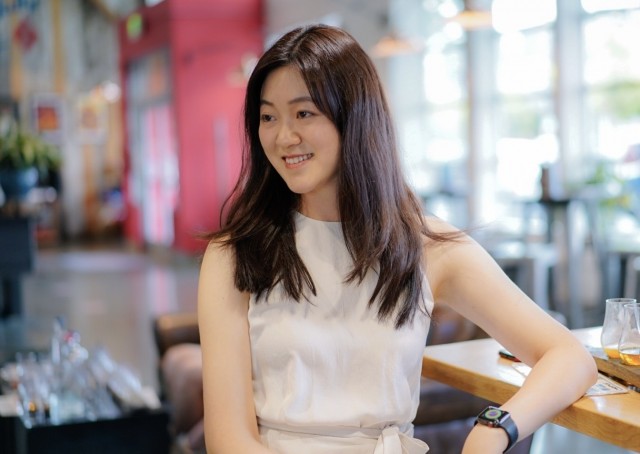
(Isstories Editorial):- Los Angeles, California Dec 29, 2025 (Issuewire.com) – In recent years, as international design competitions place greater emphasis on professional rigor and diverse perspectives, a new generation of designers has begun to step into the role of jurors. Lulin Shan is one of these designers. Her growing presence on international judging panels reflects the expansion of her professional influence. In 2025, she was invited to serve as a jury member for the French Design Awards, the World Brand Design Society Awards, and the Orpetron Web Design Awards. These appointments mark a transition from recognition of her individual work to active involvement in shaping international design standards.
Major design competitions typically evaluate a candidate’s depth of practice, professional credibility, and international impact when selecting jurors. Lulin Shan’s career spans landscape architecture, interaction design, and digital product design. She received formal training in spatial and environmental design and later built extensive experience in digital systems and user experience design. Her work across both B2C and B2B contexts in the technology and healthcare sectors, along with multiple international honors including Red Dot, EPDA, and IDA awards, has positioned her as a designer capable of evaluating work across scales, disciplines, and cultural contexts.
In her approach to judging, Shan applies a clear framework built around three core dimensions. The first dimension is value, she examines whether a project addresses a real problem and delivers measurable benefits to users and organizations. The second is quality, encompassing information architecture, interaction logic, visual systems, and the level of execution down to details. The third is impact, which considers originality and narrative coherence, while also incorporating accessibility, ethics, and long-term sustainability into the evaluation process. In her view, design assessment should go beyond visual appeal to examine whether a solution can truly function effectively in real-world settings and remain relevant over time. This perspective is deeply informed by her experience designing complex products and enterprise systems.
More on Isstories:
- Professional Napper (PRONAP) Introduces the “CEO of Sleep” Concept on Solana
- Sellvia Market Identifies Key Risks New Online Business Owners Face in 2026
- Fibromyalgia Expert And Award Winning Author- Shari Emami, Hits Market
- Algorithms Are Quietly Controlling Human Choice, New “Algorithmic Cage” Research Warns
- Realcries Unveils Luxe Single ‘Gucci Gucci’
In early November 2025, Shan officially joined the jury of the World Brand Design Society Awards. Founded in 2008, WBDS is a non-profit organization established by volunteers and known for its independent and non-sponsored judging process. Its awards span four major categories: Agency, In-House, Creative, and Student, aimed at recognizing talent across all stages and scales of the creative industry. Shan’s participation brings a strong perspective from digital products, interaction design, and cross-cultural practice, reinforcing WBDS’s commitment to diversity in both design disciplines and professional backgrounds.
Alongside her role as a juror, Shan continues to gain international recognition for her design work. One of her most notable projects, COFE+ Robot Coffee Kiosk, reimagines the modern café experience through robotics and automation. Designed for contemporary urban lifestyles, the kiosk uses a robotic arm to replicate professional barista workflows, delivering freshly ground coffee in 50 seconds and operating 24/7. Suitable for office buildings, airports, parks, and public plazas, the system integrates online and offline ordering into a seamless, contactless experience, responding directly to post-pandemic demands for efficiency, safety, and convenience.
Another award-winning project, XYG Studio Window, highlights Shan’s exploration of cultural expression through visual identity and interaction design. Centered on the concept of a “window,” the project fuses traditional Chinese seal script with visual references from Suzhou classical garden windows, incorporating modern geometric forms. The resulting visual identity extends into a website interface where positive and negative space guide navigation and interaction. This approach reflects the Eastern philosophy of yin and yang. The project demonstrates how traditional cultural elements can be reinterpreted within contemporary digital environments.
In addition to creative and branding projects, Shan has developed a strong practice in enterprise and industrial system design. She currently works as a UX/UI Designer II at Applied Medical, where she leads research and end-to-end design for new features in the Applied Request Center, an internal platform serving more than 4,000 employees. Her work focuses on improving cross-department collaboration, workflow transparency, and operational efficiency. These projects require high reliability, regulatory awareness, and system-level thinking.
Shan’s transition from landscape architecture to interaction design, and later into technology and healthcare, shapes her perspective on the future of the design industry. She views artificial intelligence as an increasingly important tool for designers, supporting ideation, research synthesis, and efficiency. At the same time, she emphasizes that AI does not replace human judgment. She believes future design will become more system-oriented and intelligent. Designers, she argues, must use AI responsibly while maintaining empathy, aesthetic judgment, and accessibility awareness. Technology can speed up processes, but the ultimate quality of design still depends on how deeply designers understand the problems they are solving and the long-term consequences of their decisions.
Beyond her professional work, Shan remains active in the design community. In 2025, she joined the Beta Fellowship, became a member of the International eXperience Design Committee(IXDC), and was selected as a mentor on ADPList. Through this role, she supports emerging designers with portfolio development, resume reviews, and career transitions. Later that year, she joined the WBDS jury. These activities further expand her role within the global design ecosystem.
From award-winning designer to international juror and mentor, Lulin Shan’s trajectory reflects steady accumulation rather than isolated breakthroughs. Her career illustrates a broader shift in the role of contemporary designers: from individual problem-solvers to evaluators of value, stewards of standards, and contributors to the long-term health of the design profession. In an industry shaped by rapid technological change, such multidimensional and sustainable influence is becoming increasingly essential.

This article was originally published by IssueWire. Read the original article here.